
After years teaching and guiding, there’s a pattern you notice pretty quickly. Beginners fall all the time, but most of those falls are slow and harmless. Advanced riders fall rarely because they’re more precise and pick their moments. The group that ends up hurt the most are the people in the middle.
Ski patrol data backs this up. Multiple European and US studies show that lower-intermediate to upper-intermediate riders account for the majority of slope injuries, not beginners and not experts. One insurance dataset from Austria even showed intermediates making up over 60 percent of reported injuries in a typical season. Snowboard wrist injuries peak at the same level too. It’s not a coincidence.
Here’s why.
Speed Sneaks Up On You
The thing about being an intermediate is you don’t feel like one. You feel good. You’re linking turns, you’re keeping up with your mates and you finally feel like the board or skis are doing what you want. And that’s exactly when the speed creeps up. Beginners fall at walking pace. Intermediates fall at a pace that breaks things.

Most injuries I see at this level come from nothing dramatic at all. Just a bit too much speed and too little control when something unexpected happens.
Confidence Grows Faster Than Awareness
You get a few good days under your belt, things start to feel smooth and your confidence explodes. Totally normal. Psychologists call it the Dunning–Kruger effect… when you’re new to something, you feel confident long before you’re actually skilled.
You start riding harder and faster. A patch of ice, a rut, a little drop in pitch, a moment of flat light. If you can’t react instantly, you’re on the ground before you even process what happened. That quick reaction time only comes from mileage and experience. Hence the “intermediate trap”.
Fatigue Hits Intermediates Hard
Beginners get tired quickly, but they’re usually riding at a crawl. Experts know exactly when to back off and their technique is energy efficient anyway. Intermediates? They tend to push through it because they’re excited about their progress. The result is sloppy technique, delayed reactions and falls that come out of nowhere.
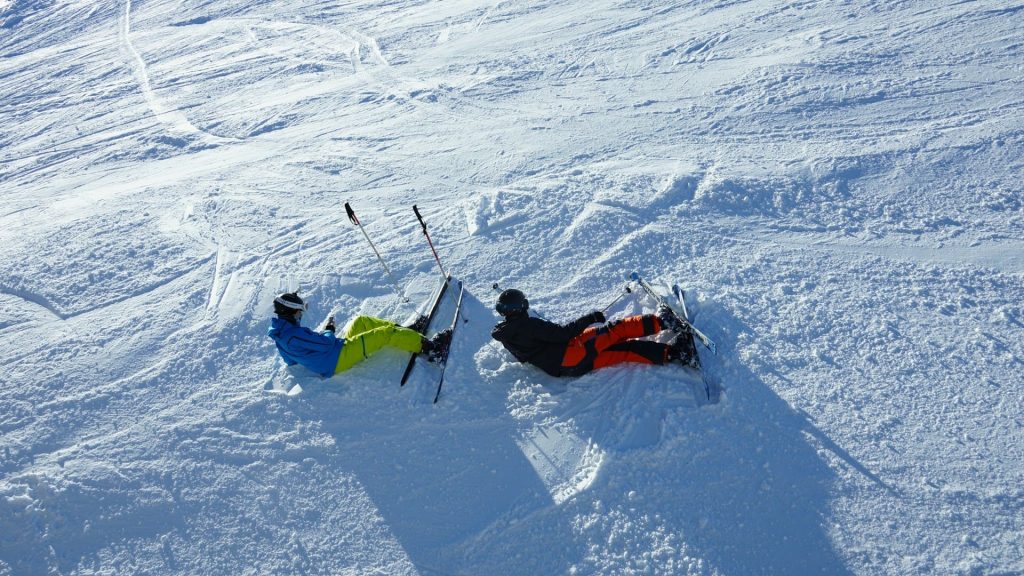
Patrol teams everywhere report the same thing: injuries spike after lunch. That’s when intermediates are skiing/riding the fastest while also being the most fatigued.
Questionable Terrain Choices
Beginners stick to greens. Experts can handle anything. Intermediates end up in that grey area in between. Chopped-up blacks, icy cat tracks, tight trees in flat light. There’s a huge difference between that and a well-groomed blue run. Doesn’t take much for things to go south.
The Snowboard Wrist Problem
A lot of riders assume beginners break the most wrists. Not really. Hospital data from Canada, France and Austria all show the peak happening among lower-intermediate snowboarders.

The risk increases once you start to build speed. That classic toe-edge catch at 25 km/h can slam your hand into the snow before your brain registers. This is exactly why I always recommend wrist guards.
It’s not complicated. You just need to match your speed to what your skill can actually handle. If you can’t change direction whenever you want, you’re going too fast. If your legs feel heavy, stop. If the snow has changed, adjust. Most injuries I see come from someone pushing on when their body has already clocked out.
And on the gear side, I won’t pretend protective kit is a magic fix, but it absolutely helps. Wrist guards, impact shorts, back protectors if you’re pushing speed. This goes for both disciplines. Most instructors quietly wear something under the layers when pushing the limits. Intermediates should do the same.

