6 Best Ski and Snowboard Back Protectors (Save Your Spine)

I’ve had some pretty nasty falls over the years. I’ve ragdolled into hidden tree stumps in Japan, caught edges on hardpack and watched friends crack vertebrae in the park. That’s enough to make me take back protection seriously.

You’ll notice almost everything in this guide is made by Demon. I know how that looks. But I’ve spent years riding in their gear, and I haven’t found another brand whose protection I prefer. I’m not going to recommend a few crappy Amazon spine guards just to make the list look balanced. If you’ve found something better, genuinely, let me know. I’d love to try it.

I’ve included everything from slim spine guards to full body armour, with a few thoughts on who actually needs what. Because the most protective option isn’t necessarily the one you’ll want to wear all day.

🏆 My Quick Pick

The Demon Ghost D3O is my favourite. The chest panel helps keep it in place, so I find it more comfortable and secure than a standalone spine guard. The Spine Guard X is cheaper and less bulky if you only want back protection.

Best Ski & Snowboard Back Protectors

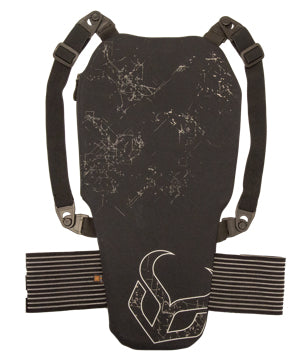
1. Demon Ghost D3O Chest & Back Protector My Favourite

Demon Ghost D3O Chest & Back Protector
  • D3O protection across the chest and back
  • Flexible enough to move naturally while riding
  • Adjustable shoulder and side straps
  • Low-profile fit under a ski or snowboard jacket

I’ve always been quite happy wearing heavier protection, particularly when I’m riding somewhere I know I might take a proper hit. My Demon Flexforce top has been with me for years. It’s substantial, covers a lot of ground and I trust it.

The downside is that there are plenty of days when I don’t particularly fancy wearing the whole thing. Especially when I’m cruising and not trying new tricks (which is most days at the moment). 

That’s where the Ghost has won me over. I wore it for a couple of weeks of riding and found myself putting it on for days when I probably wouldn’t have bothered with the Flexforce. It’s much less of a faff under a jacket, and I can move around without feeling like I’m wearing a padded shirt.

The chest panel is a big part of why I like it. I’ve used standalone spine guards before, but I prefer having something across the front as well. It helps the Ghost sit securely against my body. I’m not constantly fiddling with it or wondering whether the back panel has moved (some pure spine guards feel like they’re flapping behind you with just elastic straps in your armpits). 

That extra coverage is particularly useful when you’re skiing through trees or riding somewhere a fall might involve more than landing on your backside. I had a branch catch me across the front while riding in Japan, and I was very glad I had the chest protection on (I wouldn’t suggest deliberately testing it that way).

There’s also a good argument for chest protection if you ski race. A back protector is useful, but it does nothing for an impact to the front of your torso. You’d still need to check the protection requirements for your particular racing discipline of course, rather than assuming the Ghost meets them.

The D3O panels feel flexible when you’re wearing them, which makes a difference over a full day. I can bend to strap in, crouch through turns and sit on lifts without the protector digging in. The shoulder and side straps give you enough adjustment to get it sitting properly, although it’s worth spending a few minutes on the fit before you head out.

I wouldn’t pretend it offers the same coverage as my V6/V7 impact tops. It doesn’t. If I’m heading out for a big park session or expect to be crashing repeatedly, I still prefer the heavier top.

But for normal resort riding, teaching and days spent exploring the mountain, I’ve worn the Ghost far more often than I expected.

The Spine Guard X is worth a look if you only want back protection. It’s a simpler and cheaper option without the chest panel. Personally, I’d pay the extra for the Ghost. I like the fit and I’d rather have that additional protection at the front.

That’s why it’s my favourite here. Not because it has the most padding, but because it’s the one I’ve found easiest to wear all day without thinking about it.

Pros

  • Comfortable enough that I actually wear it all day
  • Chest panel keeps it more securely in place than a standalone spine guard
  • Doesn't get in the way when bending, twisting or strapping in
  • Chest protection came in handy riding through trees in Japan
  • Far less bulky under a jacket than my Flexforce top

Cons

  • I'd still choose my Flexforce for bigger park sessions
  • More expensive than basic spine guards
  • Takes a little fiddling with the straps to get the fit right

2. Demon Spine Guard X D3O Best Standalone Spine Guard

Demon Spine Guard X D3O
  • D3O spine protection without a bulky chest panel
  • Slim enough to wear under a normal jacket
  • Adjustable shoulder straps and removable waist belt
  • Flexible back pad that moves with you
  • Less expensive than the Ghost chest and back protector

The Ghost is the one I prefer wearing, but I can see why someone would choose the Spine Guard X instead. It’s cheaper, there’s less of it to wear, and you still get a proper D3O pad covering your back.

I’ve worn the Spine Guard X for everything from ordinary resort days to park laps (admittedly, it has been a good few years since I owned one, but I don’t think they’ve changed the product since then). 

It’s surprisingly easy to get on with. Once you’ve adjusted the shoulder straps and waist belt, it sits close to your back without making you feel like you’ve strapped a rigid board underneath your jacket. You can bend down to do up bindings, sit on lifts and move around normally.

That’s probably what I like most about it. Some back protectors are so stiff or bulky that wearing one becomes a conscious decision every morning. This doesn’t feel like much of a commitment.

The D3O pad is flexible while you’re riding and designed to stiffen under impact. I’ve had my share of falls wearing it and it’s reassuring to have something substantial between your spine and the snow, particularly when you catch an edge on hardpack. I wouldn’t pretend any back protector makes a nasty fall harmless, but I certainly prefer wearing one.

The shoulder straps and waist belt let you adjust where the pad sits, but you need to spend a little time getting them right. Too loose and the guard can move around; too tight and you’re unnecessarily squeezing yourself into it. Once adjusted, I haven’t found it particularly troublesome.

The bigger question is whether you want a spine guard or a chest-and-back protector.

I’ve spent plenty of time in both this and the Demon Ghost D3O. Personally, I prefer the Ghost. Its chest panel helps hold the whole thing in position, and I like having that extra protection when I’m riding through trees. It’s also a useful consideration for ski racers, who may want chest protection as well as a back protector, subject to their event’s equipment rules.

But not everyone wants a chest panel. If you’ve already got other upper-body protection, or simply want something slim to wear under your jacket, the Spine Guard X is a perfectly sensible choice. I wouldn’t spend more on the Ghost unless you actually want what it adds.

Pros

  • Comfortable enough that I've worn it for full resort days
  • Doesn't get in the way when bending down or strapping in
  • Fits neatly under a normal jacket
  • Adjustable straps let you position the pad properly
  • Cheaper than the Ghost if you only want back protection

Cons

  • No chest protection
  • I find the Ghost stays in place more securely

3. Demon X V7 D3O Impact Top Ultimate Protection

Demon X V7 D3O Impact Top
  • D3O pads at the shoulders, elbows, back and chest
  • Additional rib, collarbone and abdominal padding
  • Adjustable chest and elbow straps
  • Ventilated Lycra/mesh construction with side zip
  • X-Connect compatible with Demon X-Series shorts

I’ve been wearing Demon body armour for years, going right back to the V2 for mountain biking. I’ve put plenty of time into the FlexForce X V6 on snow too which I reviewed last year (pictured below). I’ve recently started using the new X V7.

This is the big one. Proper padding across your back, chest, ribs, shoulders and elbows. If you’re learning tricks, hitting XL jumps or spending a day getting battered on rails, it’s a reassuring thing to have under your jacket.

V6 Impact Top (Front)
V6 Impact Top (Back)

Do I wear it every day? Absolutely not. It’s bulky, and these days I tell myself I’m concentrating on carving rather than tricks. Nothing to do with getting older, being lazy or becoming a lil bitch about injuries (obviously).

But when I decide to have another go at inverts or spend some time on the bigger park lines, I’m very happy to own it. I’ve taken enough hits in the older versions to know why I keep it around.

The V7 updates the protection and fit, including new D3O pads at the shoulders and elbows, redesigned back and chest protection, and adjustable straps to keep everything in place. They still have the removable extra chest plate. 

V7 Impact Top (Front)
V7 Impact Top (Back)

It’s still early days with my V7, so I won’t pretend I’ve tested its durability over a full season. My longer-term experience is with the V6.

I should also note that the V7 features Demon’s “X-Connect” system so you can attach it to their best-rated impact shorts. It’s basically a velcro section on the bottom of the Impact top that connects to the same section on the crash pants. This forms seamless protection that stops ice-burn and snow entry. It also makes everything better at staying in place.

Demon also now do a complete protection package – which is a significant investment. Pretty sweet if you can afford it!

If you’re particularly wary of injuries, or you’ve got old ones you don’t fancy aggravating, this level of coverage is definitely worth considering. Just be realistic about the bulk. For ordinary cruising, I’d usually choose something lighter.

Update: I’ve now also tested the V7 alongside Demon’s much slimmer Ghost back protector, as in the photos below.

They’re very different propositions. The Ghost concentrates on your back with some bonus chest protection, while the V7 adds protection across most of your upper body. The Zero RF top is another lighter alternative, which I’ll cover in the next review.

Pros

  • Excellent shoulder, elbow, chest and back coverage
  • D3O and XRD padding for substantial impact protection
  • Easy to get on and off
  • Breathable mesh panels help with heat
  • X-Connect compatible with Demon X-Series shorts
  • Particularly useful for park riding and bigger features

Cons

  • Bulky enough that I rarely wear it for everyday riding
  • Expensive
  • More protection than most casual riders need

4. Demon Zero RF D3O Impact Top Best Padded Base-Layer

Demon Zero RF D3O Impact Top
  • RZ-LABS padding at the back, shoulders and elbows
  • Recycled D3O RF foam underlay at key impact zones
  • Soft chest cushioning
  • Lightweight, flexible construction for wearing under a jacket
  • Zip-front design

The Zero RF is the one I’d look at if you want more coverage than a standalone back protector but don’t fancy wearing a full-on armoured suit every time you ride.

I’ve spent plenty of time in Demon’s Zero RF impact shorts and knee pads, so I know how comfortable their lower-profile padding can be. I’ve had less time in the impact tops themselves – I tried them during a demo week last year, rather than testing one over a full season. So they haven’t had the same punishment as the shorts.

What I like is how much less cumbersome the Zero RF feels than the X V7. You get padding across your back, shoulders and elbows, plus softer cushioning over the chest, without the heavier, more structured feel of the V7. The zip-front design also makes it more straightforward to get on and off.

The caveat is that this isn’t simply a thinner X V7. The chest padding is softer cushioning, and Demon’s stated certifications apply to the specified protective inserts, not the garment as a whole. For riders who want the X V7’s more extensive armour and adjustment, that’s still a very different proposition.

If your priority is protecting your spine with as little extra kit as possible, I’d still consider a dedicated back protector. But if you want some shoulder and elbow coverage too, the regular Zero RF makes sense.

Note: 

There are a few different versions of the Demon Zero RF. The regular long-sleeved Zero RF is the one pictured here. The Zero Plus RF adds extra rib padding and adjustable elbow straps. There’s also a vest version which loses the sleeves altogether – great if you plan to keep your same base and mid layer setups. 

Pros

  • Back, shoulder and elbow padding in one top
  • Much less bulky than the X V7
  • Flexible to wear under a jacket
  • Zip front makes it easier to get on and off
  • Also available in a Plus version with added rib padding

Cons

  • Less extensive protection than the V7
  • Chest padding is softer cushioning, not certified chest armour
  • No added rib padding on the regular version
  • Still more to wear than a simple spine guard

5. Demon X V7 D3O Women's Impact Top Best Pick for Women

Demon X V7 D3O Women's Impact Top
  • Women's-specific version of the full-coverage X V7
  • Protects much more than just your spine
  • Adjustable fit helps keep the armour in place
  • Ventilated construction, although it's still a substantial top
  • Best suited to riders who prioritise coverage over minimal bulk

Women can obviously wear any of the back protectors higher up this list. There’s nothing inherently male-only about them; it’s a question of getting the right fit. I’ve included the Demon X V7 Women’s Impact Top separately because it’s specifically cut for women who want maximum upper-body protection.

It’s essentially the women’s version of the men’s V7 we’ve already covered, so I won’t go through all the padding again. You get the same full-armour approach, with protection across the back, chest, shoulders, elbows and ribs.

Jess has tried the older V6 version for a good few weeks now and her verdict was pretty similar to mine on the men’s version – excellent protection, but quite a lot of kit to wear. She recommends it to her beginner-intermediate riders who want that extra coverage while they’re learning. For more experienced riders, it makes sense if you’re spending a lot of time in the park or regularly taking bigger hits.

For ordinary resort laps, though? It’s a lot of armour. Jess found the fit good, but there’s no pretending a fully padded top feels like wearing a normal base layer. If you want something you’ll barely notice under your jacket, look at the slimmer options above. If maximum coverage matters more than keeping things lightweight, the V7 is worth considering.

Pros

  • Women's-specific fit without sacrificing coverage
  • Protects far more than just your spine
  • Jess recommends it to beginners wanting extra protection
  • Good coverage for park riding and bigger falls
  • Adjustable fit helps keep the padding in place

Cons

  • You'll definitely know you're wearing it
  • More armour than most casual riders need
  • Expensive compared with a simple spine guard
  • Takes some getting used to

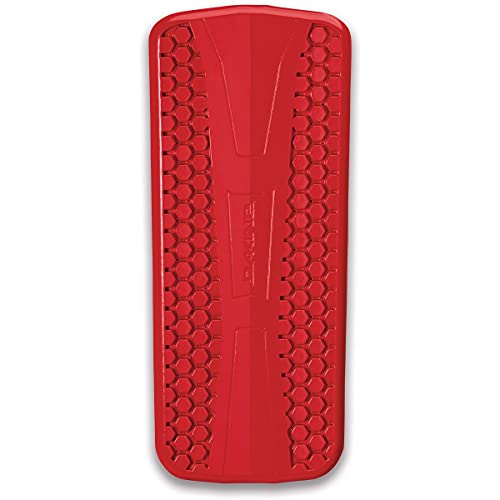
6. Dakine DK Impact Spine Protector Best Backpack Insert

Dakine DK Impact Spine Protector - Red
  • DK Impact Foam displaces hard impact and protects central back
  • Thin, flexible profile
  • CE EN 1621-1 certification
  • Fits inside multiple snow and bike packs

If you’re ski touring or already ride with a compatible Dakine backpack (and some other brands too), the DK Impact Spine Protector is a practical way to add back protection without changing your setup. It’s a firm foam insert that slides into the pack’s dedicated spine sleeve.

I’ve used one in my Dakine Poacher and barely noticed the extra bulk while skinning. I certainly noticed it when I came off a rock shelf and landed flat on my back. The foam took some of the sting out of that impact, although it’s not as cushioned as the D3O protectors higher up this list.

The main appeal is that you don’t need to strap on another piece of armour for the climb or descent. If you’re carrying the backpack anyway, it’s a smart, low-effort upgrade. Just remember that the protection stays with the pack – take it off or wear it too loosely, and you’re back to having nothing on your spine.

Pros

  • Fits inside compatible Dakine backpacks — no separate armour to wear
  • Hardly noticeable while riding
  • Took the sting out of a nasty back-first landing
  • Quick and easy to install or remove
  • Particularly useful if you already tour with a pack

Cons

  • Only protects your back while you're wearing the pack
  • No chest, shoulder or elbow coverage
  • Less cushioned than the D3O options
  • Requires a compatible backpack with a spine sleeve

Comparison Table

Back Protector Coverage Why I'd Choose It Padding Type
Demon Ghost D3O Back and chest My pick when I want proper back protection without wearing a full impact top. D3O
Demon Spine Guard X D3O Spine only A slim, standalone guard for resort laps when I don't want extra padding elsewhere. D3O
Demon X V7 D3O Impact Top Back, chest, ribs, shoulders and elbows Full upper-body armor for beginners, park progression and higher-risk riding. D3O + additional foam padding
Demon Zero RF Back and additional upper-body padding A padded layer for riders who want more coverage than a spine guard without going all-in on the V7. D3O + foam padding
Demon X V7 D3O Women's Impact Top Back, chest, ribs, shoulders and elbows The full-armor approach of the men's V7, with a women-specific fit. Jess recommends it to her beginner riders. D3O + additional foam padding
Dakine DK Impact Spine Protector Spine only An easy addition if I'm already wearing a compatible Dakine backpack for touring or freeride days. DK Impact foam insert

What I Actually Ride With

I don’t wear spine protection every time I go snowboarding or skiing. If I’m just cruising around on groomers, I’ll often leave it behind. But if I’m riding park, dropping into something questionable or heading out when the snow’s hiding rocks and stumps, I want one on.

The one I’ve worn most is the Demon Spine Guard X D3O. It’s slim and sits very comfortably under a jacket. I’ve worn it enough that putting one on is pretty much automatic when I know I’ll need it. 

For park days and bigger hits, I’ve tended to go for a full impact top. My old Flexforce X V6 took an absolute beating while I was learning backflips. I’ve since moved on to the newer X V7, but I’m not going to pretend I’ve put it through the same number of crashes yet. The extra padding is reassuring when I’m trying something new. It’s also a lot more kit to wear.

The Zero RF is interesting because it feels less cumbersome than the V7. I tried the top during a demo week rather than over a full season, so I’m still getting to know it. I can see myself wearing it more often when I want shoulder and elbow padding but don’t fancy the bulk of the full V7.

Then there’s the Ghost D3O. I like having chest protection as well as back protection when I’m riding trees or heading into unfamiliar terrain. I’ve taken it to Japan and Utah, and it’s a good middle ground when I want more than a spine guard without wearing a fully padded top.

I don’t have one favourite for every situation. That’s partly why I’ve kept several of these. The protector I’m happy to wear all day isn’t necessarily the one I want on when I’m expecting to crash.

What to Consider Before Buying a Back Protector

How Much Coverage Do You Want?

This is the first decision and it’s worth getting right before you start comparing materials and prices.

A standalone spine guard is enough kit for a lot of the riding I do. It covers the area I’m most concerned about, without adding padding to places I don’t particularly need it that day. A chest-and-back protector like the Ghost adds coverage across the front. That’s something I appreciate in trees, where a fall doesn’t necessarily mean landing neatly on your back.

Then you’ve got full impact tops. The X V7 covers your back, chest, shoulders, elbows and ribs. It’s the sort of thing I’d consider for park progression or riding where I expect to take repeated hits. But there’s a trade-off… more coverage means way more material under your jacket.

The Zero RF sits somewhere between those options. You get padding beyond your spine, but it feels less substantial than the V7.

Don’t buy the biggest suit of armour simply because it has the most padding. Buy something that suits your riding and that you’ll actually put on.

Fit Matters More Than You Think

I’ve tried cheap, supposedly universal back protectors that barely covered the length of my back. They might have been fine on somebody else, but they weren’t much use to me.

Check the manufacturer’s sizing rather than assuming your usual T-shirt size will do. A protector should cover the intended area of your back, sit securely and stay there when you bend forward, twist or crouch.

It shouldn’t ride up every time you sit on a chairlift. Equally, you shouldn’t have to tighten the straps until you can barely breathe to stop it moving.

Will You Actually Wear It All Day?

I’ve worn plenty of protective gear that felt absolutely fine standing in front of a mirror, then became annoying about two hours into riding. Add a base layer, mid-layer and jacket. Suddenly that extra bulk is very noticeable.

I run warm, so breathability matters to me. A ventilated top helps, but it won’t magically make a heavily padded garment feel like a normal base layer.

Think about what you normally wear. If your jacket is already snug, a full impact top might mean changing how you layer. If you ride in a hoodie for much of the season, you’ll probably notice the outline of a bulky protector more than you would under a shell.

Check What It Works With

A couple of the products here make more sense if you already own other compatible gear.

The X V7 has Demon’s X-Connect system for pairing it with compatible impact shorts. It’s worth considering if you already ride with those shorts, rather than buying the top and discovering later that you could have had a more integrated setup.

One last thing…

A back protector is there to help manage certain impacts. It cannot guarantee you’ll avoid a serious spinal injury. I wouldn’t use one as a reason to ride something I’d otherwise think twice about.

Final Thoughts

I’ve had enough ugly falls over the years to appreciate having something between my back and whatever I’m about to land on. That doesn’t mean I wear the most heavily padded option every day.

If I want something unobtrusive, I usually take the Demon Ghost. And when I’m expecting bigger hits, I’m happier putting up with the extra bulk of a full impact top.

That’s really what it comes down to. Find the level of protection you want, make sure it fits properly, and choose something you won’t spend the day wishing you’d left at home.

Stay safe out there!

The Snow Chasers

Ski & Snowboard Back Protector FAQs

Do I really need a back protector for skiing or snowboarding?
Not everyone does. I don't wear one for every mellow groomer lap. But if I'm riding park, hitting bigger features or heading into terrain where rocks and stumps might be lurking under the snow, I want one on. It's also worth considering if you're learning and taking a lot of falls. Just don't mistake wearing protection for being crash-proof.
Can I wear a back protector under my jacket or hoodie?
Yes. A slim guard like the Demon Spine Guard X D3O fits easily under most jackets. Padded tops like the Zero RF work more like an extra layer, although you'll notice the bulk more. If your jacket is already tight, try everything on together before committing. A protector that fits beautifully on its own can be a pain once you've added your usual layers.
Will a back protector restrict my movement?
It shouldn't stop you bending, twisting or reaching for grabs, but some are definitely more noticeable than others. I barely notice a slim spine guard once I'm riding. A full impact top feels more substantial, particularly around the shoulders and chest. If yours rides up every time you crouch or twist, check the fit rather than just putting up with it.
How should a back protector fit?
Snug enough to stay in place, but not so tight that it restricts your breathing or movement. The protective panel needs to sit over the area it's designed to cover, without riding up when you bend forward or sit down. Follow the manufacturer's size chart, especially for back length. Don't assume your usual clothing size will be right.
Can I wear a back protector with a backpack or avalanche airbag?
Usually, yes, provided everything fits properly. A slim protector can sit under a backpack, while the Dakine DK Impact fits inside certain compatible Dakine packs. With an avalanche airbag, check the pack manufacturer's guidance and make sure the protector doesn't interfere with the harness, buckles or deployment system. Don't assume a backpack's ordinary foam back panel offers the same protection as a dedicated insert.
How do I wash a padded top or vest?
Check the care label first. Some tops have removable pads, while others need to be washed with the padding in place. Follow the manufacturer's instructions for temperature and detergent, and don't put protective foam in the tumble dryer unless the brand explicitly allows it. I've found that airing gear out properly after a riding day helps avoid having to wash it quite so often.
Will a back protector prevent a serious spinal injury?
No. A back protector is designed to help manage certain impacts, but it cannot prevent every injury. It won't eliminate the risk of fractures, spinal cord injuries or damage caused by twisting and compression. I wear one because I'd rather have that extra layer in a fall, not because I think it makes a bad landing safe.

Leave a Comment

Your email address will not be published. Required fields are marked *

5 × 1 =

Scroll to Top