
The Smith Nexus has been sitting at the top of Smith’s helmet lineup for a while now. Full KOROYD coverage, MIPS, a hybrid shell, BOA 360 fit… and an eye-watering price tag.
On paper, it has pretty much everything you could want from a ski helmet. But after spending years riding in different helmets, I’ve found that it’s usually the smaller things that make the biggest difference. How comfortable it is after six hours, whether the vents actually work and whether you’re constantly fiddling with the fit.
I’ve spent plenty of time riding in the Nexus now, and I’ve got a pretty good idea of where it excels and where it doesn’t. The big question is whether it’s genuinely worth spending this much when helmets like the Vantage 2 cost considerably less.

Smith Nexus MIPS: My Verdict
The Nexus is one of the most comfortable helmets I've ridden in. The BOA fit system holds everything securely without creating pressure points, and the adjustable vents make a noticeable difference throughout the day. It's also noticeably bulkier than some alternatives, and the price is difficult to ignore.
I really like it, but I wouldn't tell everyone to spend this much on a helmet. If you're happy paying a premium for the fit and features, it's worth considering. Otherwise, the Vantage 2 is probably the more sensible buy.
What I liked
- Comfortable, secure BOA 360 fit
- Effective adjustable ventilation
- Full KOROYD coverage and MIPS
- Good goggle integration
What I didn't
- Very expensive
- Bulkier than lower-profile helmets
- Hard to justify over the Vantage 2 for most riders
Affiliate link. I may earn a commission at no extra cost to you.
Full Review
I put off trying the Smith Nexus for a long time because of the price. Not because I doubted it was a good helmet, but because I’ve always felt that once a helmet is on your head, you shouldn’t really have to think about it. Spending that much seemed hard to justify when there are plenty of decent helmets for a fraction of the price.
That changed when I had to retire my previous helmet after a crash. Nothing particularly dramatic, but enough to make replacing it the sensible decision. And since I needed a new helmet anyway, I figured it was a good opportunity to see what Smith’s most expensive option actually offered (plus there was an epic pre-season sale at my local).


The Nexus comes with pretty much everything Smith can throw at a helmet: full KOROYD coverage, MIPS, a hybrid shell and BOA 360 fit. Impressive on paper, certainly. But I wanted to know whether any of that made a noticeable difference when riding, or whether I was just paying a premium for a long list of features.
1. Comfort & Fit
This is where the Nexus started winning me over.
The BOA 360 system does a genuinely good job of distributing pressure around your head, rather than just tightening at the back like some fit systems. I haven’t had any hot spots or that familiar pressure building up after a few hours. Once I’ve adjusted it, the helmet stays comfortably in place without needing much attention.
The padding feels plush without being overly soft, and the liner handles sweat well. I’m quite sensitive to helmets feeling clammy or stuffy, but I haven’t had that problem with the Nexus, even on warmer days.


I’m also a big fan of the Fidlock magnetic buckle. It takes a little getting used to, but once you’ve got the hang of it, fastening and releasing it with gloves on is much easier than fiddling with a traditional buckle. Particularly when it’s well below freezing.
Overall, it’s one of those helmets you almost forget you’re wearing, which is about the highest compliment I can give it.
Sizing and Head Shape
One thing worth remembering with the Nexus is that the BOA 360 system can fine-tune the fit, but it can’t fix a helmet that’s fundamentally the wrong shape for your head.
I wear a size Large, which is also my usual size in other helmet brands (I think my head is around 59cm). The Nexus fits securely without needing to crank the BOA dial excessively, and I haven’t noticed any uncomfortable pressure around my forehead or temples.
I’d still recommend trying one on before buying, particularly if you’ve struggled with Smith helmets in the past. You want it snug enough that it doesn’t move around when you shake your head, but without relying on the adjustment dial to compensate for a shell that’s too big.
2. Protection
This is hard to quantify without sacrificing myself as a crash dummy.
I’ve had a few minor tumbles while wearing the Nexus, but nothing that would tell me much about its impact protection. What I can say is that it feels well built. The hybrid shell has a reassuringly solid feel, and there’s nothing flimsy about the construction.
Underneath that shell, Smith has packed in full KOROYD coverage alongside MIPS. KOROYD is designed to absorb impact energy through its crushable tubular structure, while MIPS is intended to help reduce rotational motion during certain angled impacts.


Both are features I like having, particularly given how much time I spend riding faster terrain and variable snow. But I wouldn’t pretend I can tell you how much safer the Nexus is than a cheaper MIPS helmet just from wearing it. That’s something you need independent testing to establish.
3. Venting & Temperature Control
Smith generally does a good job with ventilation, and the Nexus is no exception.
The separate front and rear vent controls are genuinely useful. Open them up and you get a noticeable amount of airflow, particularly when you’re working hard. Close them down and the helmet holds warmth well enough for freezing chairlift rides without feeling stuffy.


The AirEvac system also works well with Smith goggles, helping warm, moist air escape rather than getting trapped around the lenses. I haven’t had any significant fogging issues with this setup, even during slower, stop-start riding.
It’s not something you notice much when everything’s working properly, but that’s probably the point.
4. The Tech
The big selling point of the Nexus is its full KOROYD coverage. Rather than relying entirely on traditional EPS foam, Smith incorporates a honeycomb-like structure made from thousands of tiny welded tubes. These are designed to crush in a controlled way during an impact, absorbing energy as they deform.
KOROYD also has an open structure that allows air to pass through, which helps explain how Smith manages to combine extensive impact-absorbing material with such effective ventilation.
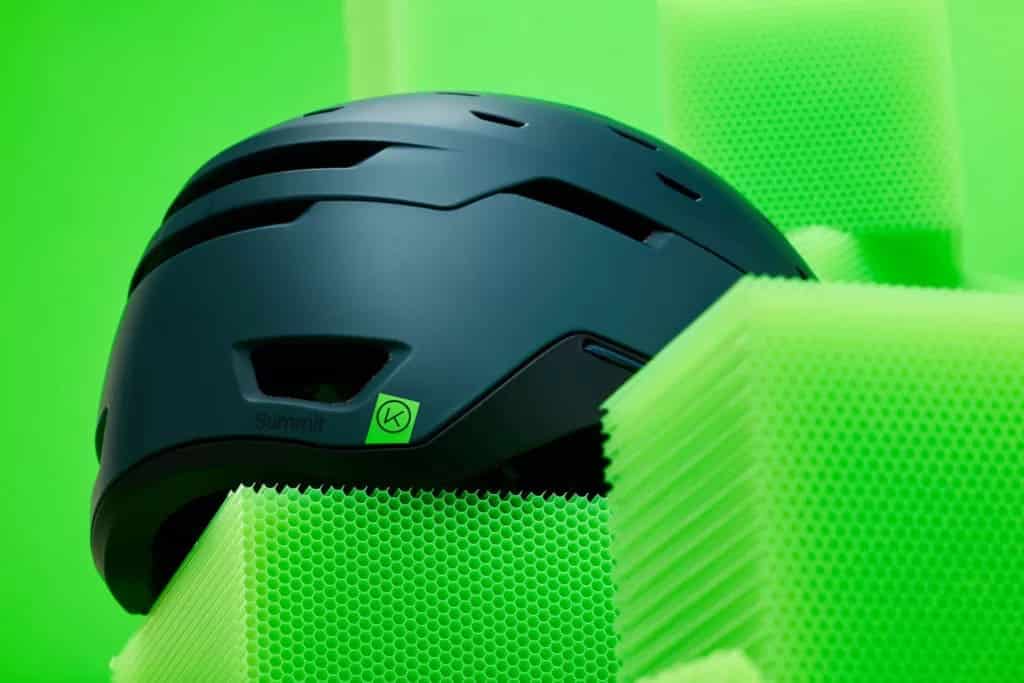
Whether it offers better protection than a conventional EPS helmet is harder to establish without looking at independent test results.
There’s also MIPS, a low-friction layer designed to reduce rotational motion transferred to the head during certain angled impacts. The hybrid shell combines a more durable hard-shell construction with lighter in-mould sections, balancing weight and durability.
None of this technology is unique to the Nexus, but having it all together, particularly the full KOROYD coverage, is a big part of what you’re paying for.
5. The Downsides
The price is the obvious one. There’s no getting around it. The Nexus is seriously expensive, and while I think it’s an excellent helmet, I’m not convinced the improvements justify the extra money for everyone.
It’s also pretty bulky. My other half took one look at me wearing it and said it made my already oversized head look even bigger. Apparently, I looked like Megamind. Not exactly the look I was going for.
To be fair, I don’t particularly mind the shape, but if you prefer a low-profile helmet, the Nexus probably isn’t going to win you over.
And realistically, not everyone needs this level of protection. If you’re a casual rider or stick to mellow groomers, something like the Vantage 2 will get you most of the way there for less money.
6. Pros & Cons
What I Liked
- ✓ Comfortable BOA fit, even after hours of riding
- ✓ Adjustable vents make a noticeable difference
- ✓ Full KOROYD coverage alongside MIPS
- ✓ Fidlock buckle is easy to use with gloves
- ✓ Good integration with Smith goggles
What I Didn't
- − Eye-wateringly expensive
- − Bulky shape won't appeal to everyone
- − Hard to justify over cheaper helmets like the Vantage 2
How I Tested the Smith Nexus
I tested the Smith Nexus over two consecutive weeks of riding, taking it through everything from groomers and park laps to powder and the halfpipe. I also wore it on a local hike to build and ride a backcountry kicker, which was a good opportunity to see how the ventilation handled more strenuous activity.
I’ve been snowboarding for over 15 years and am a certified snowboard instructor, so I’ve got plenty of other helmets to compare it against.
I’ll keep riding in it throughout the season and update this review if anything changes!
Who The Smith Nexus Helmet Is For
If you ride a lot, spend long days on the mountain and appreciate good equipment, the Nexus makes a lot of sense. The comfort, ventilation and fit are genuinely excellent, and I can see why someone would happily pay extra for them.
If you’re only getting out for a week or two each season, though, I’d struggle to recommend spending this much. The Vantage 2 offers many of the same features for less money, and there are plenty of other good helmets that cost considerably less.

For me, the Nexus is the best helmet I’ve worn to date. Not because I can prove it’s safer than everything else, but because of how comfortable and easy it is to live with. Once it’s on my head, I barely think about it.
(Whether that’s worth the asking price is another matter).
Alternatives Worth Considering
If the Nexus is more than you want to spend, the Smith Vantage 2 MIPS would be my first alternative. It also has MIPS and KOROYD, along with adjustable ventilation and a BOA fit system. It’s lighter and has a less bulky profile than the Nexus, and I suspect most riders would be perfectly happy with it. Unless you’re particularly keen on the Nexus’s full KOROYD coverage and construction, the Vantage 2 is probably the better buy.
At the cheaper end, the OutdoorMaster Diamond II MIPS is worth a look. It doesn’t have quite the same premium finish or fit adjustments as the Smith helmets, but it’s a much more affordable way to get a MIPS-equipped helmet. If you’re working to a tighter budget, I’d have no problem recommending it as an option worth considering.
You can also get an extra 20% off the OutdoorMaster with code CHASERS20.
Final Thoughts
You don’t buy the Nexus because it’s good value. You buy it because you want one of the most fully featured helmets Smith makes, and you’re happy to pay for it.
I’ve really enjoyed riding in mine. The fit is excellent, the ventilation works brilliantly and it’s comfortable enough that I barely notice it after a few hours. It’s genuinely the best helmet I’ve worn to date, even if my other half thinks I look like Megamind.
But would I recommend everyone rush out and buy one? Absolutely not.
The Vantage 2 is still an excellent helmet and probably the more sensible purchase for most people. You’re getting many of the features that make the Nexus so good, without spending quite so much.
If money isn’t a major concern, I’d happily recommend the Nexus. Just don’t assume that spending more automatically means you’re getting a safer helmet.

Smith Nexus MIPS Helmet FAQs
Is the Smith Nexus worth the money?
If you spend a lot of time on the mountain and really value comfort, ventilation and fit, I think it can be. It's the best helmet I've worn, but the Vantage 2 offers much of what I like about it for less money. I wouldn't stretch your budget just to buy the Nexus.
How does the Nexus compare to the Vantage 2?
Both have MIPS, KOROYD and adjustable ventilation. The Nexus adds full KOROYD coverage and a more substantial construction, while the Vantage 2 is lighter and less bulky. I prefer the Nexus for comfort, but I think the Vantage 2 is better value for most riders.
Does the Nexus work with non-Smith goggles?
Yes, although the AirEvac ventilation system is designed to work particularly well with Smith goggles. Other brands can fit too, but I'd check the combination before buying. You want the goggles to sit comfortably against the helmet without a large forehead gap or pressure on your nose.
What size Smith Nexus should I buy?
Measure the circumference of your head and compare it with Smith's size chart. The BOA 360 system gives you plenty of adjustment, but it can't compensate for the wrong shell size. The helmet should sit securely without pressure points or excessive movement. If you're between sizes, try both rather than automatically sizing up.
When should I replace my Smith Nexus?
Replace it after a significant impact, even if you can't see any damage. Impact-absorbing materials can be compromised without obvious external signs. Otherwise, follow Smith's replacement guidance and inspect the helmet regularly for damage, deterioration or problems with the fit system.
