
Snowboard length on its own doesn’t mean much anymore.
A 156 can feel perfect. Another 156 can feel like a plank. If you’ve experienced this, you’re not losing your mind. Board shape is doing most of the talking now.
If you ignore shape, you can end up on a board that technically fits you but feels wrong every time you ride it. Here’s how to avoid that.
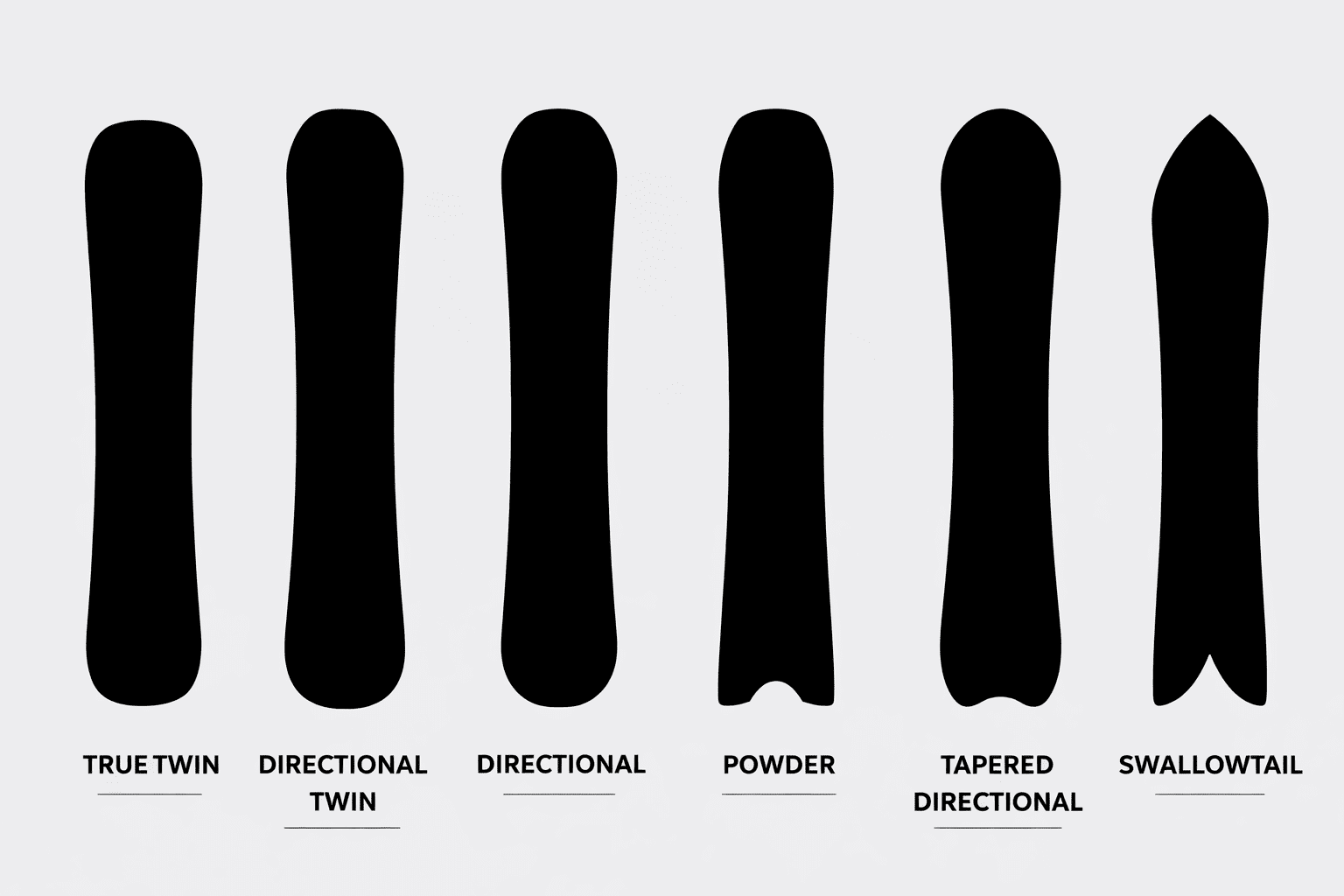
Start with "normal" boards
A regular twin or directional twin still plays by the old rules. You can size it mainly by weight (using our snowboard size chart). Height barely matters. Style and ability nudges you around inside the recommended range.
If this is the kind of board you ride, congrats. Life is easy.
Directional boards
Directional boards (longer nose than tail) feel more planted because of nose length, taper and setback. That’s built in. You don’t need to chase extra length to feel stable.
I see people size up on these all the time and then wonder why the board feels slow edge to edge. Don’t do that.
If you’re in the right weight range, trust the shape to do its job. If you’re still unsure, our calculator will tell you.
Volume Shifted Boards
Volume shifted boards are the ones that catch most people out.
These boards are wider and shorter by design. The idea is to maintain surface area while reducing length. They float well, feel stable underfoot and turn quickly, but they do not need to be ridden long.
If you size one of these like a traditional directional board, it usually feels like too much snowboard. Heavy. Slow. Awkward. These shapes almost always ride best when you trust the concept and go noticeably shorter (usually 6-10cm shorter than normal).
For example, I hated the Ride Warpig when I inadvertently rode it in my normal size. 2 seasons later I correctly “sized down” and freaking loved it.
Asymmetrical
Asymmetrical boards are shaped differently on the heel side and toe side.
This does not usually change length choice much, but it can change how a board feels edge to edge. Many riders find them quicker and easier to control, which can make a board feel more manageable even when the length stays the same.
Final Thoughts
I didn’t plan on writing a bunch of sizing articles, but I keep seeing the same mistakes over and over. People end up on boards that feel crappy, not because they’re bad riders, but because someone ignored shape and gave them the wrong size.
Board shape doesn’t replace a solid size chart, but it absolutely changes how a board rides inside that range. Get the weight right first, then let the shape nudge you toward what actually makes sense. Read the brand description carefully too, they’ll normally tell you if you need to size down.
If this saves you a season of fighting your board, good. That’s the whole point.

