
Chamonix has a reputation.
Even if you’ve never been here, you’ve probably heard the same stuff. Extreme. Intimidating. Not for beginners. Big mountains, serious terrain, people who know exactly what they’re doing.
I’m here right now. Boots by the door, board drying, legs a bit cooked. And honestly, the reputation isn’t wrong… but it’s also not that simple.
If you’re a beginner or early intermediate, Chamonix doesn’t really ease you in. It doesn’t hold your hand. It kind of drops you into the deep end and assumes you’ll work it out. Some days that feels exciting. Other days it’s just tiring (though with views like this, I shouldn’t complain).
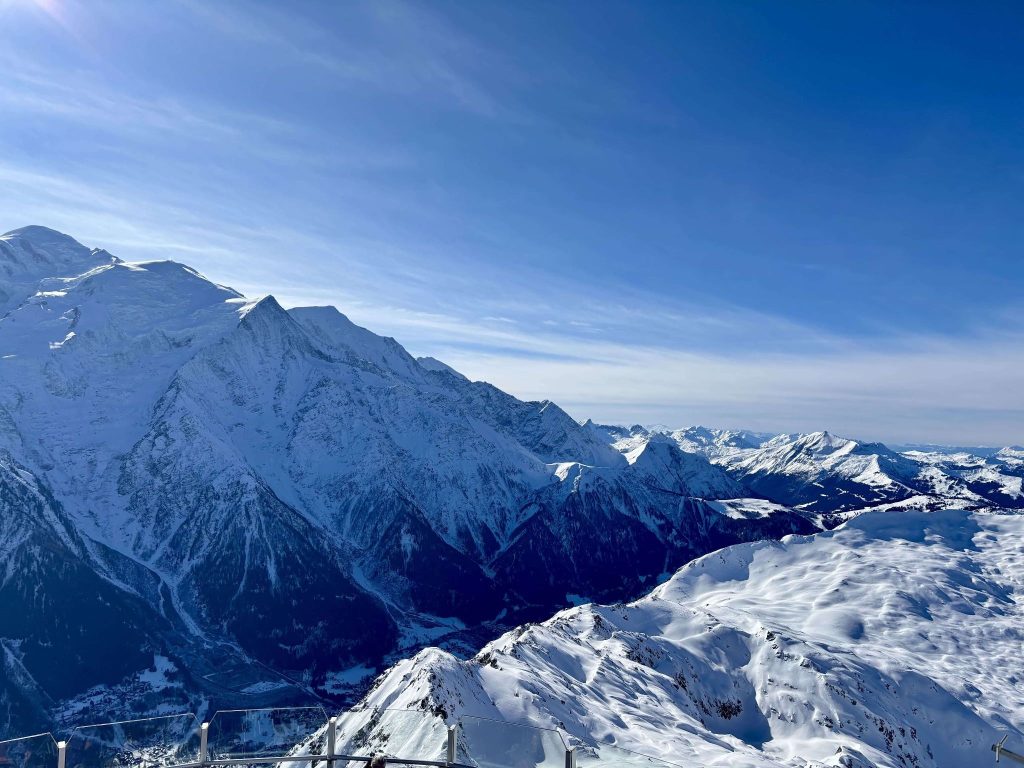
What’s surprised me most isn’t the difficulty of the riding, it’s how much of the challenge has nothing to do with turning a snowboard. Long lifts. Big distances. Weather closing things down. Blues that feel fine one minute and a bit spicy the next. Days where you spend more time moving around the valley than actually riding.
So no, Chamonix isn’t beginner-friendly in the usual sense. But it’s also not this forbidden place that beginners have no business being in. It just helps a lot if you know what you’re walking into.
These are just my thoughts from being here now, riding around, watching people learn and seeing where expectations don’t quite match reality. No scare stories. Just how it feels on the ground.
The short version
Chamonix isn’t beginner-friendly in the usual, easygoing sense, but it’s not a terrible choice either. The riding itself can be manageable, but the scale, logistics, long runs and changing conditions catch a lot of beginners out. If you’re comfortable repeating terrain, dealing with buses and adjusting plans day by day, it can be an amazing experience. If you need everything to be simple and predictable, there are easier places to start.
1. Defining Stuff
When I say “beginner” here, I don’t necessarily just mean first day ever, falling over and wrestling with rental gear.
I also mean people who can link turns on greens and blues, can control speed, but still get tired, tense, or overwhelmed when things get steep, busy or just unfamiliar. Early intermediates fit into this too. Basically anyone who still has to think about what they’re doing rather than just letting it happen.
This is also about piste riding. Not off piste. Not the Aiguille du Midi. Not anything that ends in a rope, a harness, or a mountain rescue. I’ve done that side of Chamonix before. This trip is different. This time I’m here with a few beginners in the group and that changes how the whole place feels.
2. The thing people get wrong about Chamonix
The biggest mistake people make is thinking Chamonix is a single ski resort.
It isn’t.
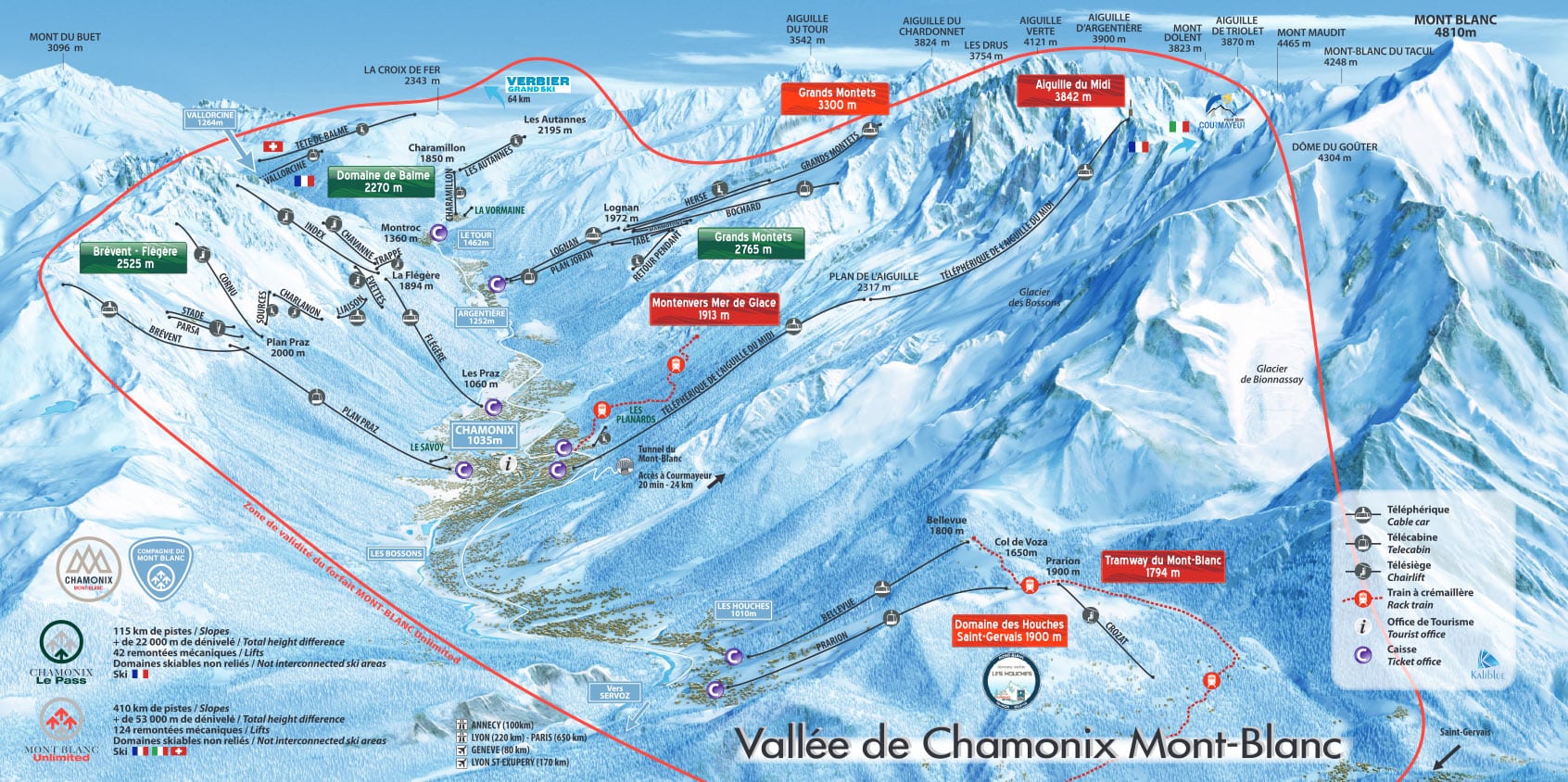
It’s a long valley with a bunch of separate ski areas dotted along it (Brévent–Flégère, Grands Montets, Les Houches, Le Tour, and a few smaller beginner zones in town). You don’t just click into skis or a board at your hotel and cruise around. You plan. You move. You get buses. You get lifts. You deal with weather shutting one area while another is fine.
That matters a lot more when you’re a beginner.
Some mornings you’re up early, gearing up, heading out, only to find a lift closed because of wind. Or the snowline is higher than expected. Or visibility is trash up high but decent lower down. When you’re advanced, you shrug and adapt. When you’re newer, that kind of uncertainty can be stressful.
It’s also worth saying that skiing or riding all the way back down into town really isn’t a thing anymore.
Years ago, in good conditions, you could sometimes ride lower. Now, pretty much every day, you’re taking a gondola or cable car back down. That’s just how it is. It’s not a problem, but if you’re expecting classic ski-in ski-out vibes, you’ll be disappointed.
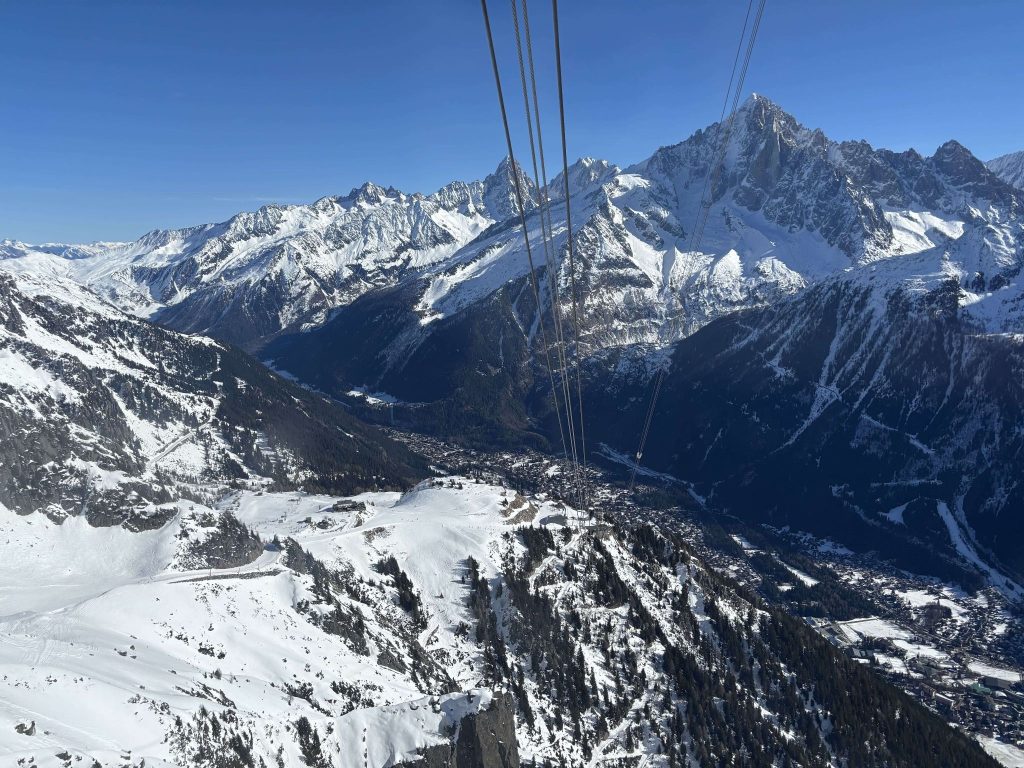
As you can see, snow cover gets pretty dicey nearer the town, and I’m writing this in mid-February. There are a couple of small lifts right in town, like the Savoy and Planards areas, which are actually great for beginners. Short runs, mellow terrain, no pressure. But they’re more like learning zones than part of a big interconnected resort day.
The rest of the time, you’re bussing it.
The good news though. Brévent-Flégère – often the sunniest aspect of the valley – is accessible from everywhere in town within a few minutes bus (or walk if you’re near PlanPraz lift or Flegere).
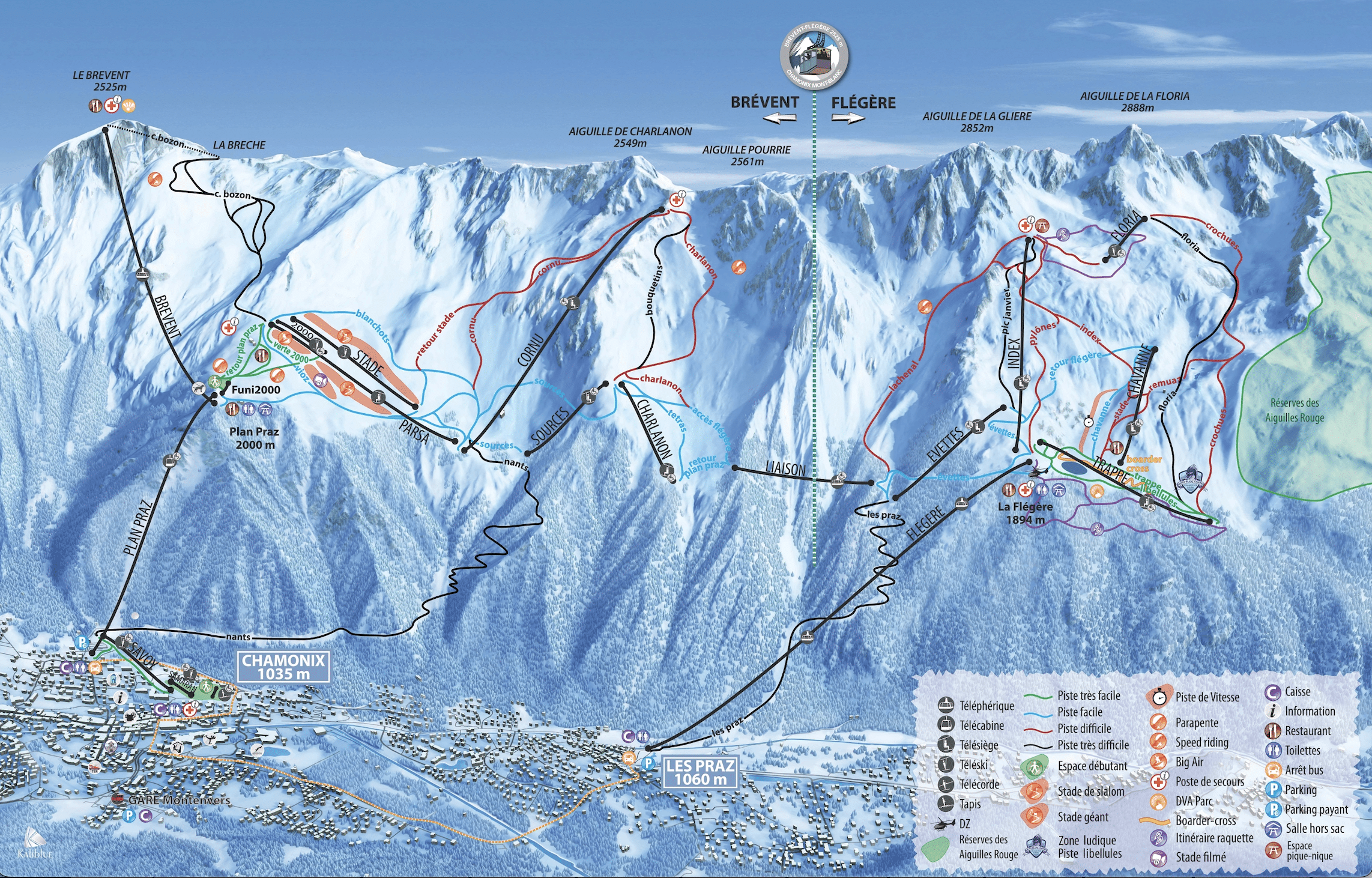
This gives you two distinct beginner and intermediate zones. If you’re comfortable on blue runs, you have the choice to cross the valley via the Maison cable car and dabble in both. If you’re not there yet, lapable green runs are available directly from either cable car.
For the most part, the blues aren’t crazy steep. The ones leading to the bottom of the Parsa lift (pictured below) are probably the safest bet if you’re just stepping up from the greens.
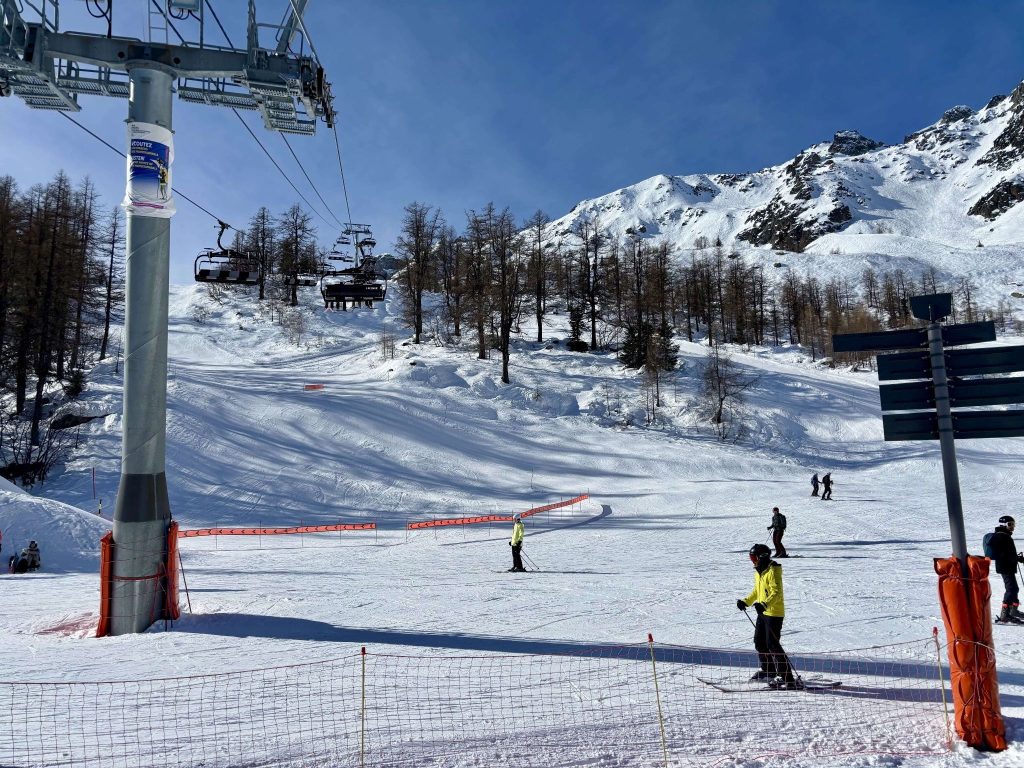
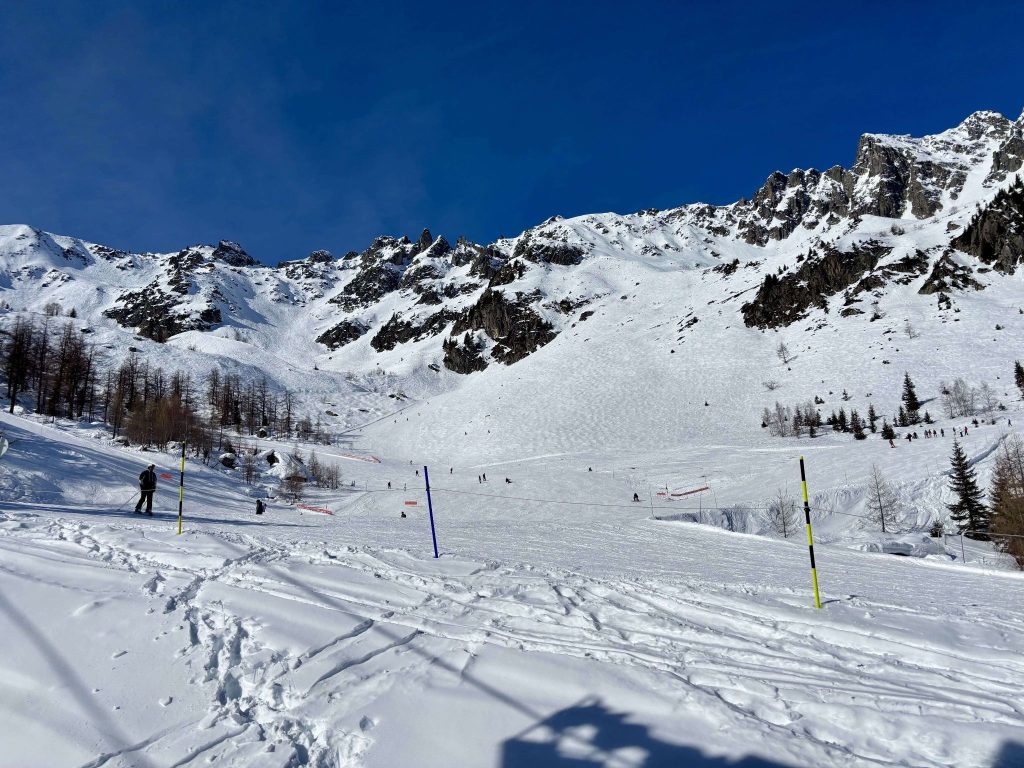
There are some really good beginners areas in Les Houches and Le Tour (Balme). From the main town though, these take either 20mins or 35 mins respectively. That’s a pain in the neck for most families – unless you choose to stay nearer those specifically.
3. What it actually feels like for a beginner
On snow, Chamonix can feel amazing one moment and oddly hard the next.
The runs are long. Properly long. Which sounds great until you realise that means a lot of sustained riding without many natural breaks. If your legs aren’t used to it, fatigue creeps in fast and once that happens, confidence tends to go with it.
Snow conditions can change a lot too. One section might be beautifully groomed and friendly, then you drop into shade, or hit scraped-off snow, or a busier choke point, and suddenly people tense up. I’ve seen that exact switch happen in real time this week.
Visibility days hit differently here as well. When the mountains are this big, flat light can feel genuinely disorienting if you’re still learning. Even people who are fine elsewhere suddenly look unsure of themselves.
None of this is necessarily dangerous on piste (if you manage it accordingly), but it’s mentally tiring. And beginners feel that more than anything.
One thing I didn’t expect, even knowing Chamonix fairly well, was how much time beginners spend just navigating the mountain rather than riding it. Figuring out where you are. Which lift goes where. Whether this run stays mellow or suddenly ramps up. That cognitive load adds up.
4. Terrain Stuff
Here’s the honest terrain situation (without pretending I’ve memorised every run name).
There is good beginner terrain in Chamonix. But it’s not always obvious and it’s often isolated. You can’t just wander around and expect everything to stay friendly.
Some blues feel exactly like blues. Others feel like reds, especially when they’re busy or firm. There are also sections where there’s only one way down and if that one way is steeper than someone’s comfort zone, you’d get stuck pretty quickly.
Snowboarders need to know about the flats. There are traverses and long run-outs where carrying speed matters. If you’re newer and still cautious about pointing it, those sections can be frustrating and exhausting. I’ve watched people unstrap more than once where they weren’t expecting to.
The upside is that when beginners finish a run here, they really feel like they’ve earned it. There’s a sense of scale that you don’t get in smaller resorts. The downside is that there’s less of that casual “just lap this lift all day” feeling unless you deliberately choose areas like Savoy or Planards.
Another plus if you’re coming as a family with varied skill levels, Chamonix will easily keep everyone occupied. I won’t go too far into it in this article – but there’s plenty of expert terrain.
5. Positive stuff
Off the snow, the town itself helps a lot. You’re not stuck eating soggy fries on a mountain every day. There’s proper food and it’s easy to dip out for a break. Tanpopo has already been a hit with our group. Really good Ramen considering we’re deep in the French mountains!
And yes, there’s even a McDonald’s right in town, which I really don’t love in principle. But when someone’s cold, tired and just wants something familiar, it’s useful. Made a useful bribe for the two kids in our group when the weather was shocking and we needed to get back.
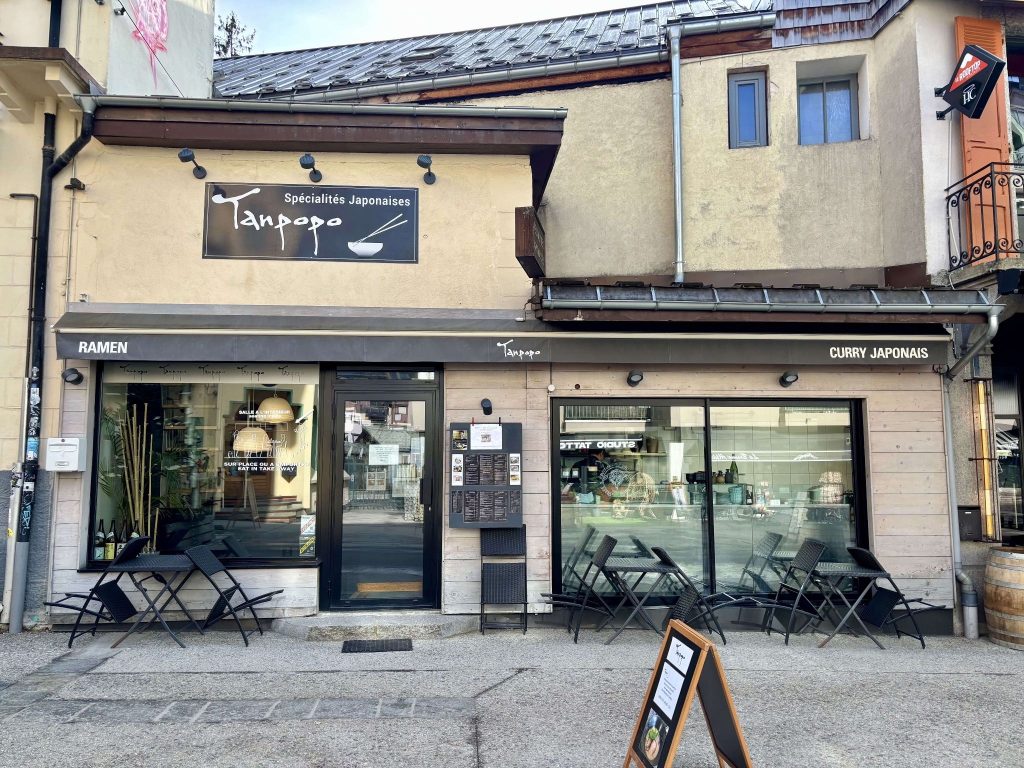
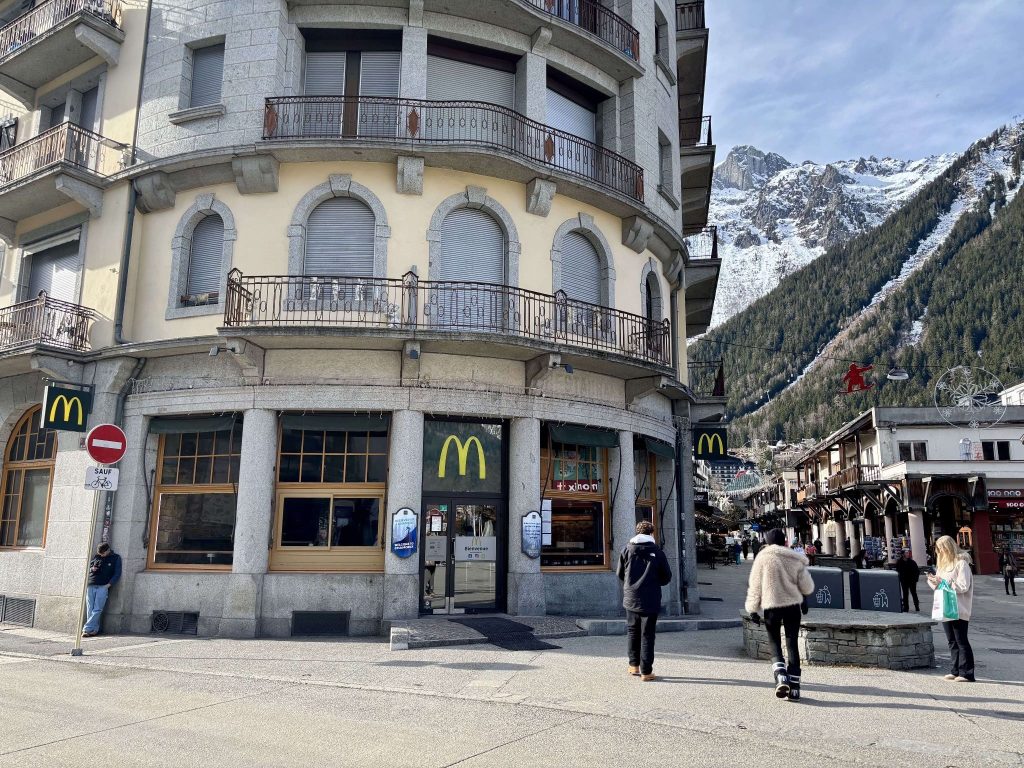
The town itself has way more going on than the smaller ski resorts too. Plenty to do if you want to walk around, check out the shops, try different foods and snacks. As a beginner, you could totally choose to ride in the mornings and spend the afternoon relaxing around the town. It’s also still got some of that “French alps town” charm, despite being on the larger side.
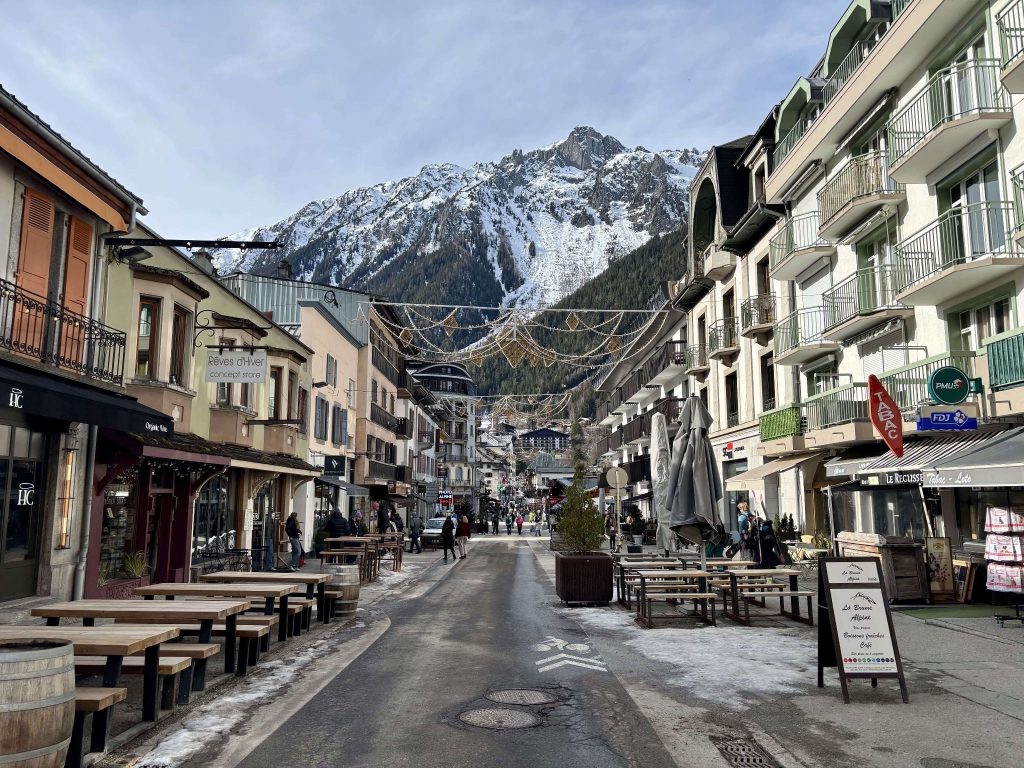
The bus system is also better than people expect. It’s frequent, free with a pass and pretty easy to figure out after a day or two. But again, it’s another layer of logistics that beginners don’t always factor in when they picture a ski holiday. So bear that in mind.
6. Snowboard-specific Stuff
Chamonix is a ski town first. That’s not a criticism, it’s just reality.
There are some fairly long flat sections. There are traverses and long run-outs where skiers glide through and snowboarders suddenly realise they needed more speed five seconds ago. If you’re still cautious about pointing it or you scrub speed automatically, you’ll notice this quickly.
I’ve watched a few beginners get stuck thinking they’d messed up somehow, when really it’s just the layout. Carrying speed here isn’t about charging. It’s about not bleeding it off unnecessarily. That’s a learned skill, and it takes time. Not the end of the world – we’ve all hiked out of flats whilst progressing. Don’t ride faster than you should just to avoid a short walk!
7. Logistical Stuff
Early starts help. Not because you need first tracks, but because everything feels calmer before lifts get busy and snow gets scraped. Beginners do better when the mountain feels quieter and less rushed.
Weather changes plans. A lot. Wind can shut lifts. Cloud can wipe out visibility up high while lower areas are perfectly rideable. If you expect to adapt, it’s much easier to enjoy.
Getting between areas takes time. Buses are regular and easy once you get the hang of them, but they still add friction. You don’t just pop over to another lift on a whim. For beginners, that means more time standing around in boots and less time riding, which matters when energy is limited.
Food and breaks matter more than people admit. This isn’t the place to push through a miserable afternoon just because you paid for the day. Taking a proper break, warming up, eating something real, then heading back out makes a huge difference to how people feel about the whole experience.
HEADS UP:
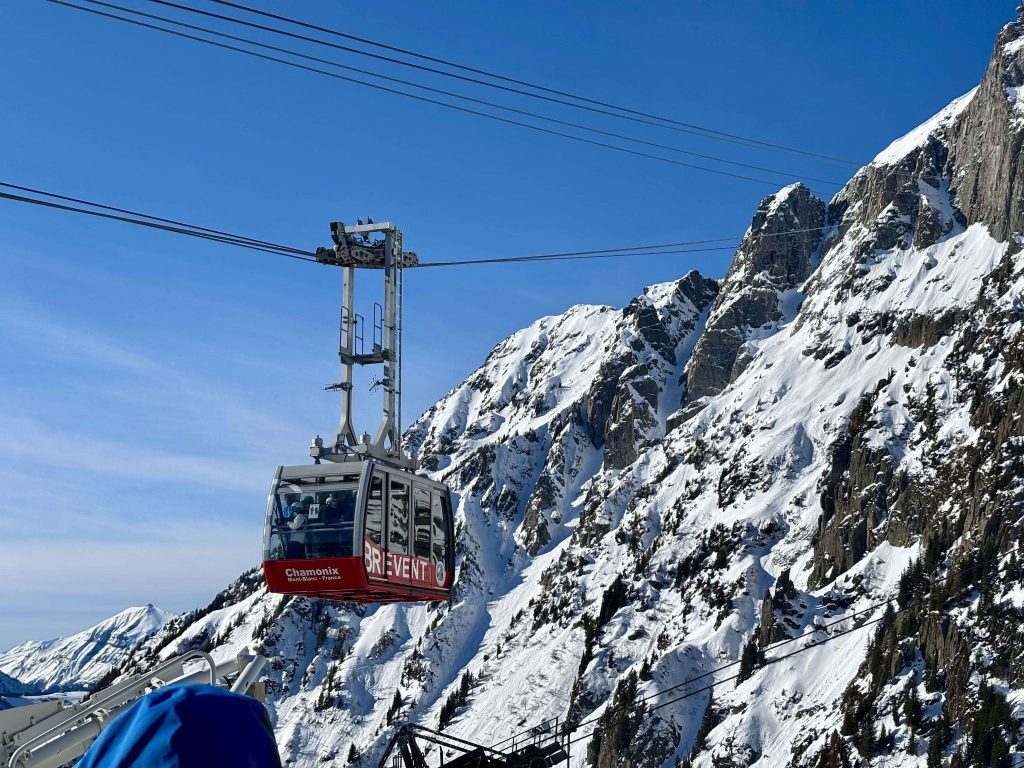
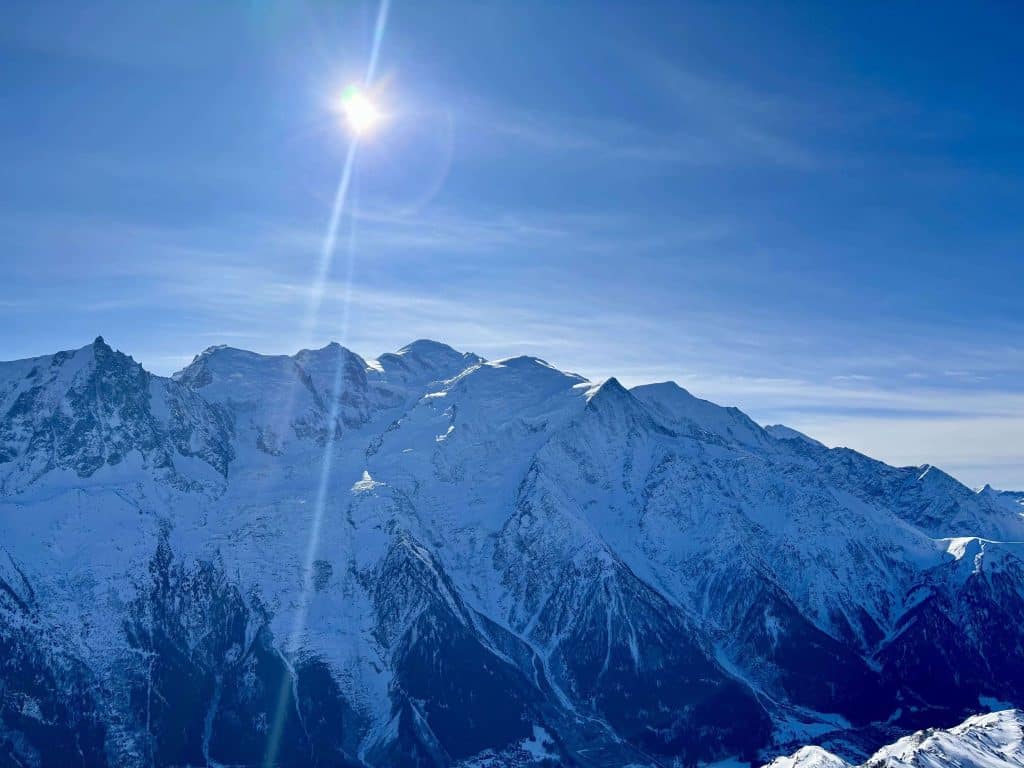
The views from the Brevent cable car are unreal. There’s also a cool little restaurant up there with full panoramics. But beginners should not attempt to ski or snowboard down from the top. Seriously. The only options are black runs, and they’re pretty gnarly in the wrong weather. Just hop on the same lift back down – it’ll drop you off at the green/blue section.
8. How to make Chamonix work as a beginner
If I was bringing beginners here again, this is how I’d approach it.
Pick one area for the day and stick with it (probably Brevent around the Funi2000) . Don’t try to see everything. Familiarity builds confidence fast, especially when people stop worrying about where they’re going next.
Repeat runs. There’s no prize for exploring every piste. Riding the same mellow run a few times lets beginners relax and actually enjoy themselves instead of constantly reacting to new terrain.
Stay on terrain where people are relaxed, not surviving. That sounds obvious, but it’s easy to push just a bit too far here because everything feels big and impressive. Backing it off a notch usually leads to better riding and better moods.
Leave while things still feel good. Long days and big vertical are tempting, but once fatigue hits, it’s rarely worth pushing through. Ending the day with a smile matters more than squeezing out one extra run.
9. Who should come (and who shouldn't)
Chamonix can be a great trip for beginners who are comfortable being out of their comfort zone a bit. People who are curious, patient and happy to repeat terrain rather than chase status tend to enjoy it most.
It’s a good fit for riders who like big scenery, proper mountains and the feeling of being somewhere special, even if they’re not riding the gnarliest stuff.
It’s probably not the best choice for true first-timers, or for anyone who needs everything to be simple, connected and predictable. If buses, long lifts, and changing plans stress you out, there are easier places to build confidence.
Waiting a season or two doesn’t mean Chamonix goes anywhere. It’ll still be here.
If what you actually want is something more contained and predictable, there are places that make life easier as a beginner. Resorts like Les Deux Alpes or Morzine have a more traditional, linked layout and a higher proportion of terrain where you can just lap the same lifts without thinking too hard. They don’t have the same scale or drama as Chamonix, but that can be a good thing when building confidence.
10. Final thoughts
Chamonix isn’t beginner-friendly in the soft, reassuring way some resorts are. It doesn’t smooth over the rough edges or hide the scale of the mountains.
But that’s also part of what makes it memorable.
If you come here as a beginner expecting to cruise effortlessly all day, you’ll probably be disappointed. If you come expecting a bit of challenge, a bit of chaos and moments where you stop and just look around at the epic landscapes, you’ll likely have a great time.
Just don’t come to prove anything. Come to experience it.
That mindset makes all the difference here.
Anyway, I’d better head back to the bar (the gruelling life of a snowboard instructor).
Have a great trip!

