
I’ve been wearing Volcom outerwear on and off for the better part of a decade. Pants, shells, midlayers. Solid stuff, but I’d never spent real time in their top-end jacket. The TDS Infrared GORE-TEX jacket (try saying that after a few drinks) has always been their flagship piece, and I’d mostly ignored it in favour of simpler shells.
This season I finally put one into regular rotation. Same riding, same conditions, same long days on hill. I spent several weeks riding in it before forming an opinion.

Summary: Volcom TDS Infrared GORE-TEX Jacket
I loved this jacket. It’s light, comfortable and warm without feeling bulky. The insulation is subtle but effective, the shell blocks weather properly and details like Zip Tech and "Face Tech" actually work. It’s expensive, no getting around that, but after riding it properly, I get why Volcom treats this as their flagship.
- Lightweight and easy to ride in
- Smart, non-bulky insulation
- Excellent weather protection
- Zip Tech actually works
- Extremely breathable
- Unrestrictive and looks great
- Price is high
- Not for riders who want heavy insulation
- Possibly overkill for casual resort days
About The Volcom TDS
The Volcom TDS Infrared GORE-TEX jacket is their top-end insulated snowboard jacket. It combines a GORE-TEX shell with targeted insulation rather than full fill throughout, which is why it sits between a traditional insulated jacket and a shell.
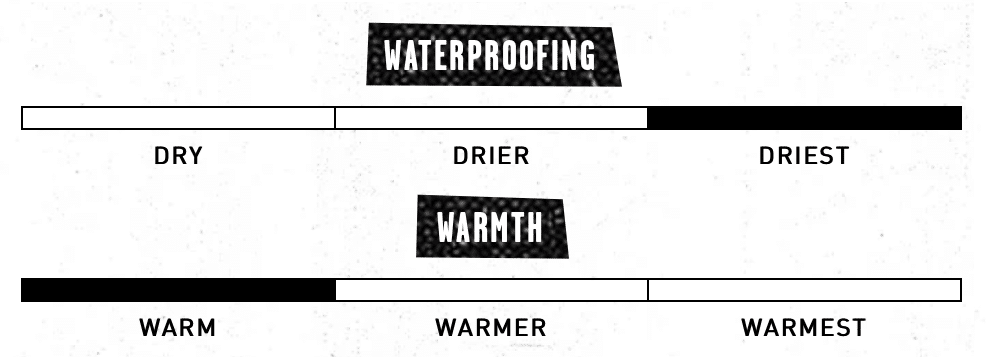
The insulation is placed where it’s supposedly most useful, with a heat-reflective lining designed to retain warmth (which I presume is the “Infrared” element). This allows the jacket to stay relatively light and flexible while still providing insulation. Volcom call this their “Thermal Defense System”, hence the “TDS” part of the jacket name.
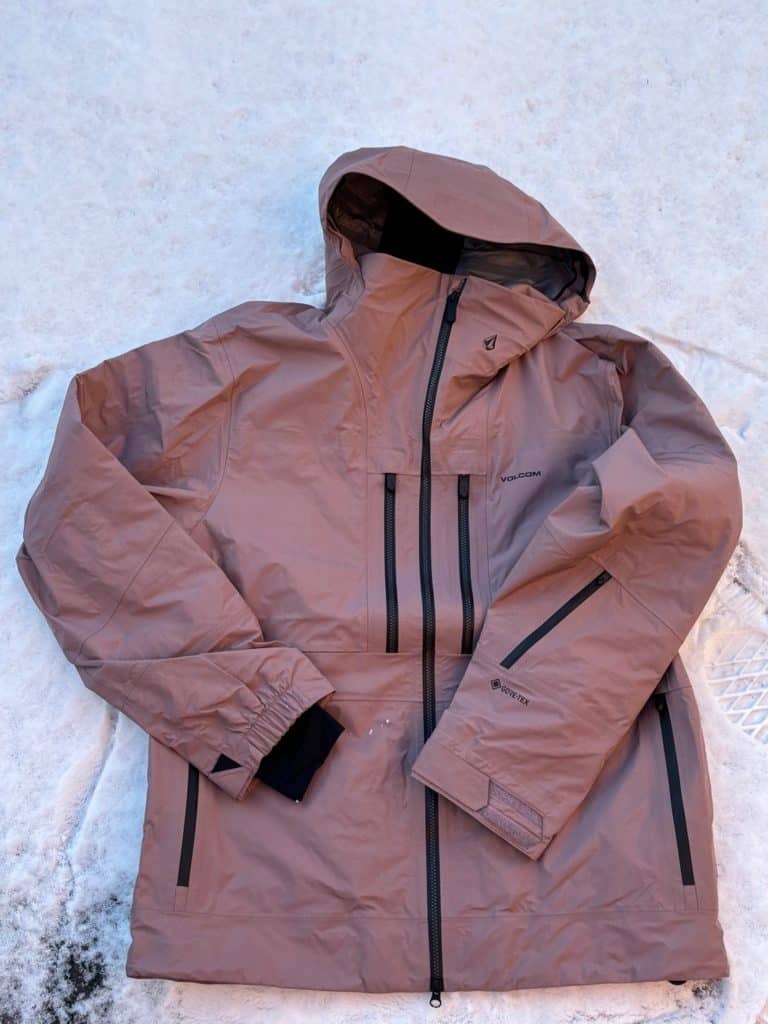
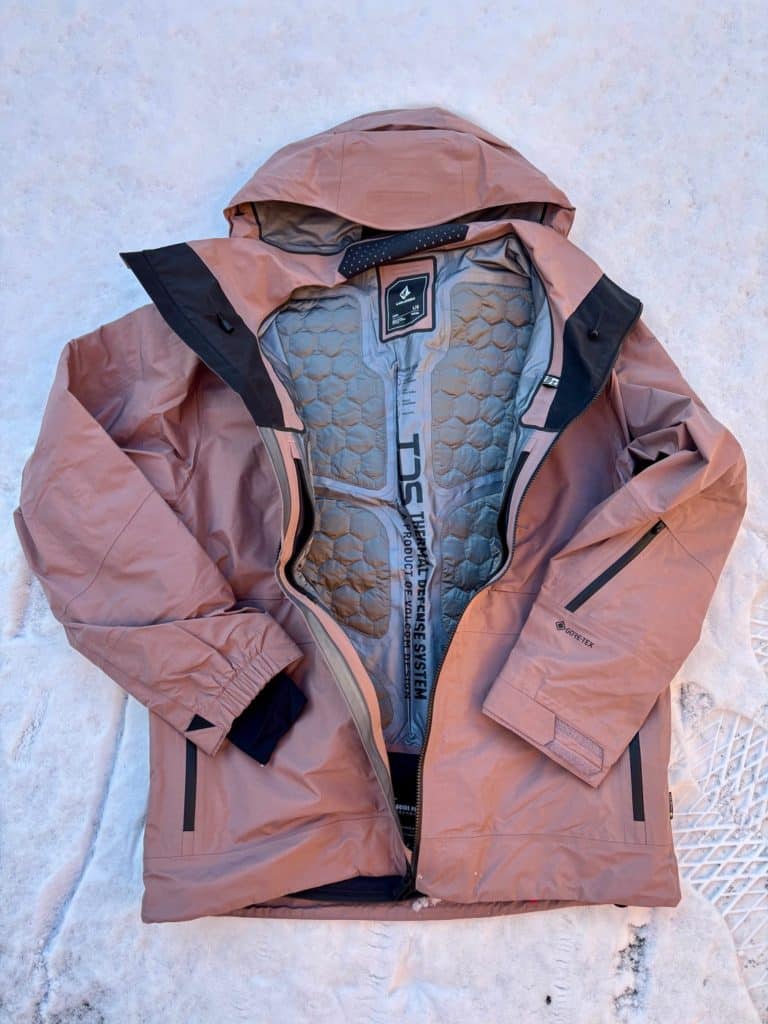
The outer shell is a recycled 3-layer GORE-TEX with fully taped seams. Meshed venting is included for temperature control. The cut is relaxed enough to allow layering without feeling restrictive.
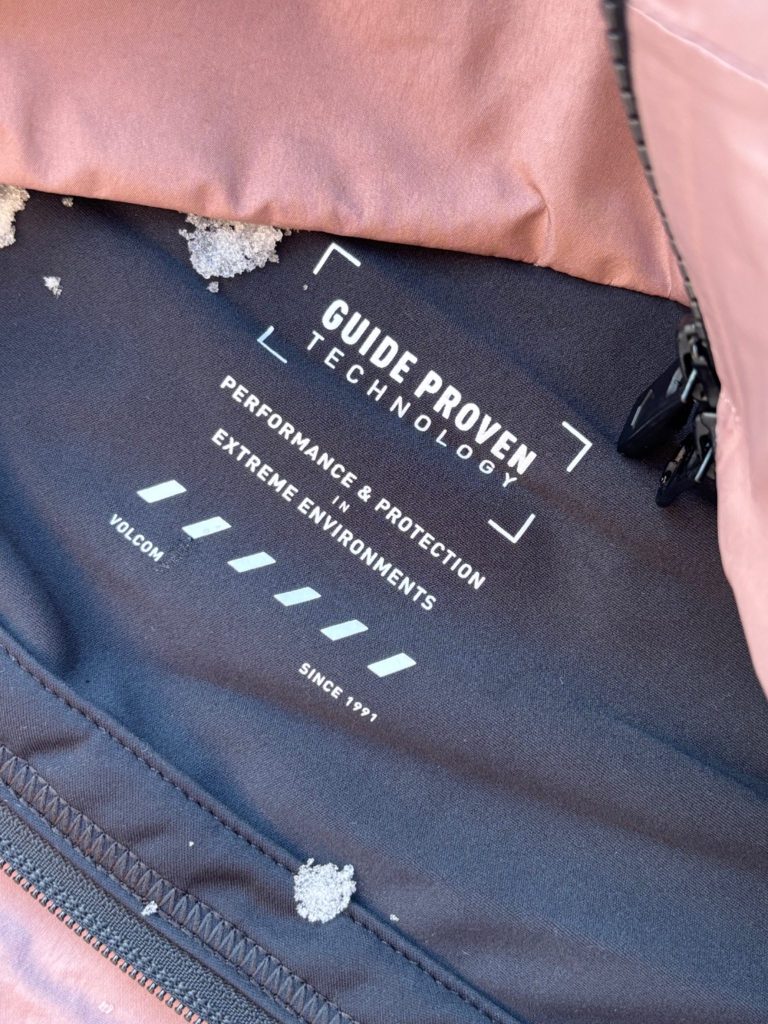
Volcom also integrates a ton of tech. I won’t bore you with the full list, but I’ve always liked Zip Tech – connects the jacket to compatible Volcom pants which reduces snow and wind entry. Also liked the built-in Face Tech mask which is stored in the hood when not in use. RECCO is included for search and rescue situations (though you should still wear a beacon).
Full Review
I rode this jacket the same way I ride everything else. Long resort days, instructing, standing around on cold lifts, getting blasted by wind on ridges, and dealing with that mix of moving and not moving that makes outerwear either shine or annoy you.
Most days it was paired with a Volcom Rain GORE-TEX bib (review coming soon). Some days I layered underneath, some days I didn’t. I wasn’t trying to over-analyse it necessarily. I just grabbed it and rode. I think that gives a better review than sitting staring at the details.
1. Fit and Feel
Fit-wise, it’s relaxed without being massive. I had room to move, room to layer and never felt like I was swimming in fabric.
It doesn’t ride short or boxy, and it doesn’t bunch up when you’re bending, reaching or just standing around awkwardly in a lift queue. Even if it did, the Zip Tech prevents you from flashing the crowd anyway.
What surprised me was how normal it feels once you’re riding. Even though there’s insulation in there, it doesn’t feel padded or stiff. No resistance in the shoulders, no weird bulk around the chest. It rides closer to a shell than other insulated jackets I’ve owned (sort of like a lighter version of the old 686 Hydra).
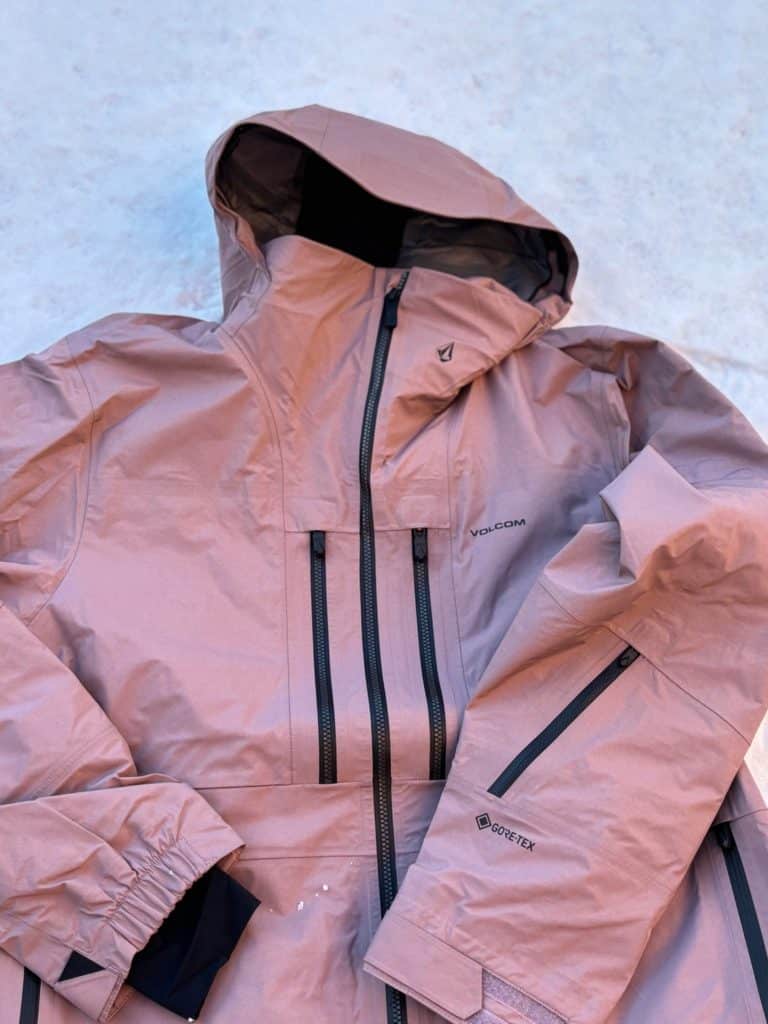
I never had that claustrophobic feeling of fighting the jacket, which is usually the first thing that sends me back to a shell setup.
Note: I wear a large in most brands and went for the same here – I’d say it’s true to size, erring on the slightly roomier end.
2. Warmth and Layering
This isn’t a jacket that feels super warm the moment you put it on indoors. If that’s what you want, you’ll probably find it underwhelming.
The insulation does its job quietly. It takes the bite out of cold days without making you feel wrapped up or sweaty. I could run a light midlayer underneath on colder days and be comfortable. On milder days, I was fine without adding anything.
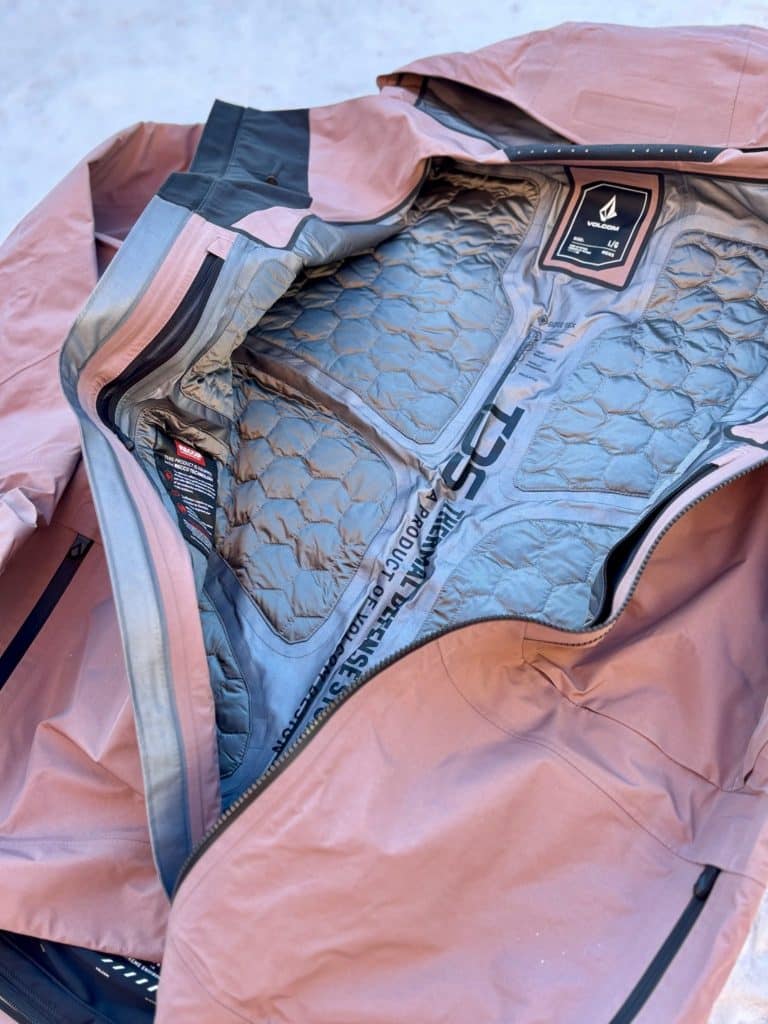

It’s not a full insulated jacket, and that’s the point. If you want maximum warmth with zero thought, this probably isn’t it. If you want something that stays comfortable across a range of conditions without constant layering changes, it works really well.
Spring riding is doable, especially with the vents open, but if you run hot or ride park laps in the sun, a shell will still make more sense.
3. Performance and Breathability
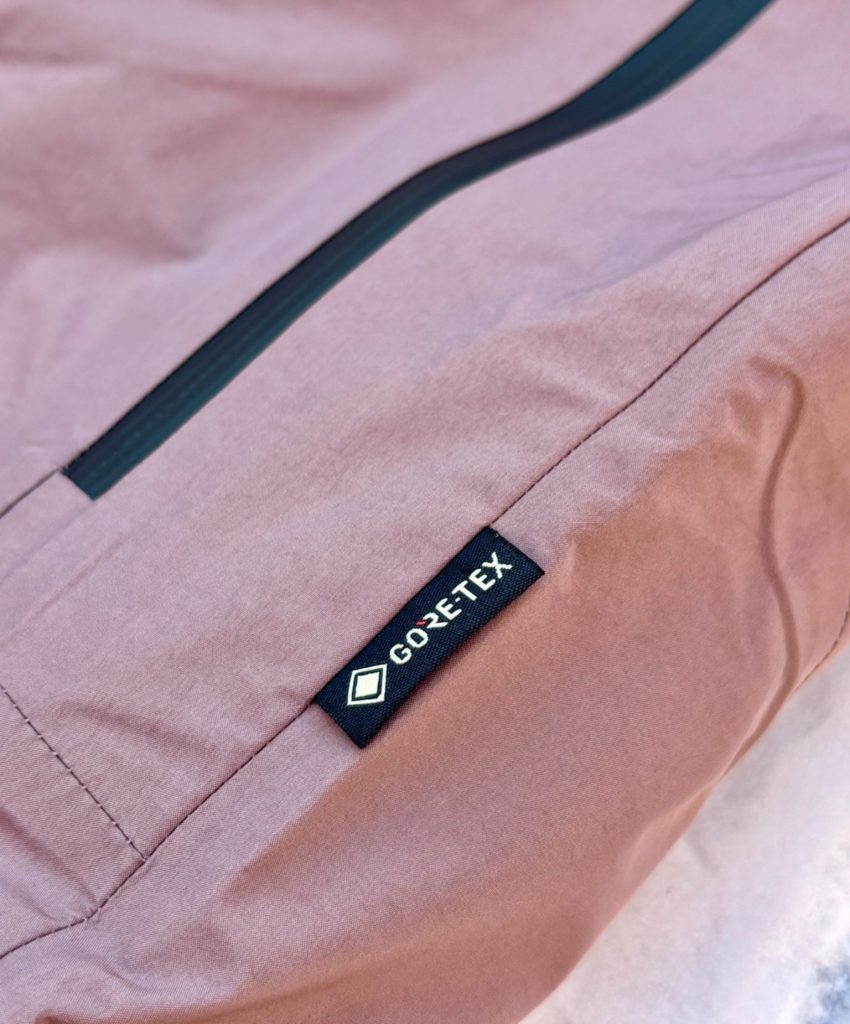
The shell is GORE-TEX, but it’s the softer C-KNIT version rather than the crinkly, stiff stuff. In plain terms, it feels quieter and doesn’t have that plastic raincoat feel some hard shells get.
In bad weather, it does exactly what you want. Wind stays out, snow doesn’t soak through, wet chairlift rides weren’t an issue. I never had a day where I was thinking about staying dry, which is kind of the point.

Breathability is far better than standard insulated jackets. As you can see, the sort of honeycomb insulation pattern has large gaps between it where it’s basically just shell. So sweat vapour can escape instead of circulating all day (gross). It feels like a shell with a bit of insulation sprinkled in.
4. Durability and Build
After a few weeks of riding, it still feels solid. No loose seams, no sketchy zips, no areas that feel like they’re going to be a problem later.
This doesn’t feel like a jacket you need to treat carefully. It feels like something you can ride hard, throw in the can and grab again the next day without worrying about it. Which is unfortunately the fate of all of my gear.
5. Pros & Cons
- ✔ Excellent warmth without bulk
- ✔ Light for an insulated jacket
- ✔ Premium GORE-TEX C-KNIT shell
- ✔ Packed with useful tech
- ✔Extremely solid build quality
- ✔ Comfortable for long, cold-ass days
- ✖ Expensive
- ✖ Not a fully insulated jacket
- ✖ Overkill for casual riding
Verdict
I still love this jacket.
It hits a balance that a lot of insulated jackets miss. Warm enough. Light enough that you forget about it. Protective without feeling stiff or restrictive. I never felt boxed in, overheated, or weighed down, which is usually why I abandon insulated jackets and go back to shells.
Yes, it’s expensive. But after riding it properly, the price made sense. You’re paying for a jacket that works across a wide range of conditions without needing constant adjustment.
If Volcom stopped making this tomorrow, I’d be annoyed.
Alternatives
Burton AK is the obvious comparison in terms of price and tech. I’ve had pretty good experiences with them over the years.
I do find the fit a little boxy and some AK shells feel more like mountaineering gear than something you’ll want to wear all day at a resort. Depending on the model, they quite often skip features like wrist gaiters and lift pass pockets too. You may have noticed I awarded “best outerwear” to Volcom in this years snowboard clothing brands roundup.
If you’re looking for a shell, I’ve got my eye on the Volcom Guch Stretch GORE-TEX jacket. That’s a pure shell with stretch and the same design DNA, just without the insulation. On paper, it looks like the better choice if you run hot or prefer to control warmth entirely through layering. Different job, but very much on my radar.
If budget is tighter, something like the Volcom Longo makes more sense. You lose some refinement, but you still get a solid shell that rides well without paying top-end prices.
Final Thoughts
I won’t pretend the price doesn’t sting. It’s a lot of money for a jacket and most people don’t need something this dialled.
That said, if you’re a gear nerd like me, it makes sense. It’s light, comfortable, warm and works without needing constant fiddling. I stopped thinking about layers, stopped messing with vents and stopped getting annoyed by small stuff.
Could you spend less and still stay dry and warm? Obviously. But if you’ve got the money to burn and like high-end gear, go for it.

