
I’ve taught total beginners. I’ve taught intermediates who look great until the terrain gets spicy. I’ve coached people who are genuinely expert but still want to sharpen things.
The group that gets stuck most often isn’t beginners.
It’s decent skiers.
Because once you’re decent, you can get down most runs. You’re not crashing every five minutes. You’re not scared all the time. You’ve got enough skill to survive almost anything the mountain throws at you.
And that’s exactly why progress slows.
You stop getting obvious feedback. You stop being forced to change. You can ski a lot, feel busy all winter, and still be skiing basically the same way five seasons later.
This is how that happens. And how to break it.
The decent Trap
Decent usually looks like this:
You’re comfortable on blues and most reds if the snow’s friendly.
You can link turns, control speed, and get down without panicking.
You’ve got a style. It might even look smooth.
You’ve learned moves to handle the most difficult situations.
That last one is the trap.
Those moves aren’t always technique. They’re coping strategies that feel like technique because they (mostly) work.
Heavy skidded turns that feel safe but kill grip on firm snow.
Sitting just slightly in the backseat because it feels stable.
Turning when you’re ready, not when the terrain asks you to.
Avoiding the fall line and calling it “speed control.”
You can get away with these for a long time. Years, even.
Until you don’t.
The real reason progress slows
Easy. You stopped getting punished!
Beginners improve fast because the mountain is brutally honest with them. Fall. Catch an edge. Lose control. Stop. Try again. All day.
Once you’re decent, the mountain stops yelling.
You can ski almost everything with your current habits, so your brain decides everything’s fine. No need to change. No urgency. No pressure.
Skiing is ruthless that way. If you don’t need a new skill to get down, you won’t build it.

The Awkward Truth About Getting Better
A lot of people think they’re practicing because they ski a lot.
But skiing laps and practicing aren’t the same thing.
If you repeat the same movements every run, you’re just reinforcing what already works well enough. You’re not touching the parts that actually need to change.
That’s why you see skiers with hundreds of days who still ski exactly the same way year after year. Mileage without intent doesn’t create progress. It locks habits in.
To get different results, you need to do something diffierent…
Why Coaching Helps at This Stage
Once you’re decent, you’re terrible at diagnosing your own skiing.
Not because you’re clueless. Because everything feels normal to you. Your whole system is built around your habits, so the thing holding you back often feels like the thing keeping you safe.
I’ve had very strong skiers take a short session, hear one sentence that clicks, and suddenly everything opens up. Not because they learned ten new skills, but because someone pointed out the limiter they couldn’t see themselves.
That’s why lessons often help most at this stage. Not forever. Not every trip. Just when something keeps showing up and you can’t self-correct.
Common Patterns I See in “Stuck” Skiers
Most plateaus come down to a few quiet things. See if you related to any….
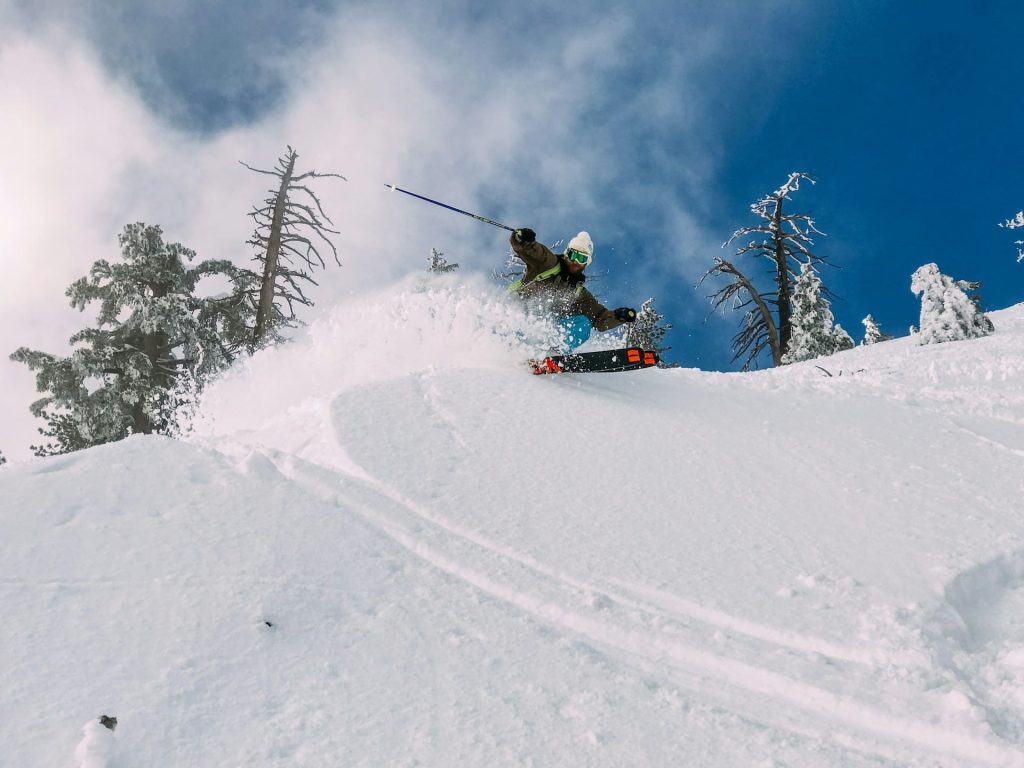
A lot of decent skiers sit just a touch in the backseat. Not full passenger mode. Just enough that everything feels reactive instead of calm. Steeps feel rushed. Bumps feel exhausting. Powder feels like work.
Turns tend to happen a bit late. You’re turning because you have to, not because you planned to. It works, but you’re always reacting instead of leading the ski.
Speed control comes from braking and skidding rather than turn shape. Totally functional, but it means firm snow never feels relaxed and steeper terrain always feels serious.
And then there’s the big one: avoiding the fall line. Just slightly. Enough that you never fully trust the ski to do its thing. This is often the difference between skiing looking busy and skiing looking smooth.
None of these stop you skiing. That’s why they hang around for years.
Breaking the Plateau
This is where people overdo it.
They decide they want to improve, so every run becomes a checklist. Ankles. Knees. Pressure. Timing. By lunch they’re stiff, tired, and somehow skiing worse than first chair.
You don’t need that.
What actually works is picking one small thing. One idea you can hold in your head without tensing up. Ski a couple of runs with it. Then forget it and just ski.

The other mistake is waiting for perfect terrain to work on things. Wide groomers. No traffic. Hero snow.
Progress shows up in chop, bumps, steeps, and awkward exits. Not because you ski them perfectly, but because you stop panicking in them.
And here’s the honest bit: once you’re decent, your brain lies to you. Video doesn’t. Other eyes don’t. That feedback loop matters. Take a camera. Take a buddy (the most brutally honest one).
Most plateaus aren’t about ability anyway. They’re about comfort.
Relax a little. Let the skis move. Progress usually sneaks in when you stop trying to force it.
Final Thoughts
Getting decent at skiing is a great place to be. You can explore. You can have fun. You’re not surviving anymore.
But it’s also where a lot of people quietly stop improving without realising it.
If you feel stuck, it doesn’t mean you’ve peaked. It usually means you’ve just gotten comfortable enough to stop being challenged.
A small nudge, the right idea, or a second set of eyes is often all it takes.
And when it clicks again? That feeling never gets old.
