
Fast entry bindings usually come with a tradeoff. You gain convenience and lose feel, response or performance somewhere else.
The Jones Mercury FASE doesn’t fall into that trap. It still feels like a normal binding underfoot, which is where most fast entry systems go wrong.
That doesn’t mean it’s perfect, or that everyone should run out and buy it. It just means this is one of the few designs that holds up once you stop thinking about how it works and just focus on riding.
We tested it over 30 days of proper use. Hard riding. Instructing. Long resort days. Not just a couple of quick laps.
Update: Full season later and we’re still riding them every day. T32M and Blaster Pro review coming soon!
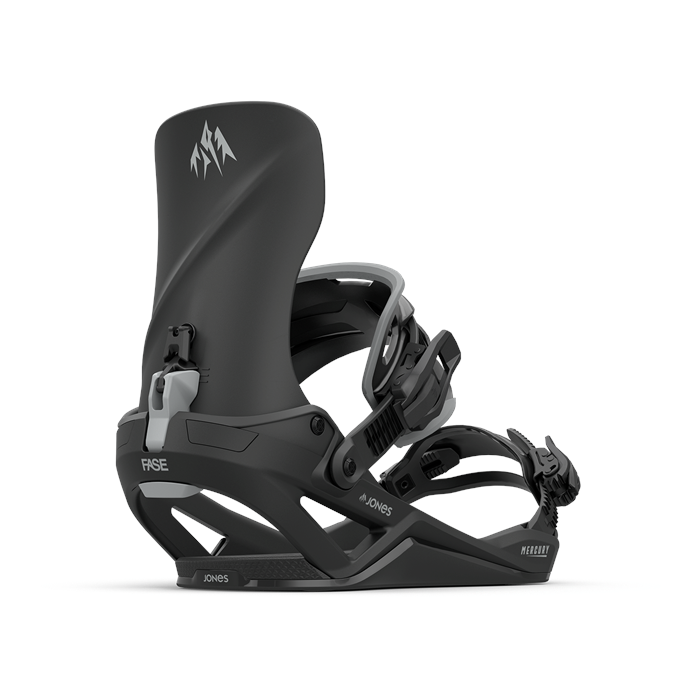
Summary: Jones Mercury FASE Bindings
The FASE system is the first fast entry binding that still feels like a proper strap binding. You get real straps, real tension and a familiar ride feel. Compared to other systems, the Jones Mercury FASE stay lightweight and don’t mess with board response. They ride like normal bindings first, with convenience second - exactly the order it should be in.
- Fast entry without changing boots
- Straps feel like proper straps, no compromise
- Responsive enough to push hard and fast
- Less bulky on snow than most "step in" systems
- Easy to fine tune fit and tension like a normal binding
- Entry takes a few rides to feel automatic
- Snow buildup slows things down on super deep days
- Price is high if you don’t care about faster entry
Also available on Amazon
About FASE Bindings
FASE stands for Fast Entry System and it comes from the Nidecker group. Jones just happens to be one of the brands using it on their much-loved Mercury.
At a basic level, it is still a normal two strap binding. Same straps. Same adjustability. Same feel once you are riding. The main thing FASE changes is how much space you get when stepping in.
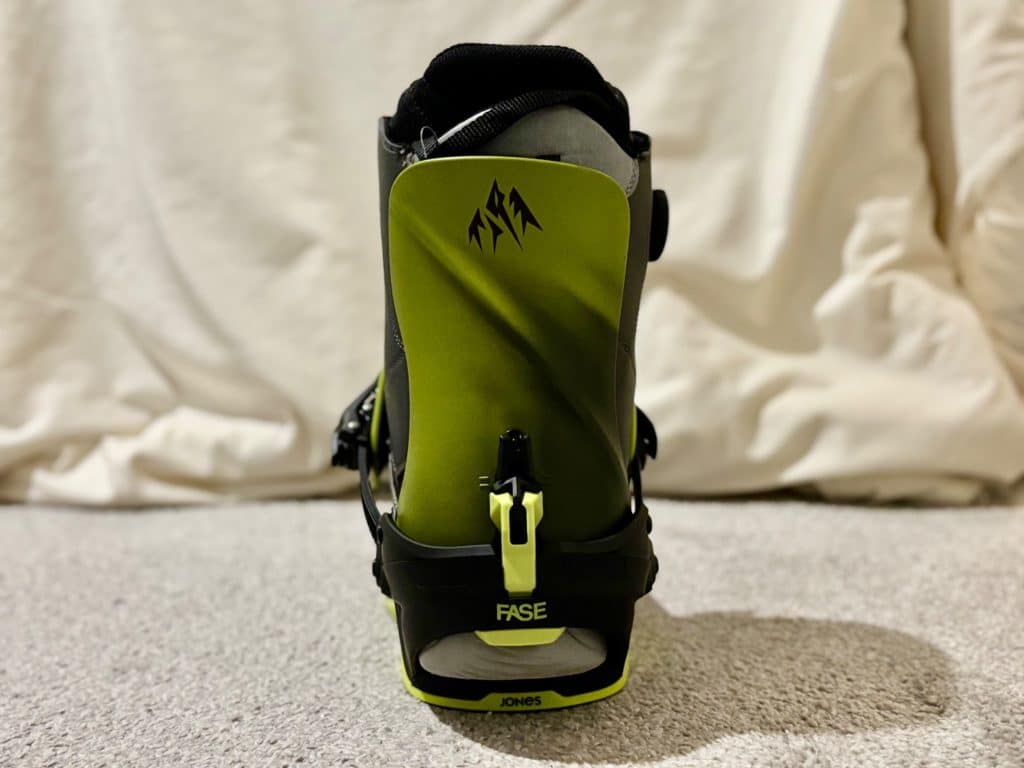
The highback hinges back to open the binding up. That gives your boot room to drop straight in without fighting the straps. You step down, bringing the highback back into position and ride off with the straps already set where you want them.
Well, almost.
The toe straps are indeed set it and forget it, the ankle straps still need ratcheting but have a “quick slide” function and a catch so you don’t need to feed the ladder into the strap.
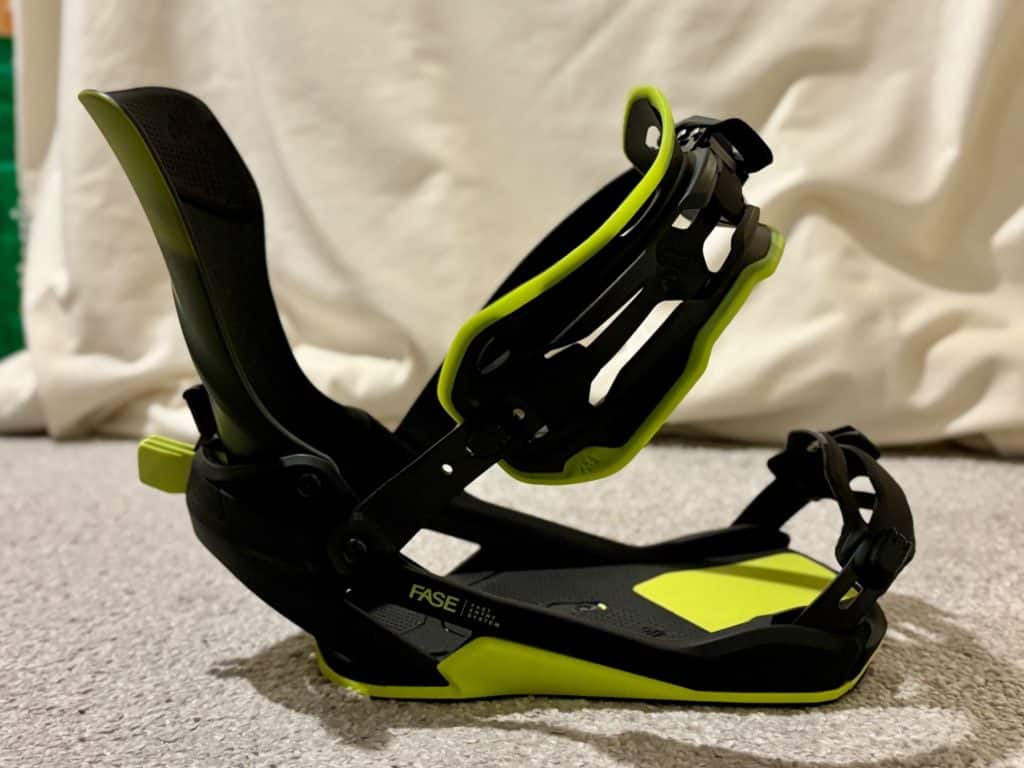


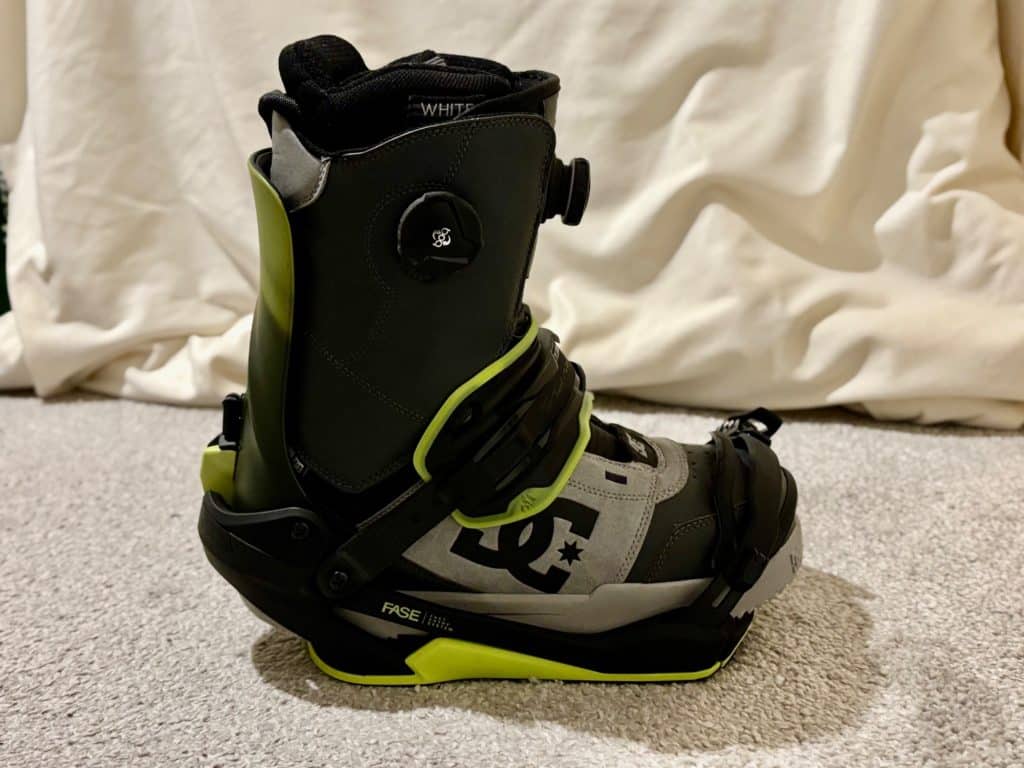
As you can see, nothing about how the binding holds your boot changes once you’re moving. That is why it works. It doesn’t replace straps or try to reinvent the connection. It just makes the boring part quicker.
If you love traditional straps (like me) and hate standing around buckling in, this might be the first system that actually makes sense.
Full Review
I’ve spent most of my riding life on normal strap bindings. Backcountry days, instructing, testing gear, riding in all kinds of conditions. Straps are familiar and predictable, and I’ve never felt a real need to move away from them.
I’ve tried other step-in systems too, including the Burton Step On. They’re quick and convenient, and it’s easy to see why they’ve pushed the category forward. But I always missed being able to fine tune strap tension the way I’m used to. Supermatics were probably the closest I’ve ridden to a traditional feel, but once things got fast and aggressive the straps still didn’t feel quite the same to me.
I rode the Jones Mercury FASE over a mix of instructing days, freeride laps and regular riding where you’re in and out of bindings constantly. Flat unloads. Windy ridges. Tired legs (and back!).
I wasn’t looking to be converted. I just wanted to see if a fast entry system could finally exist without ruining what I already like about straps.
1. Feel and Response
The first thing that matters to me with any binding is whether you forget about it once you start riding. The Mercury FASE does that pretty quickly.
On snow, it feels like a normal Jones Mercury. Solid underfoot, predictable edge engagement and no weird delay when you tip the board over. If you’re used to riding medium stiff bindings and pushing them a bit, nothing here feels unfamiliar or compromised.
What I was paying attention to most was whether the FASE hardware introduced any slop or dead feeling through the heel edge. It doesn’t. Heel side pressure feels direct and consistent, even when driving the board hard. There’s no sense that something is flexing or moving that shouldn’t be (my exact criticism of the Burton Step On).
If you like how the standard Mercury rides, you will like how this rides. The fast entry part does not change the character of the binding once you are moving.
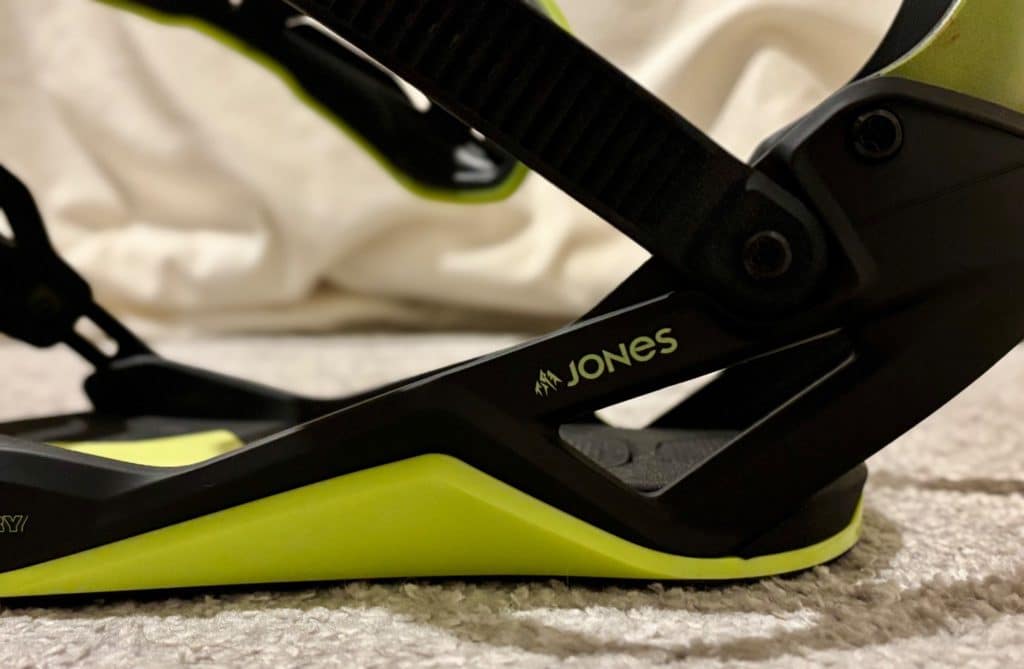
2. Straps and Fit
This is where a lot of fast entry systems fall apart for me.
I like old school straps. I like feeling exactly how tight things are. I like being able to tweak fit slightly depending on boots, conditions or how my feet feel that day.
The Mercury FASE keeps that intact.
The ankle strap feels like a proper strap. It pulls your boot in evenly and holds tension without that plasticky or overbuilt feel you get on some step in style bindings. The toe strap does its job and stays put once you have it set.

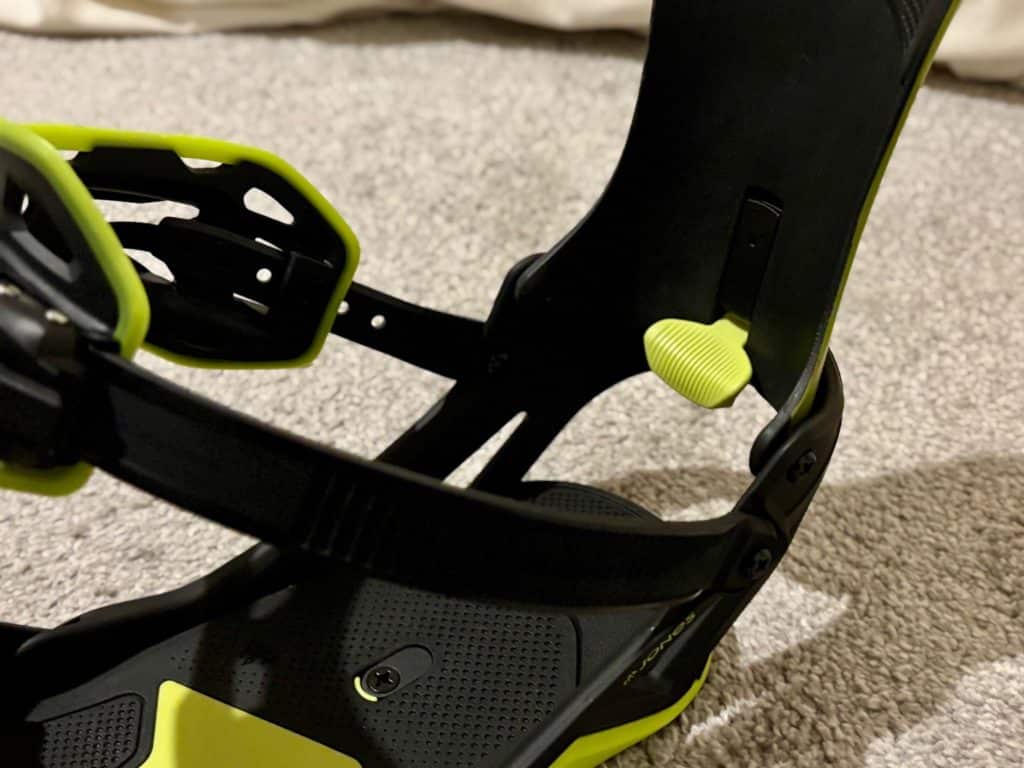
You’re not locked into one feeling or one position. You can run these snug and responsive or back them off a touch for longer days. That adjustability is the main reason this system works for riders who already like straps.
Nothing about the straps feels like a compromise made to accommodate the entry system.
3. The FASE System
FASE is not about racing everyone off the chair. It’s about removing friction from your day.
Unloads get way easier. It took a few days, but I can now step in while moving. Stopping to regroup mid-run is less of a hassle. On instructing days, where you’re constantly in and out, it’s noticeably less tiring. You’re not bending over and cranking buckles every time. Or stepping on ankle strap ladders.
The motion becomes automatic after a few days. Open the highback, step in, close it, go. It is not instant, but it is quicker and smoother than traditional strapping once you stop thinking about it.
Snow buildup can slow things down a bit on heavy days (as with every binding). You still need to be deliberate about stepping in cleanly. Brushing or stomping powder out of the footbed is still essential.
The key point is that once you’re riding, the FASE system disappears. You’re not aware of it underfoot, which is exactly how it should be.
4. Durability and Build
They feel marginally heavier than a standard Mercury but lighter than the Supermatic. On snow, the weight is much less obvious. The binding still feels balanced on the board and doesn’t feel like a brick bolted to your feet.
Everything feels solid.
The moving parts don’t feel fragile or fiddly. The hinge action stays consistent and nothing feels like it’s under stress when riding. After repeated use, nothing loosened up or started feeling sloppy.
Impressively – this does not feel like a first generation experiment. It feels like a honed-in system that was designed to be ridden hard and repeatedly. Kudos to the FASE R&D team!
It is slightly disconcerting the first time you fold the highback down, as it sort of “pops” the FASE lever out of socket. But it goes back in nicely without issue (literally just push the highback up and step in).
5. Pros & Cons
- ✔ Rides like a normal strap binding
- ✔ Great all-mountain freeride performance
- ✔ Fast entry without changing boots or straps
- ✔ Strong edge response and heel side drive
- ✔ Straps are comfortable and feel familiar
- ✖ Could be more adjustible
- ✖ Entry takes a few days to feel natural
- ✖ Snow buildup can slow entry on deep days (as with every binding)
Verdict
The common misconception on the Mercury FASE (and FASE system in general) is that they don’t really save time because you’re still using straps. That’s missing the point.
These are not trying to be step on bindings. You still have straps because straps work and most riders don’t actually want to give that up!
What FASE does is smooth out the day. Less standing on your straps or ladders. Less messing around on flats. Less stopping and starting when you are in and out of bindings all the time.
If you want instant step on speed, this is not it. If you want normal binding feel with faster entry and no weird tradeoffs, they make perfect sense.
Alternatives
Burton Step On is quick and it works. I can see why it leads the category. For me though, it never quite felt as locked in on edge as a good strap binding. I also found myself cranking the boots tighter than I normally would to get the response I wanted. That setup works for a lot of riders, it just never fully clicked for me (pun intended).
Supermatic is probably the closest traditional-feeling fast entry option I’ve ridden outside of FASE. It functions really well, but it feels heavier underfoot and the strap feel never completely matched what I’m used to when riding hard.
Where things are getting interesting is the Union Atlas Step On. It’s the most solid step-on style binding I’ve ridden so far. It drives the board well and feels closer to a normal setup than earlier systems did. If you want true step-on simplicity without giving up too much performance, it’s a strong option. Full review coming soon.
Right now, FASE is the most complete fast entry system we’ve ridden.
Final Thoughts
The Jones Mercury FASE is the first fast entry binding I’ve ridden that doesn’t feel like it’s asking you to change how you ride.
It keeps everything that works about traditional straps. The feel, the adjustability, the confidence when you push the board. The FASE system just trims away some of the day to day friction.
They’re not lighter than standard bindings and not as fast as the Step On. But they’re definitely solving an issue, especially if you’re in and out of bindings a lot (and appreciate straps).
Overall, I’m genuinely impressed. I’m really looking forward to trying other iterations of the FASE binding. Which I’ll do as soon as my wallet allows!

