
If you’ve ridden long enough, you’ve had this day.
It snowed. The report looked good. You were fired up. Then you got on the lift and realized the wind had other plans.
Sometimes wind absolutely wrecks snow. Sometimes it barely matters at all.
The problem is most people treat wind like a simple yes or no factor.
It’s not.
It actually comes down to where the wind is blowing, how long it has been blowing and what kind of terrain you are riding.
This is not a weather lesson though. It’s just how wind actually affects snow once you are on the hill.
If you understand this, you make better calls. And you waste fewer days chasing conditions that never really existed.
Short answer
Wind can strip good snow off open slopes fast. Trees and sheltered terrain usually hold up fine. The wind number alone does not tell you how the day will ride. Consider wind direction, terrain and the kind of snow on the ground.
Wind direction matters more than speed
Most people see a wind number and panic. That’s usually the wrong reaction.
What matters first is where the wind is coming from.
Wind loading can turn average snowfall into great riding. The same wind can also strip a slope down to chalk or ice.
If the wind is blowing into the terrain you ride, it can move snow into pockets, bowls and open faces. That’s often where the best turns are hiding.
If the wind is blowing across or off that terrain, it tends to scrape it clean.
Same wind speed. Very different result.
Before you write off a day, think about the faces you actually ride and how the wind hits them.
Wind ruins snow over time
Short bursts of wind are not always a problem. Sustained wind usually is.
If the wind has been strong for hours or overnight, it has time to move snow around. That’s when things start to go wrong.
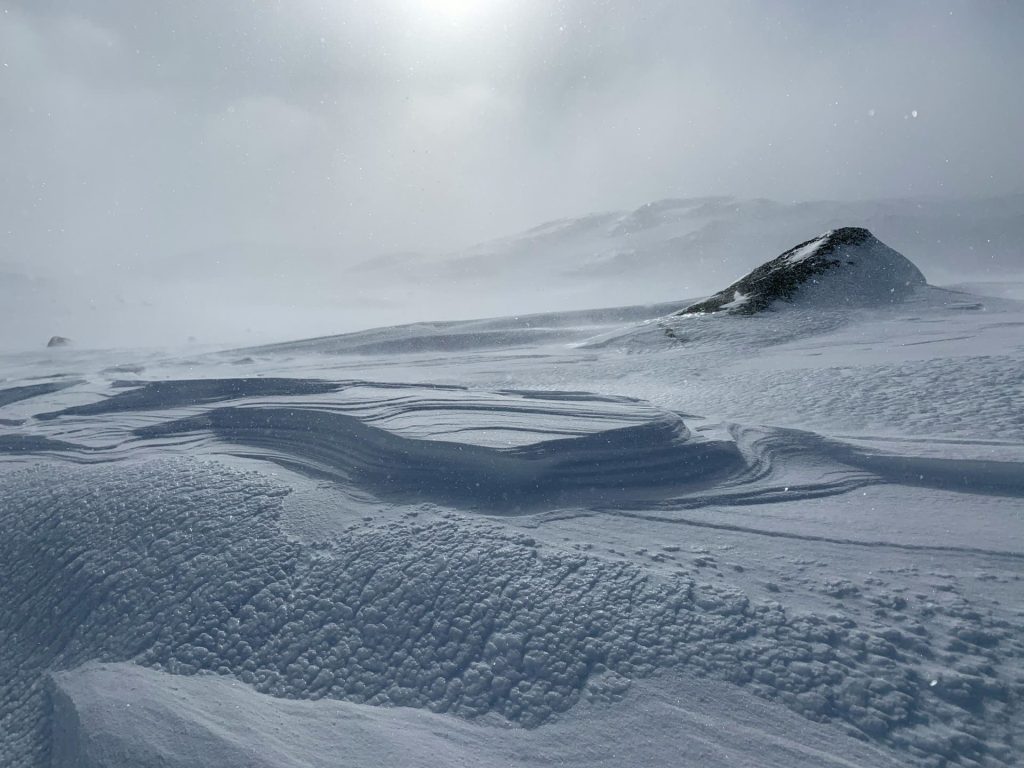
Long wind exposure can:
- Strip soft snow off ridges
- Pack powder into hard slabs
- Create crusts that feel terrible to ride
This is why some days feel worse than they look on paper. The snow fell, but the wind never stopped working on it.
If you see strong wind over a long window, expect damage unless the terrain is well protected.
Terrain decides whether wind helps or hurts
Open alpine terrain gets punished first. Trees and sheltered zones hold snow much better.
This is why some resorts ride fine in wind and others fall apart fast. It’s not about elevation alone. It is about protection.
If most of your riding is above treeline, wind matters a lot. If you spend the day in trees, gullies, or lower faces, you have more margin.
This is also why one lift can be awful while another is great on the same day.
Wind doesn’t hit everything equally.
Wind can improve snow in the right places
This is the part people forget.
Wind can:
- Fill in tracked areas
- Build soft pockets on lee slopes
- Smooth out rough snow
Some of the best turns I have had were not on calm days. They were on windy days where I knew where to look (and was willing to work for it).
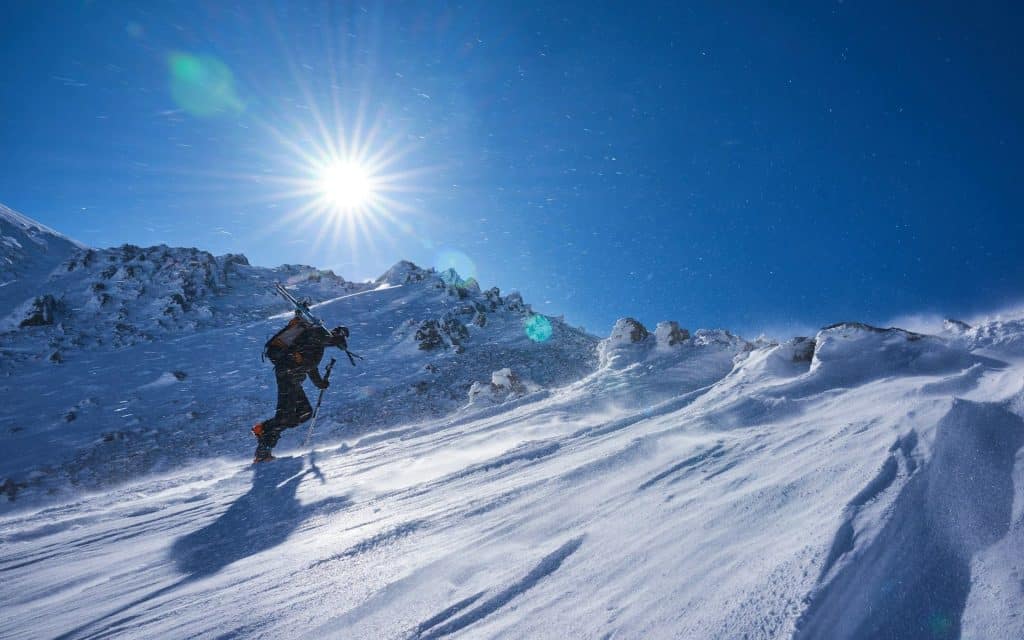
The trick is accepting that the good snow will be selective. You’re not getting wall to wall perfection.
You are hunting.
If you enjoy that kind of day, wind is not always the enemy.
Timing matters more than people think
Wind damage stacks up fast.
A slope that skis great at 9am can feel cooked by late morning. Once snow gets moved or packed, it rarely resets the same day.
This is why early laps matter more on windy days. It is also why waiting around rarely pays off.
If the wind is strong and ongoing, conditions usually get worse, not better.
How I actually use wind when deciding to ride
I don’t look at wind to decide yes or no. I use it to decide where and when.
I ask three things:
- Which aspects are protected today
- How long the wind has been blowing
- Whether I’m riding alpine or trees
If those answers line up, I go. If they do not, I lower expectations or skip it.
That one adjustment saves a lot of frustration.
What skiing looks like on high wind days (summary)
High wind days are not about skiing everything. They're about skiing what survives. Open slopes get stripped first and rarely come back the same day. Trees, gullies, and lower terrain hold snow longer and ski better. Most good turns happen where the wind cannot reach, not where the snow fell the most. If it feels like the mountain is shrinking, that is normal. You adjust the plan and keep moving.
Final Thoughts
Wind doesn’t automatically ruin good snow. It just makes conditions uneven.
If you understand how wind interacts with terrain, you stop chasing bad days. You start finding the good parts instead.
That’s usually the difference between a forgettable day and a surprisingly good one.
