
Skis don’t come with an expiration date. There’s no little sticker on the tail telling you they’re good for five years and then it’s over. But like anything you ride hard, they do get tired. If you’ve been skiing the same pair for seasons and they feel flat or lifeless, you’re not imagining it. Skis wear out.
When I worked in the shop, I saw the full spectrum. Some skis came in looking like they’d been through a war after just two winters. Others rolled in with decade-old bindings and edges still holding strong. The truth is, how long skis last depends a lot on how you ride and where you ride.
The Core Fades First
At the heart of every ski is a wood core. That’s what gives the ski life. It’s what makes your turns feel snappy and responsive instead of dull. Over time, that core softens. Not all at once. More like a slow fade each season until one day you realize the energy is gone.
I’ve had skis that lost their pop after two heavy seasons of charging. I’ve also seen weekend skiers keep the same pair for six or seven years before they really noticed the difference. It’s the same story either way: the core doesn’t last forever.
Camber and Rocker Lose Shape
Profiles don’t stay locked in forever. Fresh camber gives you bite on groomers. Rocker helps you float in powder. Both change as the core gets tired.
Cambered skis flatten out with time. They stop pushing back under your weight and feel more like planks than springs. Rockered skis can get sloppy. That loose, surfy feel turns into something closer to chaos. The shape you started with drifts away, and so does performance.
The Base Gets Thinner Every Tune
The base is another weak spot over the long haul. Every grind takes a little more material off. Hit enough rocks, or just tune too often, and you eventually run out of base to work with. I’ve seen skis where the base was practically see-through, and at that point there’s no saving them.
Even without damage, just riding abrasive snow wears the base thin. Wax helps keep things sliding smoothly, but it doesn’t rebuild material that’s been shaved off.
Edges Take a Beating
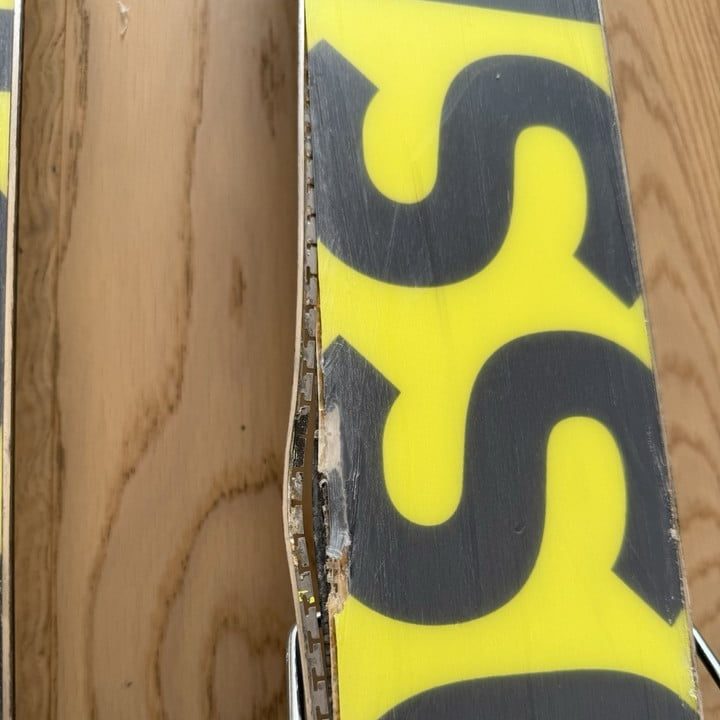
If you ski anywhere icy, you already know edges are everything. A sharp edge can hold you on boilerplate when nothing else will. The problem is, edges wear down fast on hardpack. Every tune takes off a little more metal, and every rock strike leaves scars that add up.
After a few seasons of regular tuning, edges just don’t have the same bite. I’ve pulled skis off the machine where the edge was so thin you could flex it with a fingernail. Once you’re there, it doesn’t matter how much you sharpen… the steel just won’t hold.
Binding Mounts and Holes
Here’s something snowboarders don’t deal with as much: binding mounts getting loose. Drill holes weaken the ski around them. Remount a binding too many times and you end up with a swiss cheese core that won’t hold screws.
Even with a single mount, years of hard skiing can cause tiny shifts. You start to notice wobble, or the screws don’t bite the way they used to. At that point it’s less about the ski’s flex and more about basic safety.
Skis Don’t Die Overnight
What makes skis tricky is they don’t suddenly snap from “good” to “dead.” They fade. One season they’re lively and trustworthy. The next season they’re still serviceable, just not the same. The year after that they feel like tired planks.
Most casual skiers can get five or more years out of a pair. Aggressive skiers who put in 50–70 days a season will feel them lose life in two or three. Daily skiers, instructors, or racers can burn through a pair in one season.
How to Know It’s Time
There are a few clear signs:
They won’t hold an edge no matter how often you sharpen
The camber looks flat even when they’re unweighted
The bases are paper thin or full of core shots
The bindings feel sketchy or loose in the mounts
They just feel dull and dead underfoot
If more than one of those is true, it’s probably time. Sorry.
How to Extend the Life of Your Skis
You can’t stop skis from aging, but you can slow it down. A little care goes a long way:
Wax often – A dry base wears faster. Keep it waxed and it’ll stay healthy longer. Stick with one of our recommend skis waxes.
Edge lightly between tunes – A pocket tool touch-up saves you from unnecessary shop grinds.
Avoid over-grinding – Every base grind takes life off your skis. Only do it when the bases really need it.
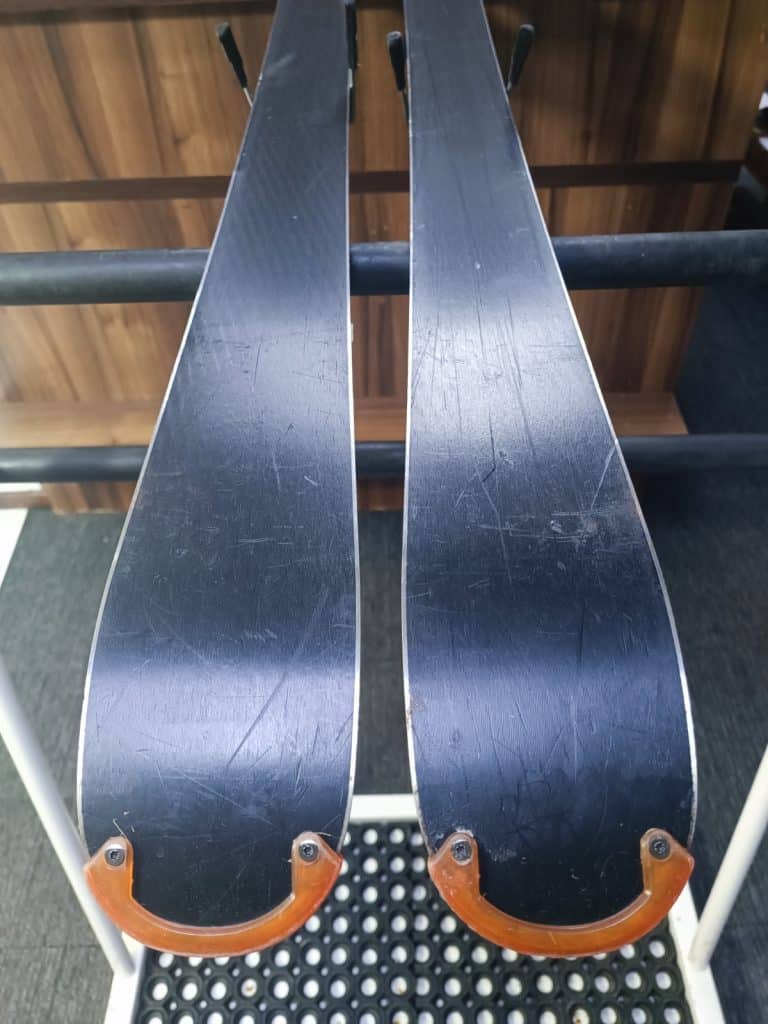
Dry them every day – Don’t leave them dripping in the roof box or garage. Water seeps into cores and mounts.
Store them right – Cool, dry spot in summer. Wax the base thick and leave it on until next season.
Protect your edges – Don’t slide across parking lots or concrete in your skis. Seriously. That sound of metal on pavement is lifespan evaporating.
None of this makes skis immortal, but it stretches the seasons out. Treat them well and you’ll notice the difference years down the line.
My Take
I’ve kept old skis around just because I loved them, even when they were long past their prime. They were fine for spring slush laps, but I wouldn’t trust them on icy steeps. At some point, it’s not just performance… it’s safety.
The best way to think about ski lifespan isn’t in years. It’s in days. How many days did you put on them, and how hard were those days? That’s the real measure. Skis aren’t immortal, and that’s okay. They’re meant to be skied until they’re dead. If yours feel flat and lifeless, that’s your answer. Time to let them go.
Final Thoughts
Most skis can handle a few good seasons before they start to fade. Some last longer, some get tired fast. Pay attention to how they feel under your boots. If they’ve lost their spark, they’ve done their job. That’s not a failure… it just means you rode them the way they were meant to be ridden. Enjoy your new skis!
