5 Best Snowboards for Japan 2026 (What I Ride)

Japan riding is epic, but it’s different.

The snow is lighter, storms stack fast and a lot of the terrain is low angle and tree-heavy. That’s why board choice really matters here.

Long freeride boards often feel like a hindrance. What works best in Japan is volume, easy float and a board that pivots naturally in soft snow. Most riders end up going shorter and wider than they ride at home.

These are the boards I’d actually want under my feet in Japan. Built for deep days, trees and soft resort laps.

🏆 Quick Pick

The Bataleon Surfer is my favorite snowboard for Japan. It floats effortlessly, turns easily in soft snow, and feels right at home in trees and lower-angle terrain. It’s not cheap, but it rides exactly how you want a Japan board to ride. If you’re on a tighter budget though, there are solid options further down.

Top 3 Roundup

Best Snowboards for Japan

1. Bataleon Surfer Best Overall

Bataleon Surfer
  • Flex: Medium
  • Profile: Pow-focused rocker with camber support
  • Base: Sintered
  • Shape: Directional, tapered
  • Best for: Deep days, trees, lower-angle riding
  • Tech: 3BT shaping, uplifted contact points
Score: 4.8/5
The Surfer just makes sense in Japan. I’ve ridden a lot of powder boards over there and this is the one I keep wanting back under my feet.

It floats instantly without needing speed, which matters on lower-angle terrain and in tight trees. You don’t have to lean back or think about technique. You just stand there and ride. The nose stays up, the tail sinks naturally and it pivots exactly when you ask it to.

What I really like is that it doesn’t feel dead once things get tracked. You can still carve groomers, link turns back to the lift and ride it all day without feeling like you’re on a novelty board. It’s expensive, yeah, but it rides like something that’s been refined specifically for bottomless powder (which it has). 

This is the board I’d hand to a strong rider going to Japan who just wants things to work.

Pros

  • Ridiculous float, even on mellow terrain
  • Pivots effortlessly in trees and tight spots
  • No back-leg burn even on deep, low-angle days
  • Feels natural and intuitive
  • Still fun on groomers and tracked snow

Cons

  • Price is high, no way around that
  • Not the board for charging icy alpine faces
  • Overkill if you rarely ride powder

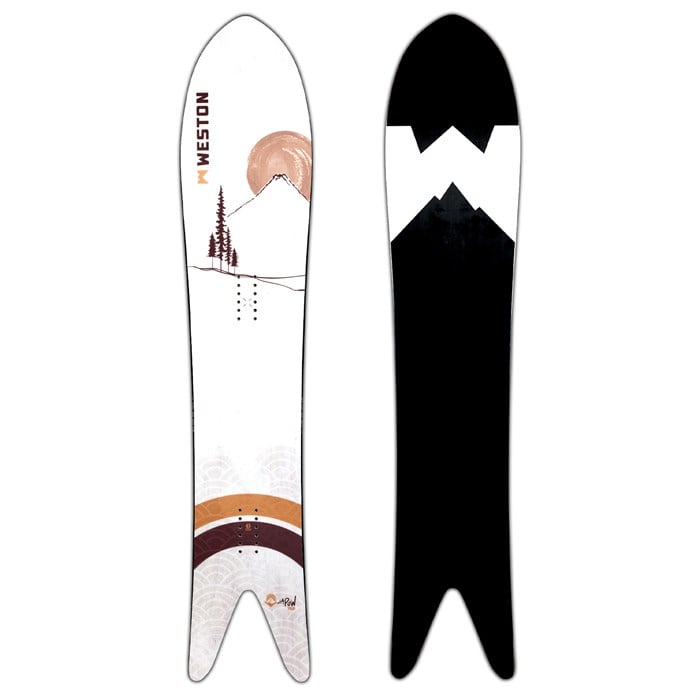
2. Weston Japow Cult Classic

Weston Japow
  • Flex: Medium-stiff
  • Profile: Directional camber with early-rise nose
  • Base: Sintered
  • Shape: Directional, volume-friendly
  • Best for: One-board Japan trips, mixed resort days
  • Tech: Tapered nose, quick turn initiation
Score: 4.7/5
If I could only bring one board to Japan and didn’t want to think about it too much, this would be high on the list.

The Japow feels like it was built specifically for Japanese resorts (what gave it away?). Plenty of surface area up front, a directional shape that floats easily and enough backbone underfoot that it still feels solid once things get tracked or you’re ripping groomers back to the lift.

It’s not as surfy or loose as something like the Surfer, but that’s kind of the point. It feels familiar in a good way. You can ride it aggressively when you want, slow it down in the trees and not feel like you’re fighting the board either way. For riders who want a Japan-friendly board that still feels like a proper snowboard everywhere on the hill, this one makes a ton of sense.

Pros

  • Floats easily without feeling loose or weird
  • More stable than shorter, wider powder boards
  • Great balance of surfy feel and edge hold
  • Confidence inspiring when snow gets tracked
  • Easy board to live on for a full Japan trip

Cons

  • Not as playful or slashy as the surfer
  • On the stiffer side (though nothing major)

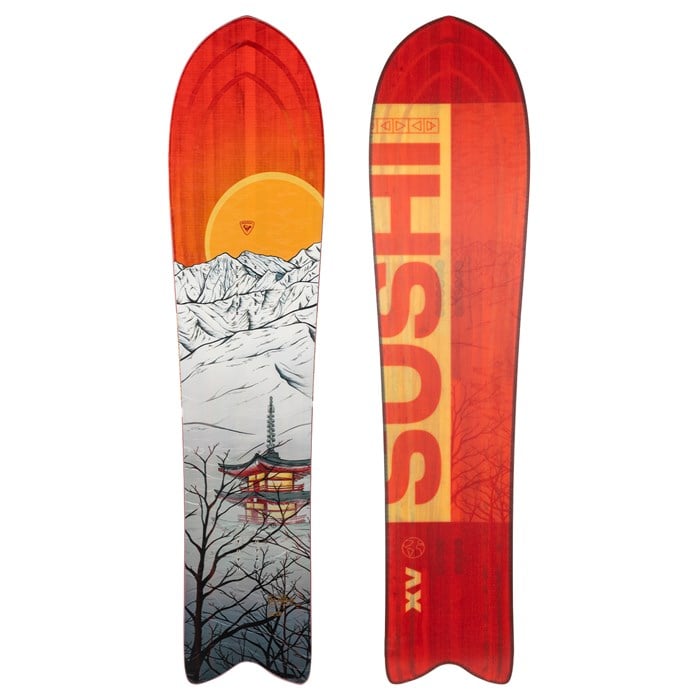
3. Rossignol XV Sushi Best for Trees

Rossignol XV Sushi
  • Flex: Medium
  • Profile: Rocker-forward, easy pivot
  • Base: Sintered
  • Shape: Short-wide directional
  • Best for: Tight trees, quick slashes, resort pow laps
  • Tech: Volume-shift outline, fast turn shape
Score: 4.7/5
The Sushi was the first board I ever rode in Japan and yeah, it looks ridiculous. Short. Wide. Absolute fatty. I remember pulling it out of the bag and thinking there was no way this thing was going to work.

Then I rode it.

In deep snow and tight trees, it just clicks. It pivots instantly, stays on top without effort and lets you slash and change direction without thinking. In places where the terrain funnels you into narrow lines or you’re making quick decisions between trees, the Sushi feels almost unfair.

It’s not a do everything board. You feel its limits once things firm up or speed increases. But for classic Japan tree riding and deep resort days, it’s stupidly fun and shockingly effective. This board is a big reason so many people go short and wide over there.

Pros

  • Insane float for how short it is
  • Turns instantly in trees and tight terrain
  • No back-leg burn on deep, slow days
  • Feels playful and confidence-boosting in soft snow
  • Perfect example of why volume matters in Japan

Cons

  • Feels limited once snow gets firm or tracked
  • Not great at speed or on longer groomer runs
  • Very directional and not switch-friendly

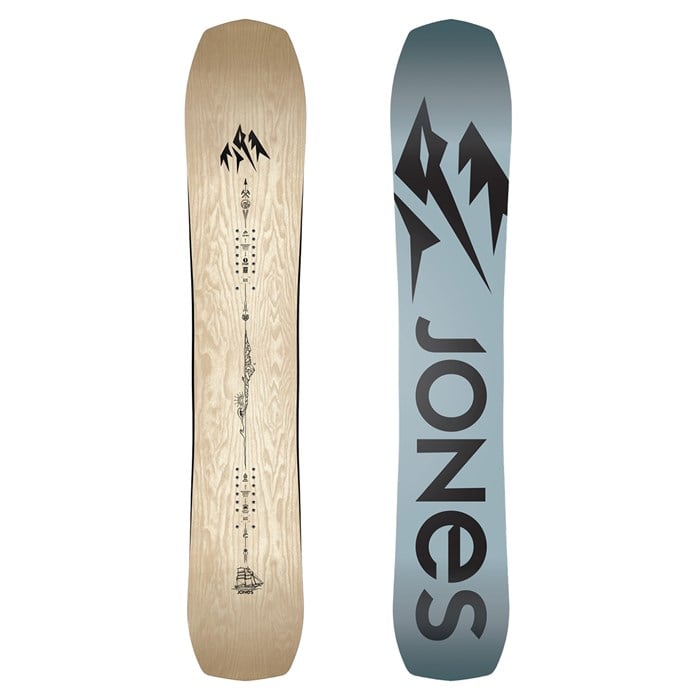
4. Jones Flagship Most Versatile

Jones Flagship
  • Flex: Stiff
  • Profile: Directional camber with rocker
  • Base: Sintered
  • Shape: Directional freeride
  • Best for: Mixed days, speed, tracked snow
  • Tech: Traction edges, damp freeride build
Score: 4.6/5
The Flagship is the outlier in this list, but it earns its place.

It’s longer than most boards people bring to Japan, but not stupid long. More importantly, it’s a board you can actually justify owning outside of this trip. If Japan is one stop on a bigger season or you want one board that works everywhere, the Flagship makes a lot of sense.

In Japan powder, it floats well as long as you size it sensibly and use the setback. It’s not as effortless in tight trees as the short, wide boards, but it’s way more composed once the snow gets tracked or you start riding faster. It shines on mixed days when you’re bouncing between soft snow, groomers and chop.

This is the board for riders who still want a freeride feel, but don’t want to bring a full-on charger or a powder novelty board.

Pros

  • Most versatile board on this list
  • Handles powder, groomers and chop confidently
  • Stable at speed without feeling like a tank
  • Makes sense for trips beyond Japan
  • Great choice if you want one board to do it all

Cons

  • Needs slightly more speed to float than volume-shift boards
  • Not as nimble in tight trees as shorter shapes
  • Overkill if your trip is all deep, low-angle days

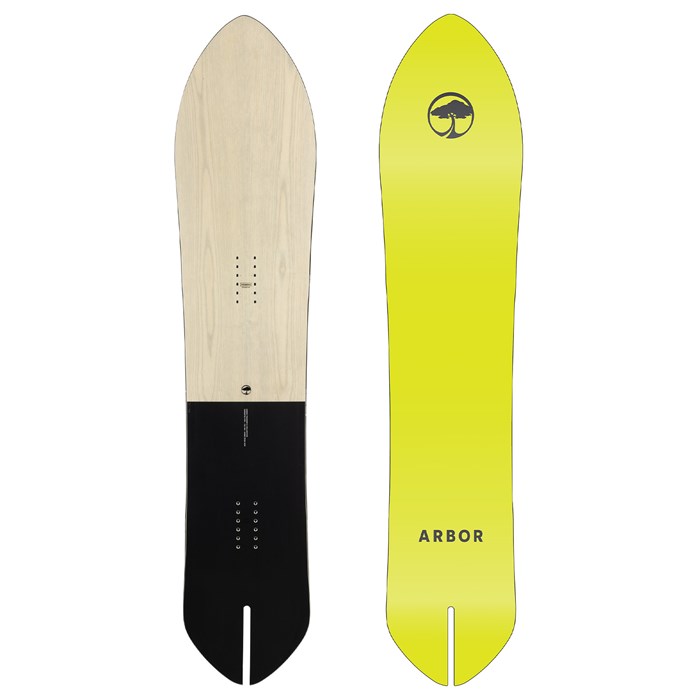
5. Arbor Terrapin PFD Most Unique Shape

Arbor Terrapin PFD
  • Flex: Medium
  • Profile: Directional with early-rise nose
  • Base: Sintered
  • Shape: Directional, tapered
  • Best for: Float with a more familiar feel
  • Tech: System platform, smooth entry sidecut
Score: 4.6/5
The Terrapin PFD is not trying to be a normal snowboard. It’s a powder board with a very specific jo  and it does that job ridiculously well.

It only comes in 146 and 152, and that’s the whole point. You ride it short, you get the float from width, taper and that 3D shaping. You end up with a board that turns insanely fast in deep snow without feeling like you’re wrestling a canoe.

The shape is wild. Big taper, System Rocker, those redesigned 3D fenders and that boat-hull style centerline through the nose. It wants to sit up and plane. The newer detail I actually like is the longer flatter section under the back foot. That gives you something to push against when you need a little drive and control, especially when the snow is deep but not bottomless.

And the “tail slot” isn’t just there to look cool. It adds a bit more bite and controllable contact when you’re threading trees or trying to manage speed in tight terrain.

This is not my pick for mixed resort days. This is the board I’d bring when the forecast is stupid and I’m planning to spend the day in trees.

Pros

  • Built for Japan style powder days and tree riding
  • Rides short but floats like a much longer board
  • Super quick turning in tight terrain
  • Flatter zone under the back foot gives real control when you need it
  • Tail slot adds bite and helps keep it more manageable in deep snow

Cons

  • Not a daily driver, it’s a specialist
  • Only two sizes, so fit is not as flexible
  • Feels a bit pointless if your trip is not lining up with deep days

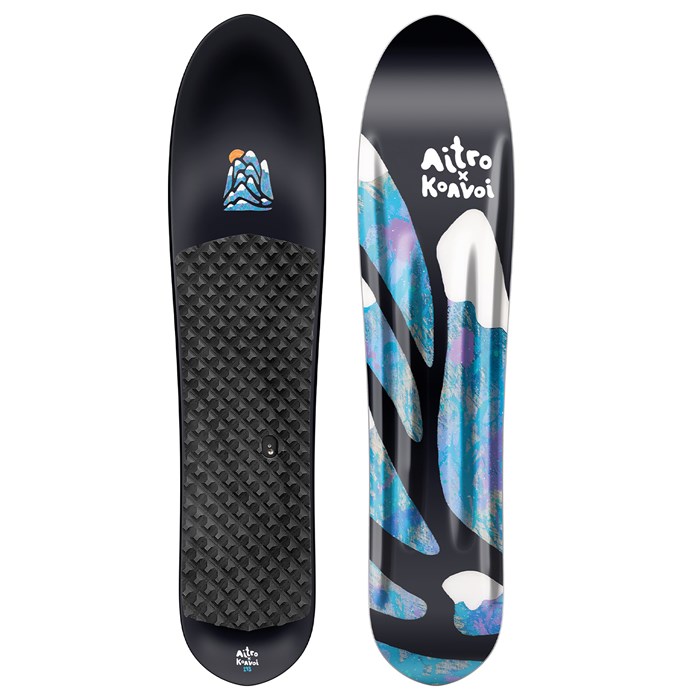
Bonus: Nitro X Konvoi Surfer Best Powder Surfer

Nitro X Konvoi Pow Surfer (Bonus Pick)
  • Type: Pow Surfer (no bindings)
  • Flex: Medium
  • Profile: Full Rocker
  • Base: Premium Extruded, full 3D base with rails
  • Shape: Directional Pow Surfer
  • Tech: Molded concave traction pad, coil leash
Score: 4.5/5

This isn’t a snowboard replacement. It’s a toy. A very good one.

The Konvoi is a pow surfer. No bindings, a traction pad and a leash. You ride it when it’s absolutely nuking and you feel like doing something different. Short hikes, mellow trees, rolling terrain. Think slashing and linking turns, not charging.

It feels closer to surfing than snowboarding. Full rocker, 3D base and a shape that just wants to float and drift. You slow down, play with the terrain and suddenly powder feels new again.

You don’t need this for Japan. But if you get one of those ridiculous days and want to mix things up, this is about as fun as it gets. 

Comparison Table

Snowboard Flex Profile Base Shape Style Score
Bataleon Surfer Medium Rockered nose with camber underfoot Sintered Directional, tapered Deep powder, trees, surfy resort laps 4.8/5
Weston Japow Medium-stiff Directional camber with early-rise nose Sintered Directional, volume-friendly Balanced powder board 4.7/5
Rossignol XV Sushi Medium Rockered nose with flat tail Sintered Short-wide directional Trees, tight terrain, slashy pow 4.7/5
Jones Flagship Stiff Camber with rocker in the nose Sintered Directional freeride Versatile freeride, tracked snow 4.6/5
Arbor Terrapin PFD Medium Surf-style rocker with a flatter tail Sintered Short, heavily tapered powder shape Shape-driven powder specialist 4.6/5
Nitro X Konvoi Pow Surfer Medium Full rocker Premium extruded, 3D base Pow surfer (no bindings) Surfy turns, deep, mellow terrain 4.5/5

Japan Snowboard Buying Guide

Japan is forgiving, but it still rewards the right board. The goal isn’t charging steeps or blasting groomers. It’s staying afloat, moving easily through trees and not fighting your setup all day.

Having now spent the best part of 5 seasons there. here’s what actually makes a difference.

Length

Shorter works better here.

You’re not sizing down to be cute. Shorter boards turn faster, pivot more easily and feel way less work in tight trees. Most riders are happier going shorter than their usual freeride board, especially if they spend time off-piste.

If you’re muscling the board to make quick turns, it’s probably too long.

Width and Volume

Float comes from surface area, not length.

Wider, volume-shifted boards let you ride shorter without sinking. That’s why so many Japan boards look stubby or surfy. They stay on top of the snow without forcing you into the backseat.

This is where Japan-specific shapes really earn their keep.

Flex

Medium flex hits the sweet spot.

You want something that bends easily at slower speeds but doesn’t fold once things get tracked or heavy. Super stiff boards feel unnecessary here. Super soft ones can get sketchy once the snow gets chopped.

Think controlled and playful, not planky.

Profile

A lifted nose helps more than anything.

Rocker or early-rise in the nose makes the board plane quickly and pivot naturally in deep snow. Most good Japan boards still keep some camber underfoot so they don’t feel dead on groomers or cat tracks.

Full rocker is fun, but a bit of camber adds confidence.

Shape

Directional shapes just make sense.

Taper, wider noses and shorter tails all help the board turn without effort. You’re not forcing turns or muscling edges. The board wants to go where you point it.

That’s exactly what you want in trees and soft snow.

Base

Faster bases matter more than people think.

A lot of Japan riding is lower angle. A good sintered base keeps things flowing and saves energy on flatter exits and traverses. Wax it and forget about it.

One Board or Two

If you’re bringing one board, go versatile with some volume.

If you’re bringing two, bring something playful and something dependable. Japan rewards having options depending on storm size and terrain.

A Quick Note on Where You’re Riding

Most Japan riding happens in trees, mellow off-piste and resort-access powder. That’s where shorter, wider boards shine.

But not everywhere in Japan rides the same.

If you’re spending a lot of time at bigger, more open mountains, a slightly longer board can make sense.

Places where sizing up isn’t crazy:

  • Furano – more open faces and longer fall lines
  • Asahidake – deep, open terrain where speed builds
  • Hakuba – steeper, alpine zones and variable snow
  • Kiroro on quiet days when you can open it up

In these spots, a longer directional freeride board gives you more stability at speed and confidence when the terrain opens up. You still don’t need a monster, but going a bit longer than a tree-specific pow board makes sense.

On the flip side, tree-heavy resorts like Niseko or Rusutsu reward quick turning and easy float far more than straight-line stability.

Rule of thumb:
If you’re ducking ropes and weaving through trees all day, stay short and wide.
If you’re riding open bowls, alpine faces or longer fall lines, you can justify a little extra length.

Final Thoughts

Japan rewards different boards than most people are used to riding.

Deep snow, low-angle terrain and tight trees mean float and maneuverability matter more than outright length or stiffness. That’s why so many riders end up downsizing and going wider once they get there.

You don’t need a crazy niche quiver, but you do want something that planes easily, pivots without effort and stays fun when the snow stacks up. Get that right and Japan becomes less about fighting your board and more about picking lines (until your legs give out).

Any of the boards above will work. The best one is the one that lets you relax, trust the turns and enjoy just how ridiculous the snow really is.

See you there!

The Snow Chasers

Japan Snowboard FAQs

Should I size down for Japan?
Usually, yes. Most people are happier on a board that’s a bit shorter than their normal freeride setup. As long as there's enough volume to keep afloat.

Japan is a lot of trees and lower-angle pow where quick turning matters. If your board feels like work in tight spots, it’s probably too long.

The caveat is open, faster terrain. If you’re riding big alpine lines, you can keep more length. You just don’t need a giant.
Why do people go shorter and wider in Japan?
Because float comes from surface area, not just length.

A wider, volume-shifted board stays on top of the snow without forcing you into the backseat. It also turns faster in trees because there’s less nose to swing around.

It looks weird in the shop. It makes perfect sense on day two when your legs are cooked.
Do I need a swallowtail for Japan?
No. Swallowtails are fun, but they’re not mandatory.

A directional board with a rockered nose, some taper, and a little setback will do the job just fine. Swallowtails just lean harder into that surfy, float-first feel.

If you like riding switch a lot, you might actually prefer a less extreme shape.
Is camber bad for Japan powder?
Not at all. The key is where it is.

A rockered nose with camber underfoot gives you float plus some drive and edge hold when you’re riding back to the lift or dealing with chopped snow.

Full camber can work if the shape is directional and the nose has enough lift. It just won’t feel as effortless on deep, slow days.
What flex is best for Japan?
Medium is the sweet spot for most trips.

Too soft can get wobbly once the snow gets tracked. Too stiff feels unnecessary in trees and makes the whole day more work than it needs to be.

If you know you’re riding faster, more open terrain, going a bit stiffer makes sense. Otherwise, keep it fun.
Are sintered bases worth it in Japan?
Yeah, they’re worth it.

Japan has plenty of low-angle zones and longer runouts where base speed keeps the day flowing. A faster base is less hiking and less swearing.

Just wax it. A fast base that’s dry is still a slow base.
Do I need a dedicated powder board, or can I bring my all-mountain board?
You can bring your all-mountain board and have a great trip, as long as it’s not a narrow, twin park deck.

A directional all-mountain board with some setback and a rockered nose can handle Japan fine. A proper powder board just makes deep days easier and way more fun.

If this is a once-in-a-decade trip, I’d lean powder-focused.
Where in Japan does a longer board make sense?
If you’re spending time in more open, higher-speed terrain, a bit more length can feel better.

Think bigger alpine zones, longer fall lines, or days where the snow is getting pushed around and you want stability more than quick pivots.

You still don’t need a monster. Just don’t auto-size down if your plan is “ride fast in open terrain all day.”
Should I change my stance for Japan?
If you’re riding a directional powder board, set it up like one.

Add a bit of setback, open your stance slightly if that’s your thing, and make sure your binding position matches how the board is meant to be ridden.

You don’t need to reinvent your stance. Just don’t run a centered park stance and then wonder why your back leg hates you.
Do I need special boots or bindings for Japan?
No special gear required. Just don’t show up with a super soft park setup if your plan is pow and trees all week.

Medium flex bindings and boots are a safe choice. Comfort matters more than anything because you’ll be riding a lot.

Also, bring dry socks. Japan will bury your boots.
What is a pow surfer, and should I bring one?
A pow surfer is a bindingless board with a traction pad and a leash. It’s for deep, mellow terrain and surf-style turns.

You don’t need one. It’s a bonus toy for ridiculous storm days when you want to do something different.

If you’re the type who gets bored doing normal turns, it’ll make you laugh out loud.
Common Japan snowboard mistakes?
  • Bringing a narrow twin and hoping “pow is pow”
  • Going too long because you’re scared of sinking
  • Not waxing your base, then hating every traverse
  • Running a centered stance on a directional powder board
  • Buying the most extreme shape, then riding groomers all week

3 thoughts on “5 Best Snowboards for Japan 2026 (What I Ride)”

  1. 100% couldn’t agree more. Short, fats are where it’s at for Japan. In Niseko last year I barely saw a single “regular” snowboard shape in 2 weeks. The locals all ride swallowtails. That should tell you something!

  2. Heck yeah. Headed to Japan in a couple of weeks and suddenly realised my trusty CAPiTA DOA probably wasn’t the best snowboard for Japan. And looking at the forecast, it for sure looks like I’ll need a powder specific board. Anyway, just wanted to say thanks for the article as it’s super helpful. Think I’ll go with the surfer and report back!

Leave a Comment

Your email address will not be published. Required fields are marked *

Scroll to Top