5 Best Snowboards for Intermediate Riders (Instructor Tested)

If you’re an intermediate snowboarder, this is where things get really fun.

You’re starting to explore steeper runs, side hits are calling and your board doesn’t need to hold your hand anymore. Suddenly, a lot of very good boards are on the table.

As an instructor, this is my favourite stage to teach. Progression stops being about survival and starts being about choice. Maybe you’re leaning into park, dabbling in powder or dialling in your carves? The best intermediate snowboards give you enough performance to explore all of that without punishing every mistake.

After testing almost 100 snowboards this season, these are your official best options. 

🏆 Quick Pick

The Jones Mountain Twin is my top pick for intermediate snowboarders. It’s stable without feeling stiff, forgiving without feeling dull, and strong enough to grow with you as you start riding faster, steeper and more confidently. This is the kind of board that lets you try everything without punishing mistakes or holding you back. Highly recommend.

Top 3 Roundup

Best Intermediate Snowboards

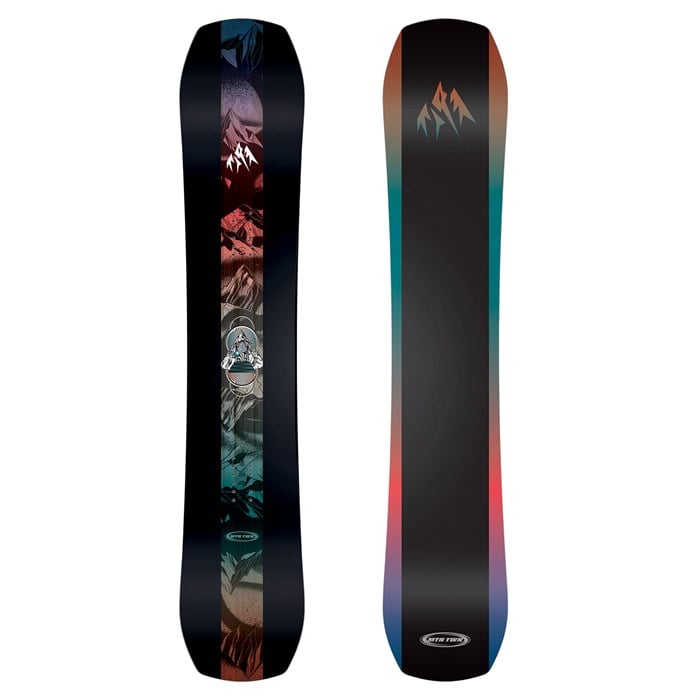
1. Jones Mountain Twin Best Overall

Jones Mountain Twin
  • Flex: Medium
  • Profile: Camber between the feet with lifted tips
  • Base: Sintered
  • Shape: Directional twin
  • Tech: Traction Tech 3.0, 3D Contour Base 2.0, FSC™ Classic Core
  • Best for: Do-everything progression, all-mountain freestyle
Score: 4.8/5
I’ve put a lot of intermediates on this board. Not because it’s necessarily the most exciting, but because it removes bullshit from the equation.

Most riders at this stage don’t need more more tech, or some hyper-specific shape. They need a board that lets them charge faster, steeper, rougher snow with confidence.

That’s where the Mountain Twin works.

Okay it still happens to be packed with tech, but it’s also extremely reliable. The camber gives you something solid to stand on when you stop sideslipping steeps and start trusting your turns. The rockered tips bail you out when you get lazy, land backseat, or ride chopped or crappy snow badly. Which everyone does, especially when they’re pushing it.

What I like most is that it doesn’t demand anything from you. You can ride it timidly and it won’t bite. You can ride it with intent and it won’t fold. That’s a rare combo.

I’ve seen riders go from cautious blue cruisers to confidently riding steeper reds and blacks on this board without changing setups or “upgrading” mid-season. It doesn’t suddenly feel out of its depth when you start riding properly.

I’ve ridden many iterations of this deck, and the 2026 has been refined to a tee. A genuine all-mountain slayer. Easily one of the top snowboards for intermediate riders. 

Pros

  • Calm and predictable
  • Enough camber to build real confidence at speed
  • Rockered tips forgive mistakes without feeling dead
  • Works across the whole mountain without needing technique changes
  • Doesn’t get “outgrown” quickly as skills improve

Cons

  • Not the most playful board if park is your main goal
  • Advanced riders may eventually want something more directional or stiffer

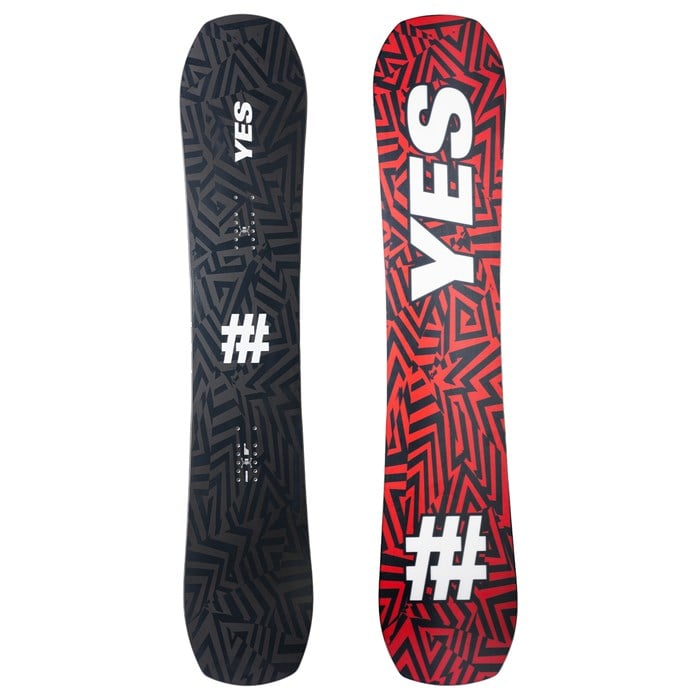
2. YES Standard Cult Classic

YES Standard
  • Flex: Medium-stiff
  • Profile: Camber with subtle rocker in the tips
  • Base: Sintered
  • Shape: Directional twin
  • Tech: MidBite Sidecut, Poplar / Paulownia Core
  • Best for: Confident carving, fast resort riding, all-mountain
Score: 4.8/5
This is the board I point people at when they tell me they want to ride harder, faster and with more intention.

The YES Standard isn’t forgiving in the soft, cuddly way. It’s forgiving in the “I’ve got you if you commit” way. There’s a big difference. If you half-arse turns, skid everything, or ride permanently defensive, this board will feel twitchy. If you start trusting your edge and letting the board run a bit, it suddenly feels incredible.

I’ve seen intermediates unlock carving on this board faster than almost anything else. The edge hold is real, the platform feels solid underfoot and the MidBite actually does what it’s supposed to do (a sidecut disruption between the bindings making a narrower waist width with wider sections underfoot). This allows fast edge changes whilst retaining a strong platform for pop and for float in powder. 

This is also a board people don’t outgrow quickly. I’ve had riders come back 3 seasons later still happy on it, riding steeper terrain and faster snow, instead of immediately looking to “upgrade.”

It’s not the easiest board here. But it’s one of the most rewarding once you’re ready to stop cruising and start riding properly.

Pros

  • Light and easy to throw around
  • Great for side hits, jumps, and learning freestyle basics
  • Forgiving flex that builds confidence
  • Feels fun and lively without being uncontrollable
  • Easy transition from beginner boards

Cons

  • Less confidence-inspiring on steep or firm snow
  • Not ideal for riders prioritising carving or freeride

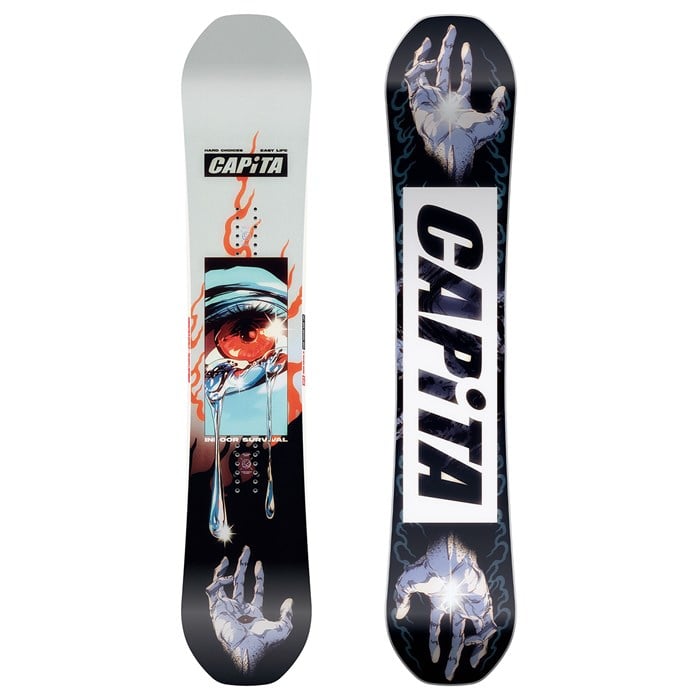
3. CAPiTA Indoor Survival Freestyle Pick

Capita Indoor Survival
  • Flex: Medium
  • Profile: Camber with early-rise tips
  • Base: Sintered
  • Shape: True twin
  • Tech: RESORT V1 Profile, Superdrive™ ADV Base
  • Best for: Park progression, jumps, side hits
Score: 4.7/5

This is the board for intermediates who are starting to look longingly at side hits and park features.

The Indoor Survival feels familiar the moment you step on it. Light, quick, easy to move around. Spins don’t feel like work. Ollies come without you needing to stomp them. It encourages you to mess around, which is exactly what a lot of intermediates need at this stage.

Where this board shines is confidence in freestyle terrain without feeling like a pure park noodle. It holds an edge better than people expect and it doesn’t completely fall apart when you point it down a groomer back to the lift.

That said, it has limits. When snow gets chopped, steep, or firm, you notice the softer flex and lighter feel. It’s not sketchy, but it doesn’t have the same calm authority as the Mountain Twin or Standard.

For riders leaning park, jumps, and playful all-mountain laps, this board speeds up progression in a fun way. For riders who want to charge harder terrain, it can start to feel a bit small once things get serious.

Pros

  • Light and easy to throw around
  • Great for side hits, jumps, and learning freestyle
  • Forgiving flex that builds confidence
  • Feels fun and lively without being uncontrollable
  • Easy transition from beginner boards

Cons

  • Less confidence-inspiring on steep or firm snow (most freestyle boards are)
  • Can feel soft once speed increases
  • Not ideal for riders prioritising carving or freeride

4. Jones Frontier Freeride Pick

Jones Frontier
  • Flex: Medium
  • Profile: Camber underfoot with rockered nose and tail
  • Base: Sintered
  • Shape: Directional
  • Tech: Traction Tech 2.0, Directional Rocker, FSC™ Control Core
  • Best for: Freeride progression, carving, confidence on steeper terrain
Score: 4.7/5
This is the board I put people on when they want to ride steeper terrain but don’t want to feel like they’re hanging on for dear life.

The Frontier is calm. That’s the word I keep coming back to. It doesn’t rush you, it doesn’t feel twitchy and it doesn’t punish small mistakes. You point it downhill and it just… settles. For a lot of intermediates, that alone is a huge unlock.

I’ve seen riders who always looked slightly stressed on steeper runs suddenly relax on this board. Turns smooth out. Speed control improves without them trying to brake every turn. They stop fighting the board and start letting it do some work.

It’s directional without being extreme. You get real float in soft snow, good grip on firmer days and enough backbone that it doesn’t fold when things get chopped. It’s not some hardcore freeride plank, it’s confidence-inspiring in a way that actually matters.

If you’re coming from a softer, twin-ish board, the Frontier feels like your first “proper” freeride board. If you’re keen to progress and favor carving and groomers over freestyle, this is a really great option. 

Pros

  • Super confidence-inspiring on steeper terrain
  • Stable and predictable at speed
  • Directional shape helps with float and control
  • Easy transition from softer all-mountain boards
  • Feels calm rather than demanding

Cons

  • Less playful than twin-focused options
  • Not ideal if park riding is a priority
  • Can feel a bit serious at slow speeds

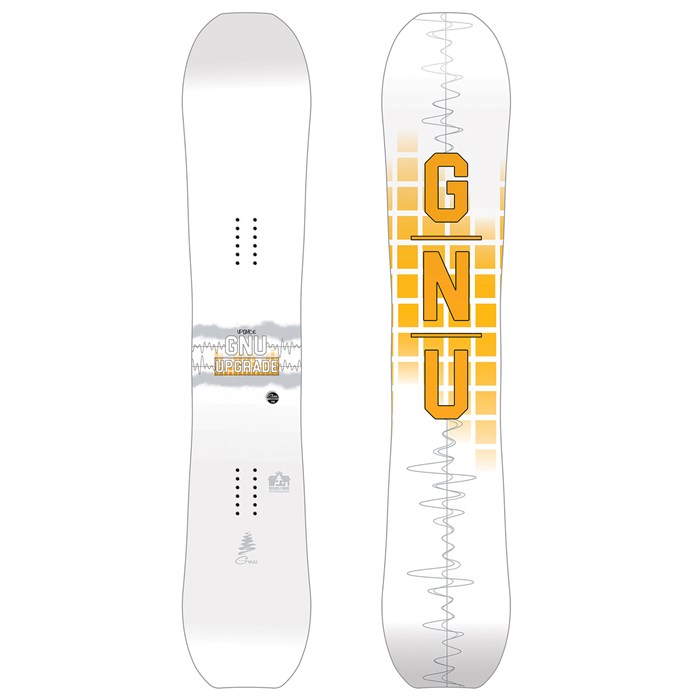
5. Gnu Upgrade Reliable Pick

GNU Upgrade
  • Flex: Medium
  • Profile: Hybrid rocker with camber zones
  • Base: Sintered
  • Shape: Directional twin
  • Tech: Magne-Traction®, C2E Hybrid Profile, G LITE 2 Core
  • Best for: Grip on firm snow, confidence in mixed conditions
Score: 4.6/5

The Upgrade is the board I recommend when someone just wants things to work.

Not necessarily “wow me every run” work. Just solid, predictable, no-drama work.

This board has saved a lot of intermediates from unnecessary frustration. It grips when the snow is firm. It doesn’t freak out when things get choppy. And it feels consistent day to day, which is massively underrated when you’re trying to improve.

Magnetraction does what it says. You feel it most on heelside turns on firmer snow, where a lot of riders struggle. The board holds without you having to muscle it, which lets you focus on stance and timing instead of survival.

It’s not the loosest, lightest, or most exciting board here. But it’s dependable in a way that builds trust. And once riders trust their board, their riding usually improves faster.

If you ride somewhere with mixed conditions or ride a lot of variable snow, this thing just gets on with it.

Pros

  • Excellent edge hold in firm or mixed conditions
  • Predictable and confidence-building
  • Feels stable without being stiff
  • Good all-conditions board for real-world riding
  • Low learning curve for intermediates

Cons

  • Less float-focused than directional boards
  • Has a little less “character” compared to others

Comparison Table

Snowboard Flex Profile Base Shape Style Score
Jones Mountain Twin Medium Camber with rocker at tips Sintered 8000 True Twin All-mountain progression 4.8/5
YES Standard Medium-stiff Camber with early-rise tips Sintered Directional Twin Powerful all-mountain 4.8/5
CAPiTA Indoor Survival Medium Traditional camber Sintered True Twin Freestyle progression 4.7/5
Jones Frontier Medium-stiff Directional rocker with camber Sintered 8000 Directional Freeride-focused all-mountain 4.7/5
GNU Upgrade Medium C2E hybrid rocker/camber Sintered Directional Twin Confidence-building all-mountain 4.6/5

Intermediate Snowboard Buying Guide

Intermediate riding is where boards start to matter.

You’re not just surviving anymore. You’re linking turns, picking lines and starting to notice when a board helps or holds you back. The goal now isn’t forgiveness at all costs. It’s progression without punishment.

Here’s what actually makes a difference.

Length

Stick close to your recommended size.

Most intermediates don’t need to size up or down dramatically. Too short and the board gets twitchy when speed creeps up. Too long and everything feels like hard work.

If you feel like you’re fighting the board to make turns, it’s probably too much board. If it feels nervous when things get fast, it’s probably too little.

Flex

Medium flex is the money zone.

This is where most people should live for a long time. Soft enough to be forgiving. Stiff enough to hold an edge when you start pushing.

Ultra soft boards get sketchy once you ride faster or hit steeper terrain. Stiffer boards reward good riding but expose bad habits fast. Medium lets you progress without constantly slapping you.

Profile

Camber still matters.

Most of the best intermediate snowboards use some form of camber between the feet with rocker or lifted contact points in the tips. That gives you grip and pop without feeling catchy.

Full rocker feels easy at first but often slows progression. Full camber can feel great, but only if your technique is already solid. Hybrids are popular for a reason.

Shape

Twin or directional twin works best.

True twins are great if you’re riding switch a lot or leaning park. Directional twins give you a bit more stability and float without locking you into a freeride shape.

You don’t need extreme taper or a swallowtail yet. Versatility matters more than specialization at this stage.

Width

Don’t ignore it.

Boot overhang kills confidence fast. Too narrow and edge hold disappears when you start carving harder. Too wide and turns feel sluggish.

Get this wrong and no amount of “tech” will save the board.

Base

Sintered is nice, but not mandatory.

A sintered base holds speed better and feels smoother when conditions vary. That said, a well-waxed extruded base beats a neglected sintered one every time.

Wax matters more than marketing here.

One Board Reality

Most intermediates want one board that does most things well.

That usually means all-mountain leaning slightly freestyle or slightly freeride, depending on where you ride. The boards in this guide all live in that sweet spot.

You can specialize later. Right now, versatility keeps progression fun.

Final Thoughts

Being an intermediate rider is a great place to be.

You’re past the scary phase. You’re riding with intent. And for the first time, your board options are infinite (almost). 

The mistake I see most often is riders staying on a board they’ve already outgrown. It still “works,” so they stick with it. But it quietly limits confidence, edge hold and progression without ever fully failing them.

Don’t do that. 

The boards in this list aren’t magic. They won’t fix bad habits overnight. But they will give you room to push, recover and experiment without feeling punished every time you try something new.

If you’re riding more, thinking more about how you ride and starting to feel the itch to level up, you’re exactly who these boards are for.

Ride more. Fall a bit. Laugh it off. That’s how this stage is meant to feel.

The Snow Chasers

Intermediate Snowboard FAQs

What makes a snowboard “intermediate”?
Intermediate snowboards balance forgiveness with performance.

They’re stable enough to ride faster and steeper terrain, but not so stiff or demanding that mistakes get punished immediately. Think predictable, not twitchy.
Should I size up as an intermediate?
Not automatically.

Most intermediates do best staying within their recommended size range. Sizing up “for stability” often just makes turns harder and slows progression.

If the board feels like work, it’s probably too much board.
Is camber too aggressive for intermediates?
No, as long as it’s not full, old-school camber.

Camber between the feet with rocker or lifted contact points in the tips is ideal. You get edge hold and pop without feeling grabby.

Full camber can be great later. Hybrid profiles are the sweet spot here.
Are softer boards better for progression?
Only up to a point.

Very soft boards feel friendly early on, but they can hold you back once you ride faster or hit uneven terrain.

Medium flex gives you room to grow without constantly slapping you for small mistakes.
Can intermediates ride advanced-expert boards?
Sometimes, but it’s rarely the best move.

Advanced boards assume clean technique. If your edge control or stance isn’t dialed yet, the board will feel tiring or unpredictable.

Progression is faster when the board works with you, not against you.
Do I need a directional board or a twin?
Either can work.

True twins are great if you ride switch or lean freestyle. Directional twins add stability and float without locking you into freeride-only terrain. If your focus is hard-charging, carving and freeride, go directional.

Most intermediates are happiest on a directional twin.
Is all-mountain still the best choice?
For most intermediates, yes.

All-mountain boards let you explore park laps, groomers, side hits and light powder without forcing a commitment to one style.

Specializing too early can actually slow progression.
What’s the biggest mistake intermediates make when buying a board?
Buying something too aggressive.

Stiffer, more “pro” boards look appealing, but they often hide mistakes instead of helping fix them.

A board you can ride confidently all day will make you better faster than a board you’re fighting.

Leave a Comment

Your email address will not be published. Required fields are marked *

Scroll to Top