Best Ski & Snowboard Wax Kits, Irons & Tuning Kits

I’ve waxed a stupid number of skis and snowboards over the years. My own gear, customers’ gear, rental gear, and plenty that probably hadn’t seen wax since it left the factory.

The funny thing is, you really don’t need that much to do a decent job at home. A good iron, scraper, brush and the right wax will get you most of the way there. But once you start shopping for tuning gear, suddenly there are edge tools, vises, base cleaners, giant 20-piece kits and all sorts of other crap you’re apparently supposed to own.

Some of it is genuinely useful. Some of it will sit in the bottom of your tuning bag forever.

So this is everything I actually think is worth having for waxing and tuning your skis or snowboard, from the basic setup I’d buy first to the extra tools that are worth adding later.

What You Actually Need

If you’re starting from scratch, get a decent wax/tuning kit. It’s the easiest way to get an iron, scraper, brush and wax in one hit, and most throw in a few useful tuning tools too.

You don’t need every tool in a 25-piece kit though. A vise makes life easier, edge tools are handy if you do your own edges, and base cleaner has its place. But for basic waxing? Iron, scraper, brush, wax. Done.

Already have some of that stuff? Skip the kit and buy whatever you’re missing below.

Best Ski & Snowboard Wax Kits

I’ve tried a bunch of these over the years. Some are genuinely well put together. Others are basically a cheap iron surrounded by 20 bits of filler.

The good ones give you the core waxing tools you’ll actually use, with a few useful extras for edge work and repairs. These are the four kits I’d actually spend my money on.

1. Demon Complete Basic Tune Kit Best Overall Pick

TOP PICK
Demon Complete Basic Tune Kit
  • Adjustable-temp waxing iron
  • Universal wax and scraper
  • Edge tuner and flat file
  • Brush and polish pad
  • P-tex and tuning stone for repairs

25% off with code SNOWCHASERS

This is about the level I think makes sense for most people. You get enough stuff to actually wax and look after your edges, without paying for a case full of tools you’re probably never going to touch.

The iron is the important bit. It’s a proper little waxing iron with adjustable temperature, rather than a glorified travel iron thrown in to make the kit look complete. It heats up quickly, holds its temperature well and I’ve never felt like I needed anything fancier for normal home waxing.

You also get an edge tuner and file, scraper, wire brush, tuning stone, P-Tex, polish pad and Demon’s White Lightning all-temp wax. The wax is pretty basic, but that’s fine. Use it up, then buy whatever wax suits where and when you ride.

I also like that everything has its place in the case. It sounds like a tiny thing until you’ve had scrapers, files and chunks of wax floating around the garage or rolling around the back of your car.

There are bigger Demon kits further down this list, but this is the one I’d point most people towards. If you just want to start waxing and doing basic edge work at home, you don’t really need much more.

Pros

  • Proper temperature-controlled waxing iron
  • Everything you need for waxing and basic edge work
  • Useful tools without loads of filler
  • Everything packs neatly into one case

Cons

  • Included wax is pretty basic
  • Brush is nothing special

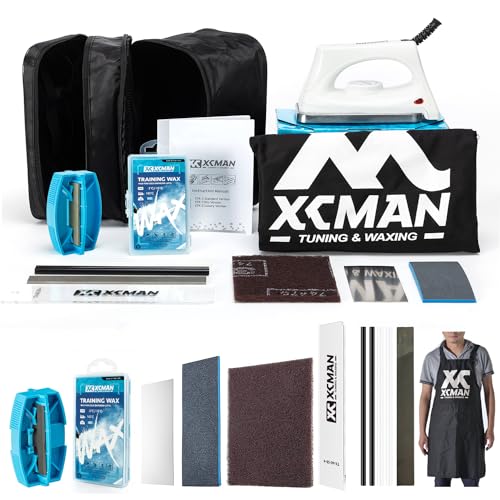
2. XCMAN Complete Tuning & Waxing Kit Best Budget Pick

XCMAN Tuning & Waxing Kit
  • XCMAN Complete Ski Snowboard Wax Tuning Kit. Perfect kit for families or those needing to...
  • XCMAN Temperature adjustable wax iron 110V/800W with a thick sole plate for temperature...
  • Large tool bag: Internal strap to secure wax iron; two internal open-access tool pockets...

The XCMAN Complete Kit is kind of the go-to cheaper option you see all over Amazon. You get a proper temperature-adjustable iron, a solid chunk of universal wax, an edge tuner that dials in multiple angles, scrapers, brush, P-Tex, file and even a (pretty thin) apron.

It definitely feels more “starter pack” than pro setup, but that’s the point. If you just want to wax at home a few times a season, or you’re tuning a family’s worth of skis and boards, it’s an easy way to cover pretty much everything in one go.

The iron runs hotter than I expected and the edge tuner is surprisingly versatile. I also like the big carry bag. If you’re hauling your tuning stuff around on ski trips, being able to chuck everything back into one bag is genuinely useful.

You can tell where they’ve saved some money. The brush and apron feel cheaper than the Demon stuff, the included wax is pretty basic, and overall it doesn’t feel quite as solid. But the bits that actually matter work well, and you get a hell of a lot of stuff in the bag.

Pros

  • Loads of kit for the money
  • Proper adjustable-temperature iron
  • Edge tuner handles multiple angles
  • Big carry bag with plenty of room

Cons

  • Some of the accessories feel cheap
  • Included wax is pretty basic
  • Doesn't feel as solid as the Demon kit

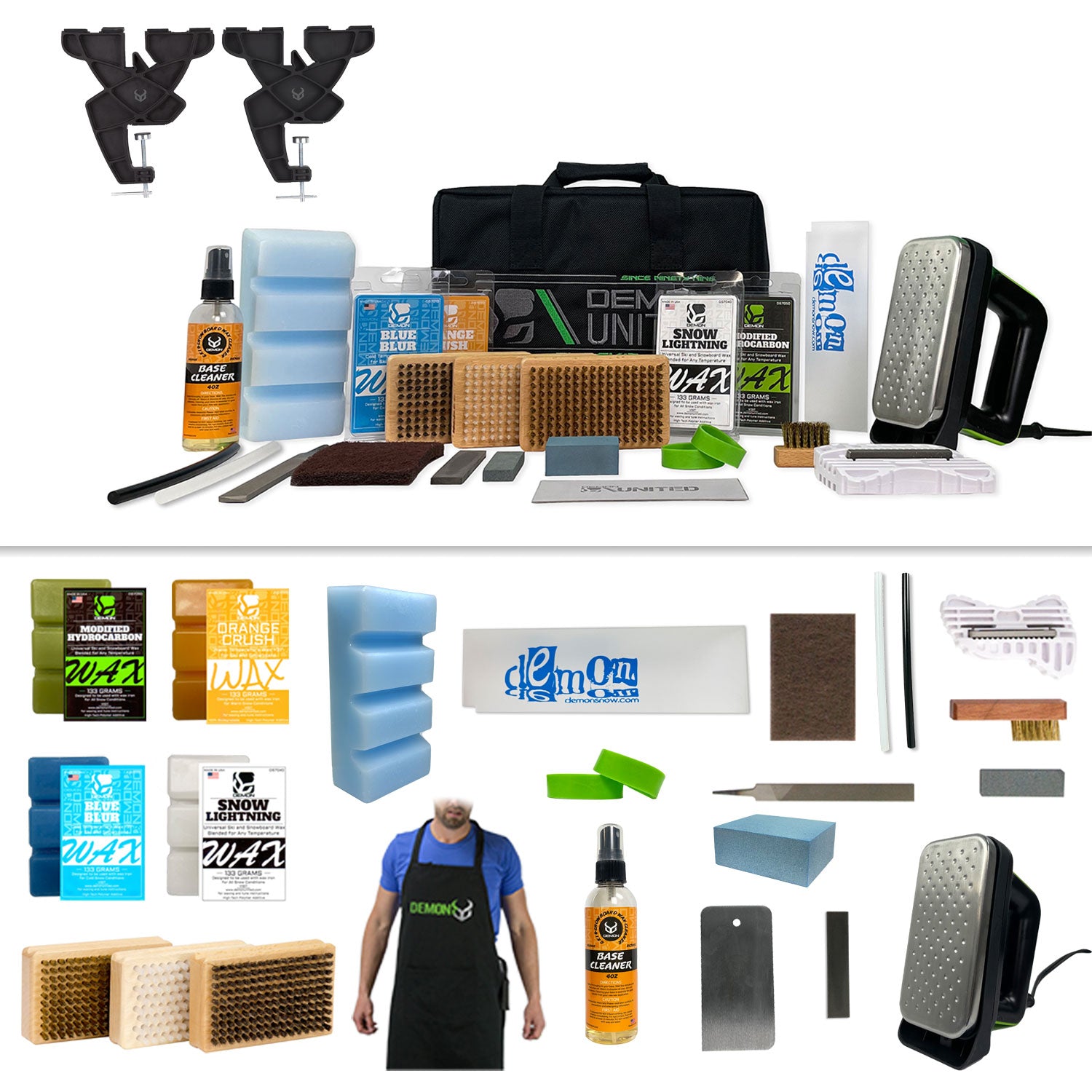
3. The Demon Charger Plus Best Upgrade Option

Demon Charger Plus Tune Kit
  • Dual-voltage adjustable-temperature iron
  • Includes ski and snowboard vise
  • Full wax pack and base cleaner
  • Edge tuner, files, scrapers and brushes
  • P-Tex for basic base repairs

25% off with code SNOWCHASERS

This is the kit I reach for when I want to do a proper tune at home. The big difference is the vise. It sounds like a boring upgrade until you’ve actually used one. Suddenly you’re not chasing your board across the table with a scraper or trying to hold it still with your hip while you do the edges. Clamp it down and get on with it.

The iron is solid. Dual voltage, simple temperature dial and nice steady heat. You get a decent pile of wax too, with universal wax for most days plus different temperature options. Then you’ve got proper brushes, scrapers, files, an edge tool, P-Tex and base cleaner. Nothing particularly exciting, but it’s all stuff that actually gets used. There’s very little “we needed 25 things to put on the box” filler.

The catch is the price. If you drag your board out for a wax twice a season, don’t bother. Get the Basic kit and spend the difference on beer or a lift ticket. But if you’re constantly waxing your own gear, your partner’s, your kids’, your mates’ or whatever else gets dumped in front of you, the Charger Plus starts making a lot more sense. This is the one I’d want permanently set up in the garage.

And if that’s still not enough, Demon makes a full workshop setup called the Sasquatch…

Pros

  • Vise makes scraping and edging much easier
  • Solid adjustable-temperature iron
  • Good selection of waxes and brushes
  • Pretty much everything you need for home tuning

Cons

  • Big jump in price from the Basic kit
  • Overkill if you only wax occasionally

4. Demon Sasquatch Speed Edition The Overkill Pick

Demon Sasquatch Speed Edition
  • Complete Demon tuning bench and vise
  • Charger Elite kit with dual-voltage iron
  • Elite X edge tuner and diamond files
  • Full brush, wax and base repair setup
  • Basically a home tuning shop in one package

Ships within the continental USA only.

25% off with code SNOWCHASERS

Full disclosure, I don’t own this beast. I couldn’t justify the price. A buddy of mine has one though, and it is ridiculous in the best possible way.

The Sasquatch isn’t really a tuning kit. It’s basically a home workshop that turns up in boxes. You get the tuning bench and vise, Charger Elite setup, iron, brushes, edge tools, waxes, files, scrapers, P-Tex… pretty much the lot. His lives permanently set up in the garage and it looks more like a little ski shop than someone’s home waxing setup.

I do own or have used most of the actual tuning tools you get with it, just accumulated separately over the years. That’s partly why the Sasquatch makes more sense to me than it probably does at first glance. Once you’ve bought a decent iron, brushes, edge tools, vise and everything else individually, you’ve spent a surprising amount anyway.

Do you need it? Absolutely not. Do I want one? Absolutely.

If you’re waxing one board a few times each winter, this would be completely insane. But if you’re the person everyone dumps their skis and boards on before a trip, you’ve got a family’s worth of gear to maintain, or you’ve always wanted a proper tuning bench in the garage, this is basically the dream setup.

Just make sure you’ve actually got somewhere to put it.

Pros

  • Basically a complete home tuning shop
  • Proper bench and vise included
  • Excellent iron, brushes and edge tools
  • Very little else you'll need to buy

Cons

  • Seriously expensive
  • Takes up a fair bit of space
  • Complete overkill for most people

Best Ski & Snowboard Wax Irons

Already got your scraper, brushes and wax? Then you obviously don’t need to buy another full tuning kit just to get an iron.

I’ve used quite a few wax irons over the years, from cheap ones that struggle to hold a steady temperature to much nicer digital models. You don’t need anything particularly fancy for normal home waxing. Consistent heat and decent temperature control matter far more than having a screen and a load of extra features.

These are the three I’d look at if you’re buying an iron on its own.

1. Demon Slide Wax Iron Best Standalone Iron

TOP PICK
Demon Slide Wax Iron 110/220V
  • Adjustable temperature dial
  • Approx. 140°F to 350°F temperature range
  • Dual voltage for 110V and 220V use
  • Wide base for skis and snowboards
  • Works with all common hot waxes

25% off with code SNOWCHASERS

If you already own the rest of your tuning gear and just need an iron, this is where I’d start. It’s basically the same little Demon iron you’ll find in some of their tuning kits, sold on its own for around $50.

I like it because there really isn’t much to it. Turn the dial, let it heat up and get waxing. The temperature range is plenty wide enough for the waxes most of us are ever going to use, the plate is a good size for both skis and snowboards, and the heat stays nice and consistent as you work across the base. It’s also dual voltage, which is genuinely handy if you travel with your tuning gear.

There’s no digital display, no fancy controls and nothing here to impress your mates. It’s just a good little waxing iron that does its job. I actually prefer that to some of the supposedly cleverer irons I’ve used over the years.

The slightly weird bit is the price. On its own, around $50 is good value. But Demon’s Complete Basic Tune Kit is around $100 before discounts and includes an iron alongside the scraper, wax, edge tools, brush, P-Tex and the rest of the kit. So if you’re starting from nothing, I wouldn’t buy this. I’d still spend the extra and get the full kit.

Already have your scrapers, brushes and everything else? Different story. Save the money and buy the iron on its own. It’s all you need.

Pros

  • Simple adjustable temperature dial
  • Consistent heat across the base
  • Dual voltage for travelling
  • Great value at around $50

Cons

  • No digital temperature display
  • Full Demon kit is better value if you're starting from scratch

2. Swix T77 Ski & Snowboard Wax Iron Proven Pick

Sale
Swix T77 Wax Iron
341 Reviews
Swix T77 Wax Iron
  • Large Base Plate: wider surface area covers more base per pass for efficient wax application on wide skis
  • Adjustable Temperature: dial control covers the range needed for all universal and temperature-specific waxes
  • 110V Power: plug into standard North American household outlets without adapters
  • Red Finish: classic Swix red color matches the brand's professional tuning tool aesthetic
  • For Skis and Snowboards: works on alpine, snowboard, and cross-country base materials

I’ve had this Swix for several seasons now and it’s taken a fair bit of abuse. Mine is scratched to hell underneath and generally looks like it’s had a harder life than most of the boards I’ve waxed with it. It still works perfectly.

That’s basically why it’s on this list. The T77 isn’t fancy. There’s no screen or precise digital temperature control, just a big dial on top. It heats up quickly, holds its temperature well and the wide, smooth base makes it really easy to spread wax evenly without thinking too much about it.

I also prefer the larger base compared with some of the little travel-style irons. You can cover a ski or snowboard pretty quickly, and the extra surface area makes it easy to keep the iron moving rather than sitting in one spot cooking the base.

The temperature dial is the obvious compromise. It works fine, but you don’t know the exact plate temperature like you do with a decent digital iron. For the vast majority of home waxing, I don’t think that really matters.

Mine has been going for years, looks absolutely battered and still does exactly what I need it to do.

It does cost a little more than the Demon, so if you’re just after the best value I’d probably save the money. The reason I still rate the Swix is simple: I’ve used this one for years and I know it lasts.

Pros

  • Mine has lasted for years
  • Wide base makes waxing quick and easy
  • Holds its temperature well
  • Simple and reliable

Cons

  • No digital temperature control
  • Not as precise as the Toko T14 or Demon Commercial

3. Demon Commercial Wax Iron Ultimate Pick

Demon Commercial Grade Digital Wax Iron
  • 1200W commercial-grade digital iron
  • Thick 17.4mm soleplate
  • Digital temperature control
  • 78–180°C temperature range
  • Large 186 × 108mm soleplate

25% off with code SNOWCHASERS

This thing is a bit of a monster.

The Commercial is Demon’s proper 1200W digital iron, with a much bigger and thicker soleplate than the Slide iron above. Pick the two up side by side and they’re not really trying to do the same job. The Slide is compact and easy to chuck in a tuning bag. This feels like something that belongs on a workshop bench.

The big slab of metal underneath is the main attraction. It’s 17.4mm thick and holds a lot of heat, so once it’s up to temperature it stays remarkably stable as you move across the base. You also get proper digital temperature control from 78–180°C, which is useful when you’re swapping between waxes rather than just melting the same universal block every time.

It’s also massive. The soleplate is roughly 186 × 108mm, so you cover a lot of base with each pass. On a snowboard in particular, that’s lovely. 

Do you need it? Almost certainly not. The regular Demon does the job for a fraction of the price, and my old Swix has served me perfectly well for years. I used to rate the Toko T14 as the premium option here, but with the price it’s reached now, I’d buy this instead.

And at $99.99 before any discounts, it’s actually not as stupid a purchase as a commercial-grade iron sounds. If I was building my dream home tuning setup, this is the iron I’d put on the bench.

Pros

  • Huge, thick soleplate holds heat brilliantly
  • Precise digital temperature control
  • Large base covers skis and snowboards quickly
  • Surprisingly reasonable price for what it is

Cons

  • Overkill for occasional waxing
  • Heavy compared to normal wax irons
  • 120V version isn't ideal for international travel

What About Travel Wax Irons?

I used to recommend a couple of smaller travel irons as well, but I don’t really see the point anymore.

They’re a little smaller and lighter, but not enough that it makes much difference once you’ve already packed wax, a scraper and the rest of your tuning stuff. And in return you’re usually getting a smaller base plate and a less capable iron.

If I’m taking waxing gear on a trip, I’d rather just throw the Demon Slide or Swix T77 in my bag. They’re still pretty compact, it’s dual voltage, and I’d much rather actually wax with it when I get there.

There are cheap travel irons that will melt wax perfectly well. I just don’t think the small saving in space or weight is worth buying a worse iron for.

Best Ski & Snowboard Wax Scrapers

I’m going to save you some time here: you do not need to spend ages choosing a wax scraper.

It’s basically a piece of plexiglass with a sharp, straight edge. As long as it’s reasonably stiff, comfortable to use and the edges are sharp, it’ll scrape wax just fine.

I’ve used dozens of them. There really isn’t much magic going on. The two below are the ones I’d buy. The XCMAN is bigger and better suited to snowboards, while the Swix is a simple, chunky scraper I’ve always got on well with.

Don’t use a metal scraper for normal wax removal. Those are more for base repair work. For scraping wax, stick with plastic/plexi.

1. XCMAN Ski & Snowboard Wax Scraper

XCMAN Ski & Snowboard Wax Scraper
208 Reviews
XCMAN Ski & Snowboard Wax Scraper
Wide 4mm plexi scraper with a corner notch for cleaning wax from edges. Comes as a 2-pack.

This is the scraper I use most for snowboards. It’s 230mm wide, 4mm thick and stiff enough that you can put a decent bit of pressure through it without it flexing all over the place. The little corner notch is handy for clearing wax off the edges too.

You also get two of them, which is useful because scraper edges inevitably get blunt eventually. Having two means these will last you ages.

There really isn’t much more to say. It’s a good, big scraper and it’s cheap.

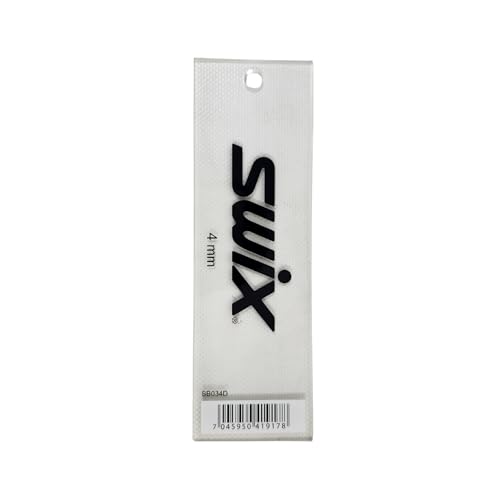
2. Swix 4mm Wax Scraper

Sale
Swix Plexi Wax Scraper
Simple 4mm plexi scraper with a stiff, straight edge. Compact and easy to control on skis.

The Swix is basically the same idea from a brand that’s been making ski tuning gear forever. It’s a simple 4mm plexi scraper with a nice straight edge and plenty of stiffness.

It’s smaller than the XCMAN, which I actually prefer when I’m working on skis. It still covers the width of the ski easily, but I find the smaller scraper a little nicer to handle. It doesn’t have the little corner notch for clearing wax off your edges, but that’s hardly essential. You can clear the edges perfectly well without one (or just go ride like I do and it sorts itself out).

Would I pay extra for the Swix because it scrapes wax better? No. It’s a piece of plexiglass. But it’s well made, it works and I’ve used enough Swix tuning gear over the years to trust it.

Best Ski & Snowboard Edge Tuners & Sharpeners

A decent ski or snowboard edge tuner holds the file at the right angle while you sharpen the edge. Edge tuning is where I’d be a little more careful than I was with the wax scrapers above. You’re actually removing metal here, and it’s surprisingly easy to get carried away.

I resisted doing my own edges for years. Slightly ridiculous considering I was literally working in a snowboard tuning shop at one point, but I was always happier waxing my own boards and leaving anything involving files to someone else.

Eventually I gave in, and it’s nowhere near as intimidating as it looks. A decent edge tool holds the file at the right angle for you, so for basic sharpening and cleaning up battered edges, you don’t need to be a ski tech.

That said, if you’ve never done it before, go easy. You’re generally trying to maintain the existing edge angle, not completely re-engineer your snowboard because some guy on a forum said 87° changed his life.

There are loads of edge tools out there, but I think these four cover pretty much every reason you’d actually buy one.

1. Toko Edge Tuner Pro Best Overall Pick

Toko Edge Tuner Pro
Adjustable 85–90° side edge angles | Roller bearings guide the tool along the base | Includes an 80mm World Cup file | Compatible with files and diamond stones

If I was buying one standalone edge tuner (or edge sharpener) this is probably the one I’d get.

The Toko is a much more serious bit of kit than the little plastic file guides, without disappearing completely down the ski-tech rabbit hole. You can set the side edge anywhere from 85° to 90°, it takes normal files and diamond stones, and it comes with a decent 80mm file to get you started.

The bit I really like is the rollers underneath. Rather than just dragging a plastic guide along the base of your ski or snowboard, the Toko rolls along it while holding the file at the angle you’ve selected. It just feels like a much nicer way of doing something I’m already slightly paranoid about screwing up.

And that’s probably worth repeating. I’m much more relaxed about waxing than I am about filing edges. Waxing badly usually means making a mess. Getting carried away with a file means you’ve actually removed metal.

You absolutely don’t need something this expensive to keep your edges sharp, and the XCMAN below will do the basic job for a fraction of the price. But if you’re going to tune your own edges regularly, I’d rather spend the extra money on the Toko.

Pros

  • Adjustable from 85° to 90°
  • Rollers guide the tool along the base
  • Works with files and diamond stones
  • Good quality file included

Cons

  • Expensive for a side edge tuner
  • Doesn't tune the base bevel

2. XCMAN Ski & Snowboard Edge Tuner Best Budget Pick

Sale
XCMAN Ski & Snowboard Edge Tuner
Four side edge settings: 87°, 88°, 89° and 90° | Includes a removable metal file | Simple handheld file guide for skis and snowboards

At the other end of the scale, this thing costs about twenty bucks.

And for a lot of people, I think that’s all you need to spend. The XCMAN is basically a plastic guide that holds a file at the angle you choose. You get 87°, 88°, 89° and 90°, the file comes with it, and there really isn’t much more going on.

Is it as nice as the Toko? No. You don’t get the rollers, it doesn’t feel anywhere near as refined and you’re much more limited if you want to start playing around with different files and diamond stones later. But if all you want to do is keep the side edges on your skis or snowboard sharp, it does the important bit for a fraction of the price.

I actually think there’s something to be said for starting here if you’re new to doing your own edges. Pick the angle your gear is already running, take your time and learn what you’re doing before deciding you need a $70 edge tuner and a drawer full of diamond stones.

If you end up getting really into tuning, you’ll probably outgrow it. If you sharpen your edges a couple of times a season, you might never bother.

Pros

  • Really cheap
  • Four useful side edge angles
  • File included
  • Simple and easy to use

Cons

  • Much more basic than the Toko
  • Limited file and stone compatibility
  • Side edges only

3. Demon Elite X Edge Care Kit Best Complete Edge Kit

Demon Elite X Ski & Snowboard Edge Care Kit
  • Adjustable 85–90° side edge tuner
  • 240, 500 and 1000 grit diamond stones
  • Steel file for sharpening edges
  • Gummy stone for finishing and deburring
  • Carry pouch keeps everything together

25% off with code SNOWCHASERS

The Demon is the one I’d buy if you want to go a bit further than just dragging a file along your edges every now and then. You get the adjustable edge tuner, but also three different diamond stones, a steel file and a gummy stone, so you can actually sharpen, smooth and finish the edge properly.

The tuner itself adjusts from 85 to 90 degrees. That’s probably more adjustment than most of us will ever need, but I like having the option. More importantly, you’re not locked into whatever angle a cheap fixed plastic guide happens to give you.

It’s the diamond stones that make this kit more interesting though. You’ve got 240, 500 and 1000 grit stones, so you can work through them rather than attacking the edge with a file every time. You really don’t want to be taking a file to your edges any more than necessary. Once the edge is sharp, the diamond stones are much better for keeping it that way and cleaning up little burrs.

The gummy stone is useful for knocking off rust and tidying things up too. I always seem to find a bit of surface rust somewhere when I pull my gear out after it’s been sitting wet in the car or roof box.

At $79.99 it’s obviously a completely different proposition to the cheap XCMAN above. But with our 25% discount it comes down to about $60. That’s relatively palatable and you’re getting the stuff you’d otherwise end up buying separately once you disappear down the tuning rabbit hole.

If you just want to sharpen your edges occasionally, save your money and get the XCMAN. If you actually enjoy tuning your own gear and want to look after your edges properly, I’d buy the Demon kit.

Pros

  • Adjustable from 85 to 90 degrees
  • Three diamond stones for maintaining edges
  • Includes steel file and gummy stone
  • Much more complete than a basic edge tuner

Cons

  • Far more expensive than a basic tuner
  • Overkill if you only touch up your edges occasionally

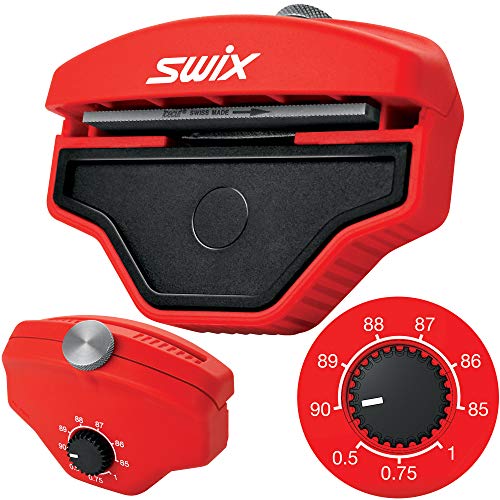
4. Swix Multi Edger Tool Best for Side & Base Edges

Swix TA3006 Base-Side Dual Edger
98 Reviews
Swix TA3006 Base-Side Dual Edger
Adjustable edge tool for both side edges and base bevels, with nine angle settings and an included 80mm file.

This is where things get a bit more serious.

Most of the tools above are really about the side edge. That’s the bit I’m happy telling most people to maintain at home because it’s fairly difficult to make a complete mess of things if you know what angle you’re aiming for and don’t go mental with the file.

The Swix can do that too, but it also lets you work on the base bevel. You can set the side edge from 0 to 5 degrees and the base at either 0.5 or 1 degree, giving you nine different settings altogether.

That makes it much more versatile, but it also comes with a warning: I wouldn’t start messing around with your base bevel just because you’ve bought a tool that lets you do it. If your skis or board are riding well, I’d generally leave the factory base angle alone and concentrate on keeping the edges clean and sharp.

Where this becomes useful is if you already know what you’re doing, you’re trying to restore an existing bevel, or you simply want one tool capable of handling both sides of the edge.

It comes with an 80mm file, and you can swap that out for compatible 70 or 80mm diamond stones. That’s how I’d use something like this long term: file when the edge genuinely needs work, then stones for normal maintenance rather than gradually filing half your edge away.

For most people, I’d still buy the Toko or the cheap XCMAN and leave the base bevel alone. But if you want one adjustable tool that can actually tackle both sides of the edge, the Swix is the more capable option.

Pros

  • Tunes both side edges and base bevels
  • Nine different angle settings
  • Includes an 80mm metal file
  • Compatible with 70–80mm diamond stones

Cons

  • More complicated than most people need
  • Easy to overdo things if you don't understand edge angles
  • Diamond stones need to be bought separately

Best Ski & Snowboard Vises

I waxed and tuned boards for years without a vise. It works, but it’s a pain in the ass. Scraping sends the board across the table, edge work is awkward and you end up finding increasingly stupid ways to hold everything still.

A proper vise fixes all of that. It gives you a solid platform for waxing and base repairs, then holds everything securely when you turn it on its side to work on the edges.

Skis and snowboards need slightly different setups though. I like the simple Toko supports for boards, while skis are much better in a proper three-piece vise with a centre clamp. If you work on both, there are universal options that save buying two separate setups.

These are the three I’d actually consider.

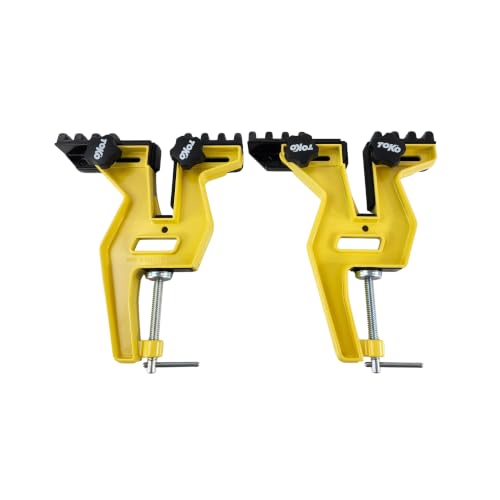
1. Toko Board Grip 2.0 Best Snowboard Vise

Toko Board Grip 2.0
Snowboard-specific vise with non-slip supports for base work and an upright position for tuning side edges.

I’ve had a set of these for years. They’re ridiculously simple, but for working on a snowboard that’s exactly what I want.

For waxing, the board just sits across the two wide rubber supports. They’re grippy enough that it stays put while you’re scraping and brushing, without having to actually clamp the board down.

The clever bit is the slot in the middle. Turn the board onto its side and it drops in between the supports, holding it upright while you work on the edges. It’s much easier than trying to balance a snowboard on its side while you’ve got a file in the other hand.

There’s no centre clamp, moving jaws or much else to go wrong. Clamp the two supports to a bench and you’re done. They’re also small enough that I can chuck them in with the rest of my tuning gear rather than needing a permanent workshop setup.

If I was only tuning snowboards, these are still what I’d buy. A three-piece ski vise is more substantial, but for a big, flat snowboard it just adds complexity you don’t really need. Toko has kept this one stupidly simple, and it works.

Pros

  • Made specifically for snowboards
  • Secure platform for waxing and scraping
  • Holds the board upright for edge tuning
  • Simple, compact design

Cons

  • Expensive for such a simple design
  • Not the setup I'd choose for skis

2. Swix T149-50 Ski Vise Best Ski Vise

Swix T149-50 Ski Vise
Proper three-piece ski vise with a wide centre clamp and adjustable supports for waxing, base work and edge tuning.

If you’re tuning skis rather than a snowboard, I’d spend the extra and get a proper three-piece vise like this.

The Swix has two supports for the tip and tail, then a big centre clamp that actually grips the ski. That gives you a much more solid setup than simply resting the ski on a couple of supports, particularly when you’re scraping hard or working on the edges.

You can clamp the ski flat for waxing and base work, then rotate it onto its side for edge tuning. The centre jaws open wide enough for most alpine skis, and everything that touches the ski is rubber-lined so you’re not clamping metal straight against the sidewall.

It’s expensive. There’s no getting around that. But it’s also a proper bit of workshop kit rather than something you’ll eventually want to replace. If I was setting up a bench specifically for tuning skis, this is the vise I’d buy.

The Demon below makes much more sense if you want to spend less or need something that’ll work with both skis and snowboards. But purely as a ski vise, the Swix is the better ski vise setup.

Pros

  • Proper three-piece ski vise
  • Centre clamp holds the ski securely
  • Excellent for both waxing and edge tuning
  • Rubber-lined contact points protect the ski

Cons

  • Pretty expensive
  • Not designed for snowboards

3. Demon Ski & Snowboard Ultra Vise Best Ski & Snowboard Vise

Demon Ski & Snowboard Ultra Vise
  • Works with both skis and snowboards
  • Horizontal and vertical tuning positions
  • 60° and 90° positions for edge work
  • Non-slip rubber contact surfaces
  • Built-in magnetic tool holder

25% off with code SNOWCHASERS

If you own skis and a snowboard, buying separate Toko and Swix setups starts getting expensive pretty quickly. That’s where the Demon makes a lot more sense.

It’s a two-piece vise, but unlike the Toko it’s designed to handle both. You can lay skis or a snowboard across the rubber supports for waxing, scraping and base repairs, then lock them into position when you want to work on the edges. It’ll hold your gear at 90° or 60°, which is particularly useful when you’re spending a bit of time with a file or diamond stone.

There are a few nice little touches too. You get ski brake retainers in the box, plenty of clearance underneath for bindings and a magnetic section for dumping files and other tools while you’re working. Nothing groundbreaking, but all useful.

The compromise is that it’s not quite as good at either job as the dedicated options above. For snowboards I’d still rather have the simplicity of the Toko, and for skis I’d take the proper three-piece Swix with its centre clamp.

But that’s also missing the point a bit. The Demon costs a lot less than buying both, takes up less room and will happily let you wax and tune either. If you’ve got skis and snowboards in the house and want one vise for everything, this is the one I’d buy.

Pros

  • Works with both skis and snowboards
  • Holds gear at 60° or 90° for edge tuning
  • Useful magnetic tool holder
  • Much cheaper than buying separate ski and snowboard vises

Cons

  • Swix is better if you only tune skis
  • Toko is simpler if you only tune snowboards

Best Ski & Snowboard Base Cleaners

Do you actually need base cleaner before every wax? No. Most of the time, I don’t think you need it. If the base is reasonably clean, I’ll scrape off anything obvious, give it a good brush and get on with waxing.

Where base cleaner is useful is when your skis or board are genuinely filthy, you’ve got old wax you want to remove, or you’re doing a proper end-of-season clean and tune.

I’ve used quite a few over the years, but I’d keep the choice pretty simple. Purl is the one I’d use most of the time. Swix is the stronger option when I actually want to strip a base properly.

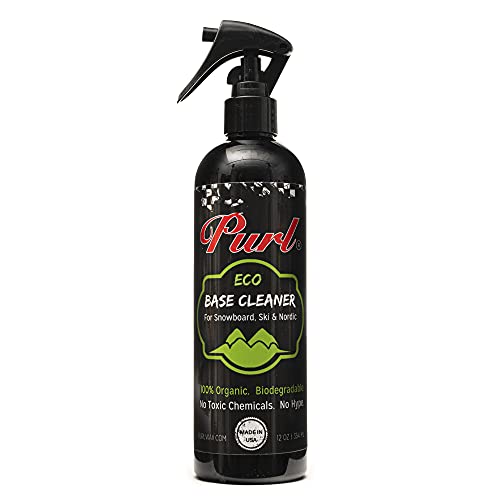
1. Purl Eco Base Cleaner Best Overall

Purl Eco Ski & Snowboard Base Cleaner
Non-toxic, biodegradable base cleaner for removing dirt and grime from ski and snowboard bases without drying them out.

I’ve used this stuff loads over the years. It’s the base cleaner I’d buy for normal home waxing.

It’s really easy to use. Spray a little onto the base, wipe it down and let it dry. It gets rid of the dirt and grime that builds up over a season without feeling like you’re attacking your base with some industrial solvent.

Purl says it’s non-toxic, biodegradable and made from renewable ingredients. More importantly for me, it doesn’t stink the place out and I’ve never found it leaves the base feeling dry afterwards. That’s particularly nice if, like me, most of your waxing happens indoors.

I definitely don’t use it before every wax. If the base looks clean, I’ll usually just give it a good brush and get on with it. I use the Purl when the base actually needs cleaning.

For really stripping back old wax, I’d use the stronger Swix cleaner below. But for general dirt, grime and normal cleaning before a wax, Purl is the one I’d keep in my tuning kit.

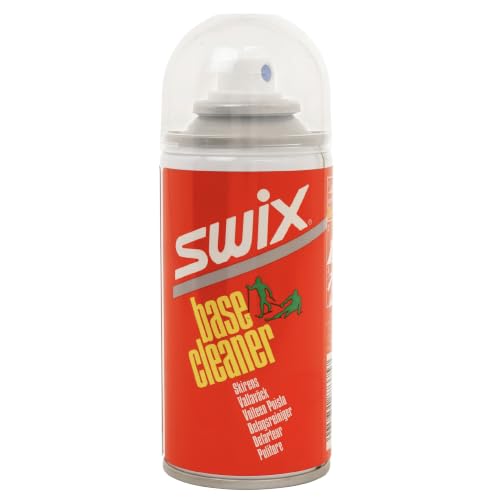
2. Swix Base Cleaner Best for Deep Cleaning

Swix Ski & Snowboard Base Cleaner
Traditional base cleaner for removing stubborn dirt, grime and old wax before giving skis or snowboards a fresh wax.

The Swix is what I’d reach for when I actually want to strip a base back and give it a proper clean.

It’s a more traditional solvent-based cleaner than the Purl. Apply it to the base, let it work for a few minutes, then wipe everything away. It’s good for shifting stubborn grime and old wax that a normal brush isn’t getting out.

The downside is that it’s stronger stuff. It smells like it too, so I’d use it somewhere well ventilated rather than sitting at the kitchen table with it. And I definitely wouldn’t use it before every wax.

For normal cleaning, I prefer the Purl. If the base is properly filthy or I want to remove old wax before starting again, this is when I’d grab the Swix.

Best Ski & Snowboard Base Repair Kits

Sooner or later you’re going to hit a rock.

For small gouges and scratches, you don’t need anything particularly clever. Some P-Tex and a metal scraper will handle most of the repairs I’m prepared to do at home.

If you want everything in one go, the XCMAN kit is cheap and has the basics covered. Already got a scraper? Just buy the Toko P-Tex.

1. XCMAN P-Tex Base Repair Kit Best Base Repair Kit

XCMAN P-Tex Base Repair Kit
Five P-Tex sticks, a metal scraper and sanding sponge for basic ski and snowboard base repairs.
There’s really not much you need for basic P-Tex repairs, and this gives you the lot. Five sticks, a metal scraper and a sanding sponge for tidying everything up afterwards.

It’s cheap, simple and saves buying the bits separately. For the usual scratches and rock gouges, this is all I’d bother with.

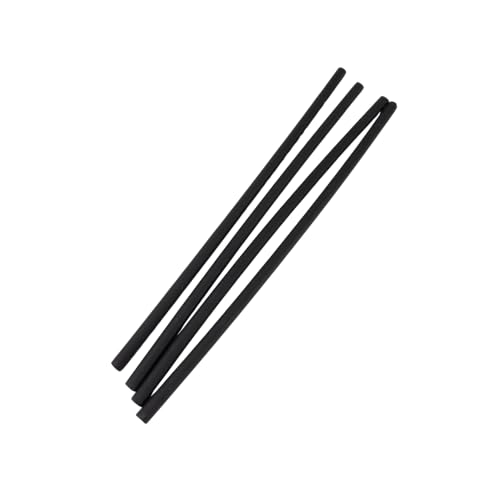
2. Toko Graphite P-Tex Repair Candles Best P-Tex

Toko Graphite P-Tex Repair Candles
6mm graphite P-Tex candles for repairing scratches and gouges in black ski and snowboard bases.

If you’ve already got a metal scraper, you don’t need another kit. Just keep some P-Tex around for when you inevitably find another rock.

These Toko graphite sticks are for black ski and snowboard bases. Light the end, drip the P-Tex into the damage, let it cool and scrape it back flush.

Nothing fancy. They’re just good P-Tex sticks from a tuning brand I’ve trusted for years.

Final Thoughts

There’s a point with tuning gear where buying more stuff stops making your skis or snowboard any better.

If you’re starting from scratch, a decent kit is still the easiest way in. You’ll get most of what you need in one go and can replace or upgrade individual bits later if you actually find a reason to.

If you already own an iron, scraper and brush, forget the kits. Pick up the individual tools you’re missing and spend the rest on lift tickets.

The goal is to spend less time at the tuning bench and more time actually riding the thing.

The Snow Chasers

Ski & Snowboard Waxing & Tuning Tool FAQs

For basic waxing, you really only need a waxing iron, wax, a plastic scraper and a brush. That's enough to keep your bases running well. An edge tuner is worth adding if you want to sharpen your own edges, while a vise makes the whole job easier but isn't essential. Base cleaner is useful when your bases are genuinely dirty, but I don't use it before every wax.

If you're starting from scratch, a decent tuning kit usually makes more sense. You'll get an iron, scraper, brush, wax and often a few edge and repair tools for less than buying everything individually. If you already own some of that stuff, I'd skip the kit and just buy the individual tools you're missing.

Mostly, yes. The same waxing irons, wax, brushes, scrapers and many edge tools can be used on both skis and snowboards. Vises are the main exception. Snowboards work well on wide supports, while skis are better held in a three-piece vise with a centre clamp. Universal vises are available if you regularly work on both.

Technically, yes, and plenty of us have done it. But I'd buy a proper waxing iron. You get much better temperature control and a smooth baseplate without the steam holes found on most clothes irons. Waxing irons aren't particularly expensive either, so it's one of the tuning tools that's actually worth buying.

No. I waxed and tuned boards for years without one. A vise just makes everything easier. It stops your gear sliding around while you're scraping and gives you a much more secure position for working on the edges. If you only wax occasionally, you can manage without one. If you're doing it regularly, I'd get one.

Yes, as long as you take your time. A decent edge guide holds the file or stone at the correct angle, which makes basic sharpening pretty straightforward. The main thing is not to get carried away. You're removing metal, so I'd normally maintain the existing edge angle rather than changing it unless you know exactly what you're doing. I'd be particularly careful with the base bevel.

Leave a Comment

Your email address will not be published. Required fields are marked *

one × 5 =

Scroll to Top