Pow surfers are ridiculous. In the best way.
No bindings. No straps. Just deep snow, a traction pad and slashing turns like you’re on a wave.
I first rode one on a proper Japan powder day and it completely rewired how I thought about riding deep snow. You slow down. You stop pointing it. You start playing with the terrain instead of charging it. Needless to say, I’ve been obsessed ever since.
Pow surfers don’t replace a snowboard though. They’re not practical. They’re not for every day. But when it’s deep, mellow and you want to feel something different under your feet, nothing else comes close.
🏆 Quick Pick
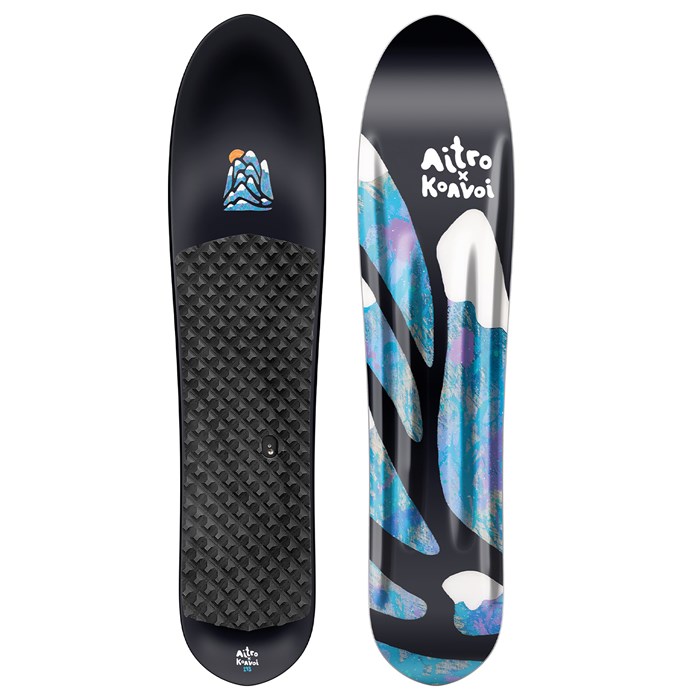
The Nitro x Konvoi Pow Surfer is the best powder surfer I've ever tested. It feels purpose-built, floats easily and actually rides the way you imagine a bindingless board should ride. It’s playful without feeling sketchy and serious enough that you won’t outgrow it after a couple of days. Not cheap, but if you’re going to try a pow surfer, this is the safest bet.
Top Pow Surfers 2026
Pow Surfer Reviews
1. Nitro x Konvoi Pow Surfer Best Overall
- Flex: Medium
- Profile: Full rocker
- Base: Premium extruded
- Shape:Directional Pow surfer
- Best for: Deep snow, mellow terrain, surf turns
- Tech: Full 3D base with rails, concave traction pad, coiled leash
This pow surfer made me laugh out loud on the first run.
The Nitro x Konvoi feels loose, surfy and instantly intuitive. You don’t need to “figure it out.” You point it downhill, lean into turns and it just starts slashing. The full rocker and 3D base mean it floats ridiculously well on mellow terrain, which is exactly where pow surfing makes the most sense.
Compared to the Jones, this one feels more playful and less serious. It wants quick direction changes, spray turns and playful lines through trees rather than long drawn-out carves. That’s why so many riders describe it as more fun, especially on resort pow days or in lower-angle zones.
If you want a pow surfer that feels forgiving and fun first, this is it.
Pros
- Instantly surfy, playful feel
- Ridiculous float on mellow terrain
- Easy to pivot and slash without effort
- Forgiving for first-time pow surfers
- Perfect for resort pow days and trees
Cons
- Less edge control at speed
- Feels loose if you push it hard
- Not ideal for steeper or faster lines
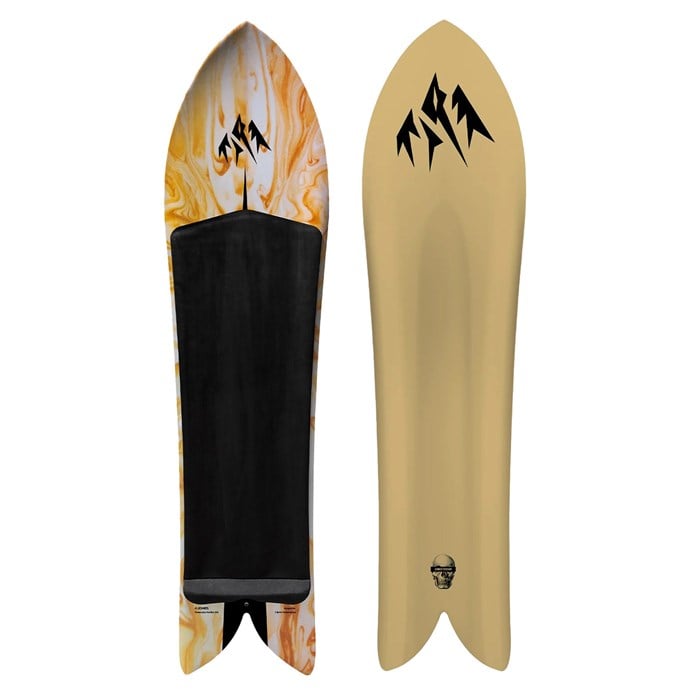
2. Jones Mountain Surfer Premium Pick
- Flex: 3/5 (soft, surfy)
- Profile: Surf Rocker (Christenson)
- Base: Waxed sintered
- Shape: Directional, tapered
- Best for: Smooth slashes, floaty turns, deep snow
- Tech: 3D contour base, 3D stepped edges, traction pad + coiled leash
The Jones Mountain Surfer feels like a pow surfer on steroids. It’s noticeably more directional and deliberate than the Nitro.
The Christenson rocker profile gives it insane float when you load the tail, but there’s also more edge engagement and structure once you’re moving. That makes it feel calmer at speed and more confident on steeper terrain.
Riders who prefer carving clean lines instead of slashing everything tend to gravitate toward this one. It still surfs super nicely, but it rewards better input. You have to ride it with intention.
If the Nitro feels playful, the Jones feels composed. Neither is better. They’re just different flavors.
Pros
- More control and drive than most pow surfers
- Feels stable at higher speeds
- Excellent float when riding off the tail
- Encourages clean, powerful turns
- Feels like a serious tool, not a novelty
Cons
- Less playful than the Nitro
- Needs more rider input to shine
- Expensive for something you won’t ride daily
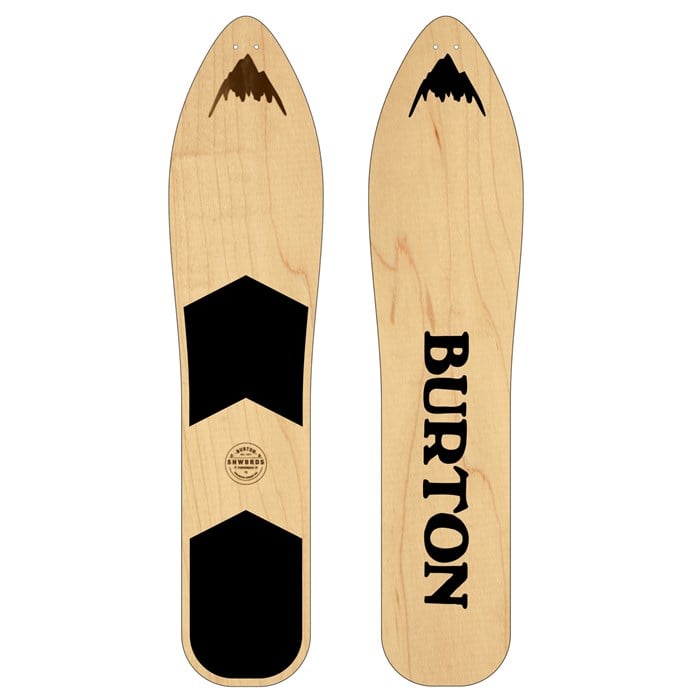
3. Burton The Throwback Budget Pick
- Flex: Soft
- Profile: V-Rocker
- Base: Extruded
- Shape: Directional
- Best for: Backyard hills and messing around in soft snow
- Tech: Simple surf-style build, grippy top, low-maintenance base
The Throwback is not trying to be a performance pow surfer. And that’s important to understand.
It’s cheap, simple and designed for backyard hills, sledding runs and messing around. If you’ve never ridden binding-free before and just want to see what it feels like, this is the easiest entry point.
But compared to the Nitro and Jones, it’s night and day. Less speed, less float, less control. You’ll have fun, but you’ll also quickly understand why real pow surfers exist.
This is a curiosity board. Not a replacement.
Pros
- Low cost entry into pow surfing
- Simple and unintimidating
- Fun for backyard and mellow terrain
- Good way to test the concept
Cons
- Very limited performance
- Not suitable for real resort riding
- You’ll outgrow it fast
- Feels more like a toy than a tool
Comparison Table
| Pow Surfer | Flex | Profile | Base | Shape | Best Use | Score |
|---|---|---|---|---|---|---|
| Nitro x Konvoi Pow Surfer | Medium | Full rocker | Premium extruded, full 3D base | Directional pow surfer (no bindings) | Surfy turns, mellow terrain, deep resort days | 4.6/5 |
| Jones Mountain Surfer | Soft-medium | Surf rocker (nose and tail) | Sintered | Directional pow surfer (no bindings) | Deep powder, natural lines, soul turns | 4.7/5 |
| Burton Throwback | Soft | V-Rocker | Extruded | Directional surf-style board | Backyards, sled hills, low-speed fun | 4.2/5 |
Pow Surfer Buying Guide
Pow surfing isn’t about speed or steep lines. It’s about feel.
You’re riding slower, leaning into turns, using the terrain and letting the board do most of the work. When it’s right, it feels effortless. When it’s wrong, it feels awkward fast.
Here’s what actually matters.
Terrain First
Pow surfers shine on mellow slopes, natural features, trees and open bowls. Think places where you can flow and link turns, not straight-line.
If you’re expecting to charge steeps or ride hardpack, this isn’t the tool.
Shape
Shape matters more than anything.
A good pow surfer has a wide nose, tapered tail and a surf-inspired outline. That’s what creates float and lets the board pivot without effort. You shouldn’t be forcing turns. The board should want to turn.
If it looks weird, you’re probably on the right track.
Profile
Rocker is your friend.
Most pow surfers run full rocker or surf-style rocker. That’s what keeps the nose up and makes direction changes feel natural. Some boards add subtle flat sections for stability, but the goal is looseness, not edge hold.
This isn’t about grip. It’s about glide.
Flex
Softer than a normal snowboard. Also less important.
Pow surfers work best with a soft to medium flex. Too stiff and they feel dead. Too soft and they wash out. You want something that bends easily underfoot but still gives you feedback through the turn.
Playful beats powerful here.
Expectations
This is not a replacement for your snowboard.
Pow surfers are an addition, not a do-it-all solution. Most people ride them on the right days, in the right zones and switch back to a normal board when conditions or terrain change.
Treat it like a new way to ride powder, not a new quiver killer. For example, I always take one to Japan alongside my dedicated Japan powder board.
Final Thoughts
I grab a pow surfer when I’m bored of doing the same thing on a normal board.
On a good day, it makes riding feel raw again. Slower, looser, more about turning and terrain than speed or tricks. You’re not charging. You’re messing around. And that’s exactly why it works.
You won’t ride it every day. You won’t replace your snowboard. But when the snow’s deep and the slope is right, it’s hard to beat. Addictive though – be warned.
Pow Surfer FAQs
No bindings. No straps. Just your boots, the board and gravity. It’s closer to surfing than snowboarding and that’s the whole point.
They’re built for deep snow, mellow slopes and flowy turns. Not speed or airtime.
You’re still riding snow, reading terrain, managing edge pressure and speed. You’re just doing it without bindings forcing your feet into place.
It feels stripped back, which is why some people hate them and others get obsessed (like me).
They shine where speed stays controlled and the snow stays soft. Think storm days, sidecountry laps, mellow resort zones.
Hardpack, ice, or steep sketchy runouts are not their world.
Some resorts allow them on powder days, others ban them outright. Always check before you show up.
They’re more commonly used in sidecountry, backcountry, or private zones where rules are looser.
You don’t need expert-level skills, but you do need decent balance and snow awareness. If you can’t control speed or read terrain, it’ll feel sketchy.
The first few runs feel weird. Then it clicks. And suddenly normal boards feel a bit… restrictive.
You’re relying on foot pressure instead of bindings, so supportive boots give you more control.
Super soft park boots work, but they feel vague once things get deeper or faster.
Pow surfers aren’t about straight-lining. You scrub speed naturally by turning more and riding with the slope.
If you’re trying to bomb it, you’re on the wrong tool.
Some are playful and loose. Others feel more locked-in and surfboard-like. Shape, rocker and base contour make a massive difference.
That’s why boards like the Nitro x Konvoi and Jones Mountain Surfer get compared so much. Same idea. Very different feel.
It’s not a replacement for your snowboard. It’s a bonus board for the right days.
If you like experimenting, slowing things down and riding for feel instead of performance, it’s absolutely worth it.
- Trying to ride it like a normal snowboard
- Taking it onto hardpack or icy terrain
- Ignoring resort rules
- Expecting it to replace a powder board
- Buying one before you’ve even ridden deep snow properly