Breaking your wrist snowboarding is miserable. Trust me, I’ve managed it twice.
Since then, I’ve spent far too much time trying different wrist guards because I wanted something that actually protected my wrists without making my hands feel useless. I’ve worn most of these for a full season or more, and one pair has stayed in my bag long after the others disappeared.
🏆 My Pick
Years later, I'm still wearing the Demon Flexmeters. After breaking both my wrists, I became slightly obsessed with not doing that again. They're backed by published research showing up to a 67% reduction in wrist fractures, but honestly, what keeps me wearing them is that they don't feel like I'm riding with two casts strapped to my arms.
How I Test Wrist Guards
My recent injuries have changed the way I look at wrist guards. Before that, I assumed they were mostly for beginners. I don’t anymore.
I didn’t set out to test every wrist guard on the market. I just kept buying different pairs whenever I thought I’d found something better. Some lasted a day before they annoyed me. Others made it through a season.
The biggest thing I paid attention to wasn’t how much protection the marketing promised. It was whether I actually wanted to keep wearing them. If a pair made my hands feel like they were strapped into two plaster casts, they usually stayed in my bag. If I forgot I was wearing them after a few runs, that was a very good sign.
Everything on this list has been ridden in real conditions over multiple days, not worn for ten minutes in a shop or pulled straight out of the box for a review.
What I Look For
A wrist guard can be incredibly protective, but if it’s uncomfortable enough that you leave it in your bag, it’s useless. These are the things that mattered most to me.
- Protection: The whole point. I looked for guards that spread the force of an impact instead of simply stopping your wrist from moving.
- Comfort: If I couldn’t wear them from first lift until last lift, they weren’t making this list.
- Freedom of movement: I still wanted to grab my board, strap in, adjust bindings and carry gear without feeling like I was wearing medical equipment.
- Glove fit: Some guards work brilliantly until you try getting your gloves over them. I looked for pairs that actually fit under snowboard gloves without turning into a wrestling match.
Why Should You Care What I Think?
Maybe you shouldn’t.
But I’ve spent over 15 years snowboarding, worked as a snowboard shop technician, taught riders for years, broken both wrists and wasted plenty of money on gear that wasn’t as good as the marketing claimed.
These are simply the wrist guards I’d buy again with my own money.
The Line-Up
1. Demon Flexmeter Snowboard Wrist Guards
- Single-sided support that spreads impact
- Three adjustable straps for a locked-in fit
- Designed with physicians and trauma specialists
- Flexible design keeps natural wrist movement
- Proven to reduce wrist fractures by up to 67%
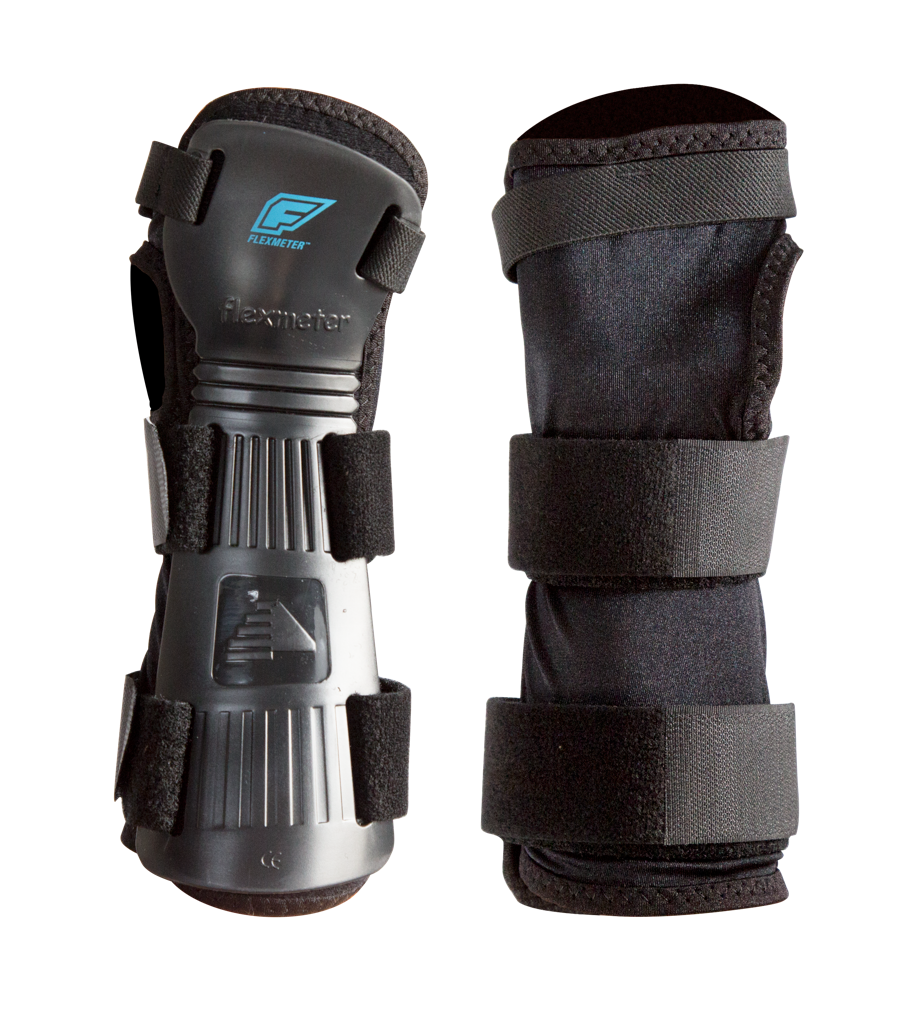
The Demon Flexmeter Wrist Guards are unlike any other wrist guard I’ve used. I bought my first pair years ago, back when they were just called Flexmeters, and I’m still wearing them today. They were developed with wrist surgeons and trauma specialists, and it shows.
Most wrist guards rely on rigid splints that simply stop your wrist bending. The Flexmeters do something different. Their longer, flexible splints spread the force of an impact instead of just transferring it further up your arm. If you choose the double-sided version, you also get D3O padding that stays soft while you’re riding but stiffens on impact.
There are two versions:
- Single-Sided: The one I’d recommend for snowboarding. It’s lower profile, fits under gloves more easily and still gives you enough movement to grab your board, strap in and ride normally.
- Double-Sided: Adds a palm skid plate and extra protection. I’d skip it for snowboarding, but it’s an excellent choice for longboarding, skating or any sport where you’re likely to hit pavement.
Personal take: Mine have outlasted several pairs of gloves. They aren’t the cheapest wrist guards you’ll find, but I’ve never regretted buying them once.
Best for: Anyone who’d rather not spend six weeks in a cast. Especially beginners, riders coming back from a wrist injury, or anyone who rides hard.
Want the full story? I’ve written a dedicated long-term review of the Flexmeters after years of riding in them. You can read it → here
Pros
- Unmatched wrist protection
- Patented Flexmeter design
- Comfortable under most gloves
- Durable and long-lasting
- Trusted by experienced riders
- Reduce fractures by ~67%
- Still flexible enough to strap in and adjust your gear.
Cons
- Pricier than basic wrist guards
- Bulkier than low-profile options
2. Dakine Wrist Guards Budget Pick
- Adjustable hook and loop wrist cinch
- Low Profile design for use inside gloves
- Lightweight Internal aluminum stay
- Neoprene stretch body for maximum comfort
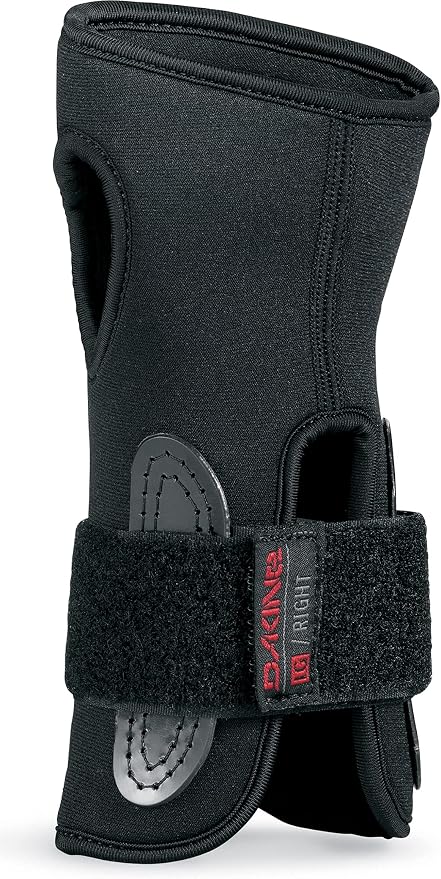
I’m still hesitant to recommend anything other than the Flexmeters because they’re the only wrist guards I genuinely trust if avoiding a fracture is your priority. But if your budget won’t stretch that far, the Dakine Wrist Guards are a decent alternative.
They’re about as simple as wrist guards get: a neoprene sleeve with a rigid palm bar. The slim profile fits under most snowboard gloves without much hassle, they’re lightweight, and they’re comfortable enough for shorter days.
The downside is that rigid palm bar. By the end of a full day my hand usually felt cramped, and you lose a lot more freedom of movement than you do with the Flexmeters. If I had the choice, I’d spend the extra every time.
Best for: Riders who want basic wrist protection without spending much.
Pros
- Affordable price point
- Low-profile design fits under most gloves
- Easy to put on and take off
- Lightweight and minimal
Cons
- Less protective than Flexmeters
- Rigid palm bar can cause cramping
- Limited flexibility
3. Dakine Wrist Guard Snowboard Gloves
- MULTIPLE SIZES FOR PROPER FIT: Available in XS, S, M, L, XL, and XXL. Designed as mens winter gloves with a gauntlet length fit for skiing, snowboarding, and full cold-weather coverage.
- HI LOFT INSULATION FOR WARMTH: Built as winter gloves men can rely on with Hi Loft synthetic insulation (110/230g) and a 300g fleece lining to help retain heat in cold conditions. Ideal mens gloves for cold weather on long mountain days.
- DK DRY WATERPROTECTION: Featuring a DK Dry waterproof insert and DWR-treated shell, these snow gloves for men are designed to help keep hands dry in storms, wet snow, and lift rides.
- INTEGRATED WRIST SUPPORT SYSTEM: Includes removable rigid nylon support plates on the backhand and palm for added stability. Designed to support impact while maintaining natural range of motion during active riding.
- TRUSTED DAKINE PERFORMANCE: Durable shell construction with Rubbertec palm enhances grip and longevity. One hand cinch gauntlet closure, adjustable hook and loop wrist strap, and removable leash provide secure fit and reliable ski gloves performance.
I wasn’t convinced by the idea of wrist guard gloves at first. Normally, built-in protection means compromising on both the glove and the guard. These surprised me a bit.
The wrist guard is based on Dakine’s standard design, but it’s sewn into a warm, waterproof glove, so there’s no wrestling separate guards under your gloves every morning. Everything stays where it’s should, and you can just throw them on and ride.
The downside is that you’re locked into one setup. If the glove wears out, you replace the whole thing. You also can’t swap gloves depending on the weather or adjust the guard separately like you can with standalone wrist guards. For me, that’s enough to keep using separate Flexmeters, but I can see why plenty of riders prefer these.
Best for: Riders who value convenience over ultimate protection, or anyone who wants one less thing to think about before getting on the lift.
Pros
- Warm and waterproof
- Built-in wrist guard solves glove layering issues
- Durable outer material
- Guard stays securely in place
Cons
- Guard and glove cannot be adjusted separately
- Less flexibility than standalone guards
- Fit can be tricky for some hand shapes
4. Burton Kids Protective Wrist Guards Best Kids Wrist Guards
- Sturdy, tapered top splints
- Soft palm pad
- Flexible hook-and-loop adjustment
- Low-profile design; Gender neutral sizing
- Polyethylene insert; Lifetime warranty
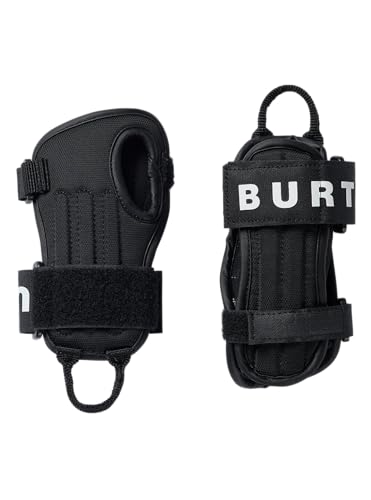
I ended up buying these for my son because the Flexmeters simply weren’t available in a size small enough. Thankfully, Burton have done a good job.
They’re low-profile enough to slide under kids’ gloves or mittens without turning getting dressed into a battle, and the tapered splints give plenty of support without feeling overly bulky. The adjustable straps also make it easy to get a snug fit as they grow.
No, they’re not as clever as the Flexmeters, but they don’t need to be. If your child is learning to snowboard, these are comfortable, easy to wear, and offer far more protection than riding without wrist guards.
Best for: Young snowboarders who need a comfortable wrist guard that actually fits.
Pros
- Kid-friendly low-profile design
- Slides easily under mittens or gloves
- Solid protection from tapered splints
- Durable build quality
Cons
- Not as protective as premium options like Flexmeter
- Limited adjustability
5. Bodyprox Impact Wrist Guards
- Nylon 40% SBR 25% Polyester 20% EVA 15%
- Imported
- Flexible ribbing along the top of the wrist to prevent overextending.
- High-density EVA foam padding protects palms from impact. Our design features a larger padding section than the typical to cover more surface area
- Velcro closures along the top of the hand and wrist to adjust the fit
The BODYPROX Impact Wrist Guards remind me a lot of their impact shorts. They’re simple, affordable and better than you’d expect for the money. I wouldn’t put them in the same league as the Flexmeters, but they don’t pretend to be.
The slim design fits under most snowboard gloves without much hassle, and they’re comfortable enough for occasional trips. The downside is that the rigid splints don’t spread impact in the same way as the Flexmeters, and they don’t feel as well made as the Dakines either.
Personal take: If you ride once or twice a year, I’d be perfectly happy recommending these. If you snowboard regularly, I’d save a bit longer and buy the Flexmeters instead.
Best for: Occasional riders or beginners looking for decent protection without spending much.
Pros
- Very affordable
- Slides under most gloves easily
- Decent protection for casual use
- Good entry-level choice
Cons
- Less impact dispersion than Flexmeter
- Durability not as high as premium models
6. OutdoorMaster Wrist Guards for Snowboarding
- Premium Protection: High-density, impact-resistant molded PE splints on front and back for support. The "bump" of the wrist guards splint that run along the palm and wrist to ensure proper coverage, gives concentrated protection when most hard impacts occur. Includes EVA shock-absorbing foam layers with double stitching for durability
- Breathable & Comfortable: Wrist guards are made of polyester and spandex blend that is lightweight and breathable that won’t irritate your skin or weigh you down, helps keep your hands cool, dry and comfortable. Slim enough to fit under gloves for winter sports
- Adjustable Straps: Slide-On Design for easy on and off. We added a thumb hole for extra flexibility, and the whole thing is secured with only one strap, you’ll enjoy their snug, stretchy fit. The finger slots help to ensure they won't slip out of place. We provide beautifully stickers. This stickers is made of high quality silicone. Self-adhesive design, you can decorate your wristsaver
- Multiple Outdoor Sports: Solid wrist support and protection, front to back. Wrist guards are designed for sports safety protection, for roller skating, inline skating, skateboarding, skiing, snowboarding and other extreme sports which need impact protection gear
- What You Will Get: 1 Pair Wrist guards. Available in five sizes, please measure the circumference of your palm with a flexible measuring tape. If your measurements are in-between the sizes, we strongly recommend sizing up to the larger size
I grabbed these to see if a true budget wrist guard could hold up for snowboarding and honestly, they’re not bad for the price. The dual splints (front and back) give a decent level of support, and the fit is slim enough to slide under my mittens without feeling awkward.
They’re definitely more of a light-protection option. I wouldn’t trust them to take the same heavy hits as my Flexmeters (bet you’re bored of hearing me say that one), but for cruising days or beginner falls, they do the job. The materials aren’t premium, so I wouldn’t expect them to last forever, but for the cost, it’s hard to complain.
Best For: Riders who want cheap, functional wrist protection for casual snowboarding without layering guards under gloves.
Pros
- Dual splints for added support
- Slim enough to fit under most gloves or mittens
- Affordable entry-level pick
- Easy to adjust with Velcro straps
Cons
- Not as durable as higher-end guards
- Limited impact absorption on big falls
- Materials feel a little cheap
7. Triple Eight Undercover Snowboard Wrist Guards
- Sold as a pair
- Fits under most snowboard gloves
- Perforated neoprene body for extra breathability and a comfortable fit
- 2" wide elastic support strap
- EZ pull-on loop
The Triple Eight Undercover Snow Wrist Pads are about as low-profile as it gets. I barely noticed them under my gloves, which is great if you hate bulky gear. They slide on well as they’re basically a thin neoprene sleeve with a single rigid splint in the palm
They’re not going to save you from every crash, especially heavy side impacts, but for mellow riding or if you just want a little peace of mind, they’re a good, simple option. I used them for a couple of easy days and completely forgot I had them on – which is kind of the point.
However, they do feel nowhere near as sturdy as my beloved Flexmeters. Sorry Triple Eight!
Best For: Riders who want discreet, lightweight wrist protection for cruising and casual park laps.
Pros
- Ultra slim and low-profile
- Quick to put on/off
- Reliable polyethylene splint protects against most common wrist injuries
- Solid budget choice for casual or beginner snowboarders
Cons
- Minimal protection compared to dual-splint or premium guards
- Minimal adjustability — can feel loose or tight depending on hand size
Types of Snowboard Wrist Protection
There are really only two options. Separate wrist guards, or gloves with the protection built in. I’ve ridden in both, and each has its place.
1. Standalone Wrist Guards
These are what I recommend to almost everyone. You pull them on first, then your gloves or mittens go over the top.
Most use a rigid splint along the palm to stop your wrist bending too far in a fall. Better ones, like the Flexmeters, spread the force instead of simply stopping your wrist dead.
Why I prefer them:
- You can wear them with any gloves you already own.
- They generally offer the best protection.
- If your gloves wear out, you don’t have to replace the guards as well.
If your main priority is avoiding a wrist fracture, this is the style I’d buy every time.
2. Wrist Guard Gloves and Mittens
These build the wrist guard straight into the glove. It’s a neat idea because you don’t have to wrestle separate guards under your gloves every morning.
They’re comfortable, warm and convenient, especially if you only ride a few trips a year.
The downside?
The guard and glove become one piece of gear. If the glove doesn’t fit quite right, neither does the protection. And because the protection has to work inside a glove, it’s usually less substantial than what you’ll find on a dedicated wrist guard.
I still think they’re a good option if convenience matters more than maximum protection, but if I had to choose just one style, I’d still reach for standalone guards.
Final Thoughts
Wrist guards might not be exciting gear, but they can save your season. I’ve worn mine for years and they’ve saved me more times than I can count.
I know they’re not the first thing people want to spend money on. I’d rather buy a new board too. But after breaking both my wrists, they’re one purchase I’ve never regretted.
Ignore everything else in this guide if you want. Just don’t ignore this. Broken wrists suck.
Snowboard Wrist Guard FAQ
No. Plenty of riders never wear them. But wrist fractures are one of the most common snowboard injuries, especially if you're learning, riding park or trying new tricks. After breaking both of my wrists, I wouldn't ride without them. They're one of the few bits of gear that can genuinely stop a season-ending injury.
I'd recommend them. Beginners fall more often, and the natural reaction is to put your hands out to break the fall. That's exactly how many snowboard wrist injuries happen. Wrist guards won't prevent every injury, but they can reduce the risk and give you a bit more confidence while you're learning.
No wrist guard can guarantee you won't break your wrist. That said, good designs can significantly reduce the risk by spreading the force of an impact instead of letting it travel straight into your wrist. Published research on Flexmeter wrist guards found they reduced wrist fractures by up to 67%.
Yes. Most snowboard-specific wrist guards are designed to fit under gloves or mittens. If your gloves are already a tight fit, you may need to size up or choose a slimmer wrist guard. Buying gloves and guards from the same brand can also make sizing easier.
A little, but they shouldn't make your hands feel useless. You should still be able to strap into your bindings, grab your board and ride comfortably. Better designs protect your wrist without locking it completely rigid, which makes a big difference over a full day on the mountain.
Usually, yes. Snowboard wrist guards are slimmer so they'll fit inside gloves, while skate guards tend to be bulkier with larger plastic palm splints and are designed to be worn on their own. You can use skate guards for snowboarding, but they're rarely as comfortable.
They should feel snug without cutting off circulation. Your wrist shouldn't move around inside the guard, but you should still be able to make a fist and grip your board comfortably. Once your gloves are on, everything should stay in place without creating pressure points.
Absolutely. In fact, I usually prefer mittens because they tend to have a little more room than gloves. As long as the wrist guard fits comfortably underneath without bunching up or squeezing your hand, either option works well.