Best Ski & Snowboard Knee Pads (Because Falling Hurts)

If you ski or snowboard for long enough, sooner or later you’re going to land on your knees.

Mine have had a rough enough time already, so I wear knee pads.

The problem is that a lot of knee protection is horrible to actually ride in. Too bulky, too restrictive, or slowly working its way down your leg while you’re trying to ski.

I’ve tried a fair few over the years, from cheap foam sleeves to some seriously heavy-duty protection. Some have been great. Others lasted about a day before I stopped wearing them.

Here’s what I’ve ended up with.

🏆 My Pick

I wear the Demon Zero RF D3O most of the time. The Hyper gives you more protection, but it's also a lot bulkier. For skiing and snowboarding, I'd rather have less material around a joint I'm bending all day. The Zero RF still gives me plenty of protection without getting in the way.

Shop Now at Demon

25% off with code SNOWCHASERS

Ski & Snowboard Knee Pad Reviews

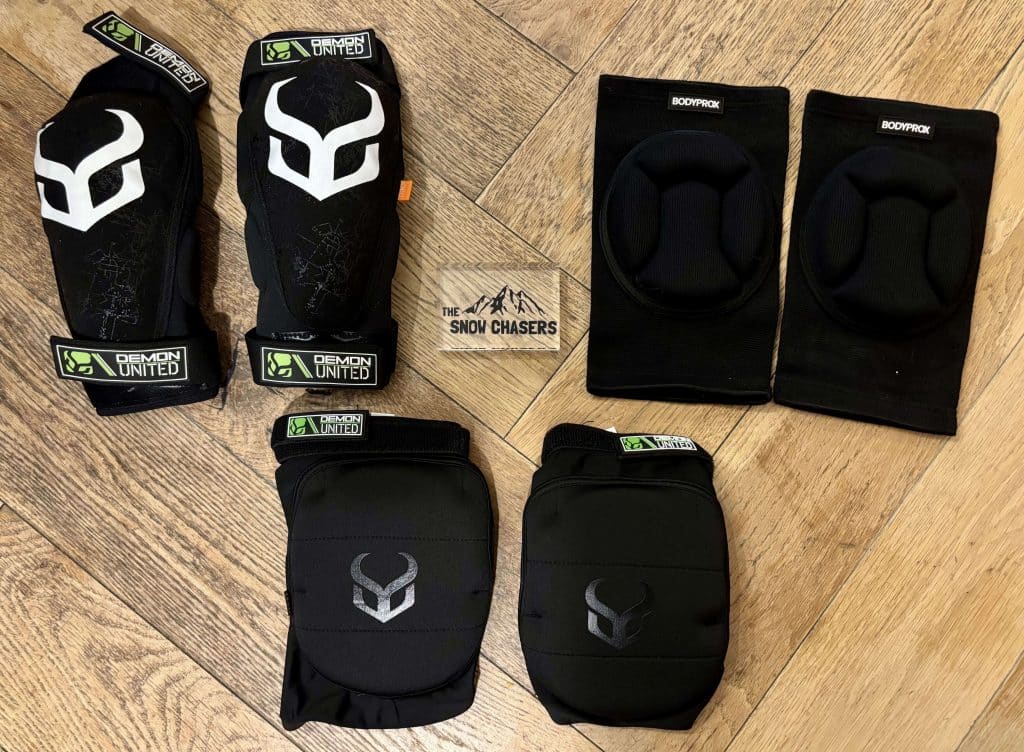
I’ve tested almost a dozen knee pads and narrowed it down to three very different options. The Zero RF is what I wear most, the Hyper is considerably more protective, and the Bodyprox is the cheap and simple option. Here’s how they actually compare.

1. Demon Zero RF D3O Knee Pads My Top Pick

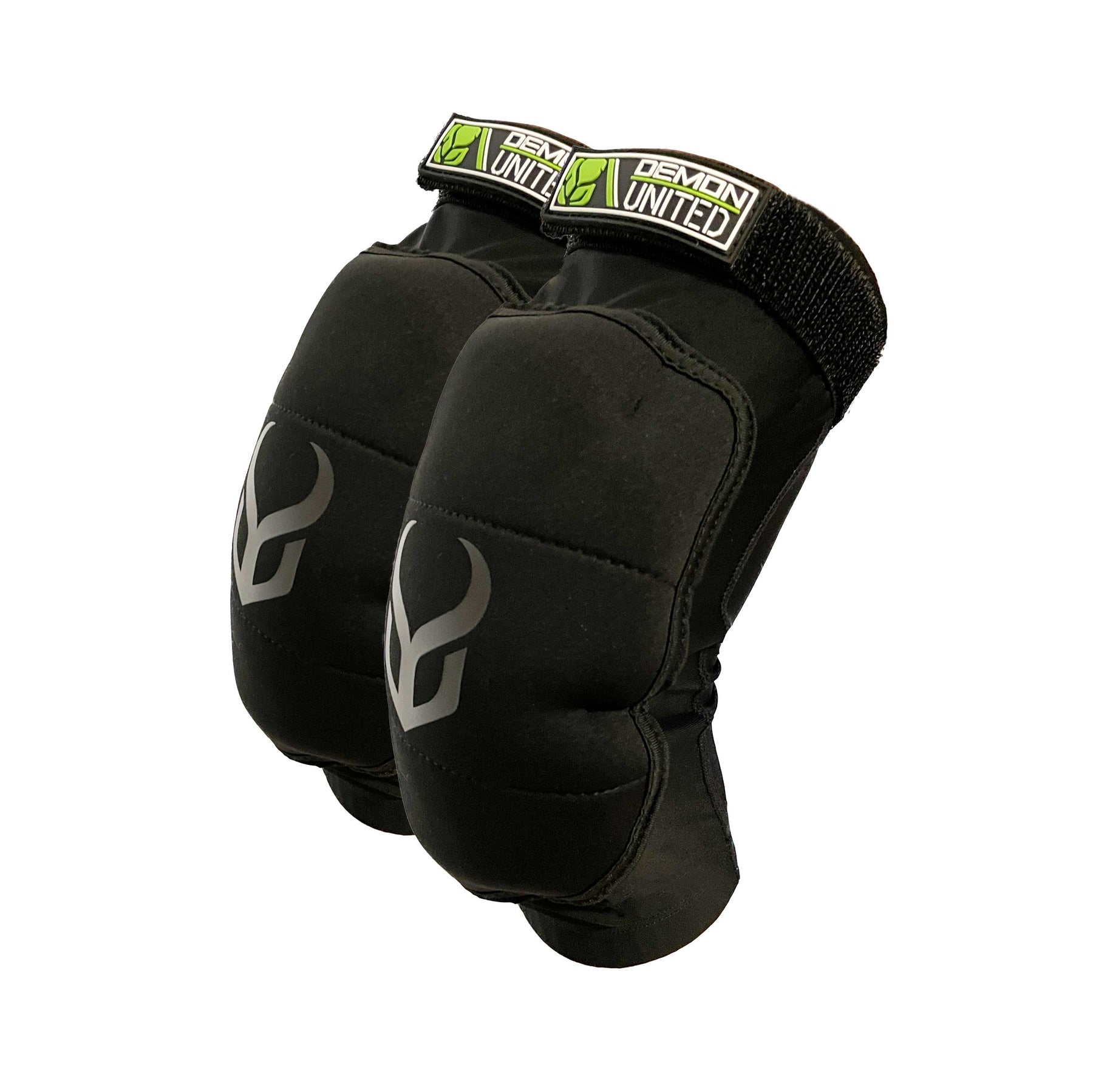
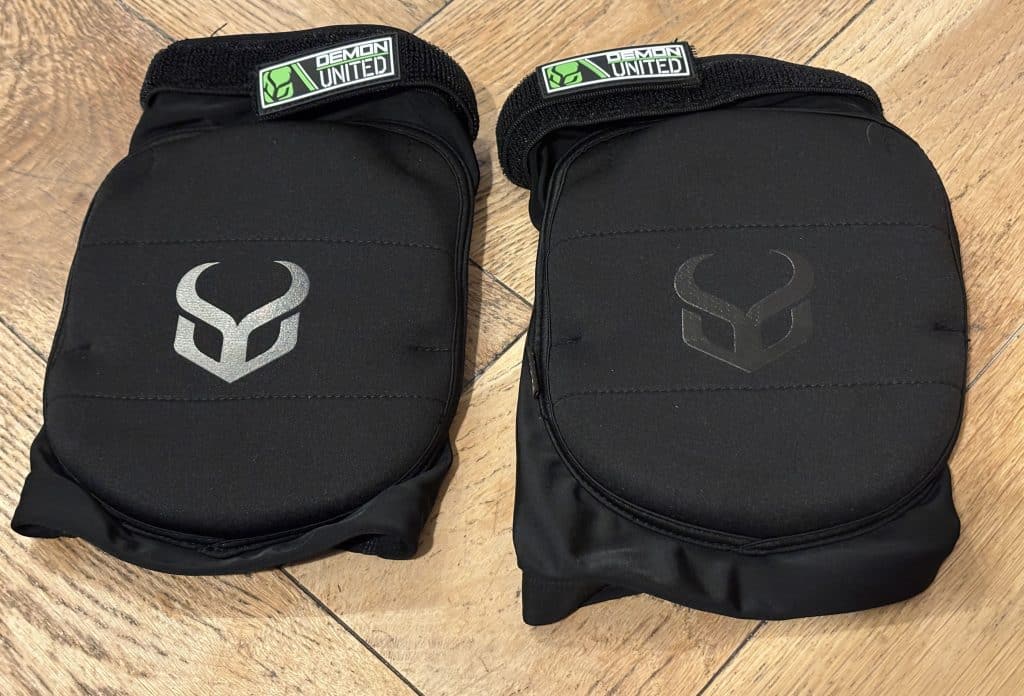
Demon Zero RF D3O Ski & Snowboard Knee Pads
  • Recycled D3O RF impact foam
  • Soft comfort foam underneath
  • Low-profile neoprene construction
  • Silicone grippers help keep them in place
  • Adjustable soft-touch Velcro top strap

25% off with code SNOWCHASERS
I’ve got more protective knee pads than these. I just don’t wear them as much.

The Zero RFs are the pair I wear most often because they’re not massive. That matters more with knee pads than it does with most protective gear. You’re bending your knees all day, and a big lump of padding strapped over the joint gets annoying pretty quickly.

There’s still a decent amount of protection here. Demon uses a layer of D3O RF with softer foam underneath, so these aren’t just thin foam sleeves with a logo on them. The neoprene body flexes easily and there are silicone grippers inside as well as the strap at the top. Mine stay where they’re supposed to.

They’re also slim enough to disappear under my snowboard pants. You can tell you’re wearing knee pads, obviously, but they don’t interfere with my riding or make my knees awkward to bend. That’s the main reason I’ve carried on wearing them.

The Hyper is different. It’s considerably more substantial and when my knee is flaring up or I want more protection, that’s the one I’ll use. All that extra material gives the knee a bit more support too, almost like a light brace. But I don’t particularly want that much knee pad every time I go snowboarding.

For normal riding, I prefer the Zero RF. It’s enough knee pad without being too much knee pad.

Pros

  • Good protection without loads of bulk
  • Flexible enough for all-day riding
  • Low profile under ski or snowboard pants
  • Silicone grippers and top strap keep them in place
  • D3O RF with softer comfort foam underneath
  • Much easier to live with than heavier-duty pads

Cons

  • Less protection than the Demon Hyper
  • Still bulkier than basic foam sleeves
  • Not particularly cheap

2. Demon Hyper X V7 D3O Knee Pads Best Protection

Demon Hyper X V7 D3O Knee Pads
  • D3O T6 impact padding
  • A.I. air padding around the knee
  • Armortex front shield woven with Kevlar
  • Perforated neoprene construction
  • CE certified to EN 1621-1

25% off with code SNOWCHASERS
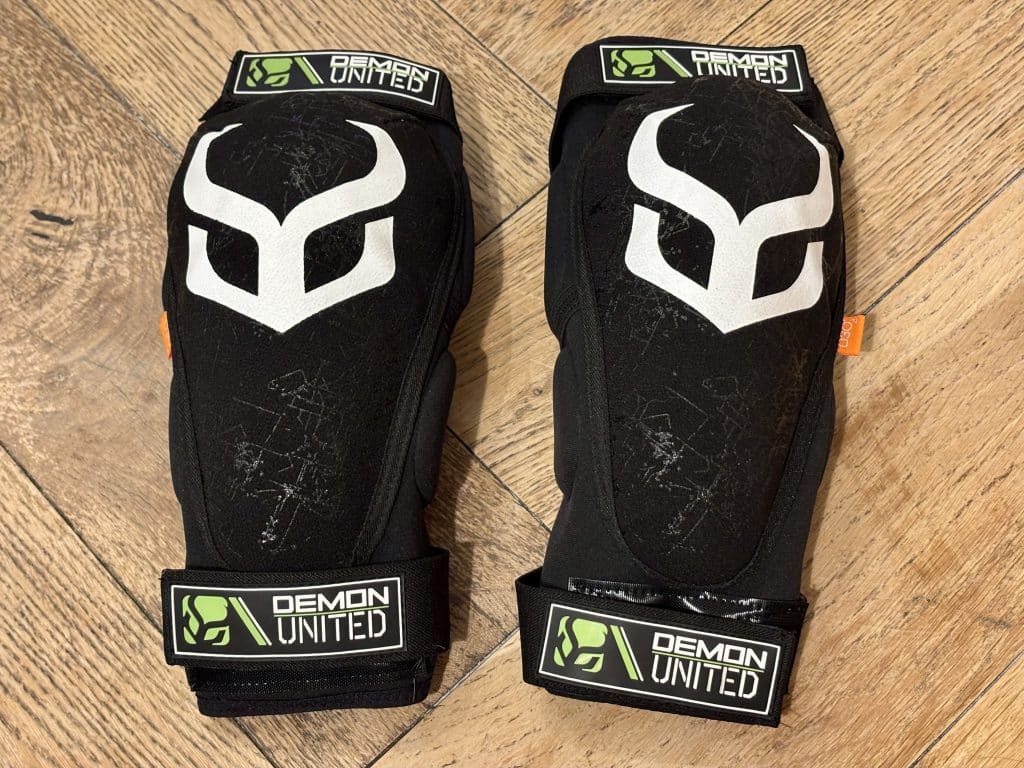
The Hypers have a different job. After my knee surgery, or if my knee is playing up, these are the ones I wear. They’re not a knee brace, but the longer and more substantial construction does give me some extra support as well as considerably more impact protection.

The V7 has had a pretty serious upgrade too. There’s D3O T6 over the knee, Demon’s A.I. air padding around it and an Armortex front shield woven with Kevlar. It’s a lot of protection for a knee pad.

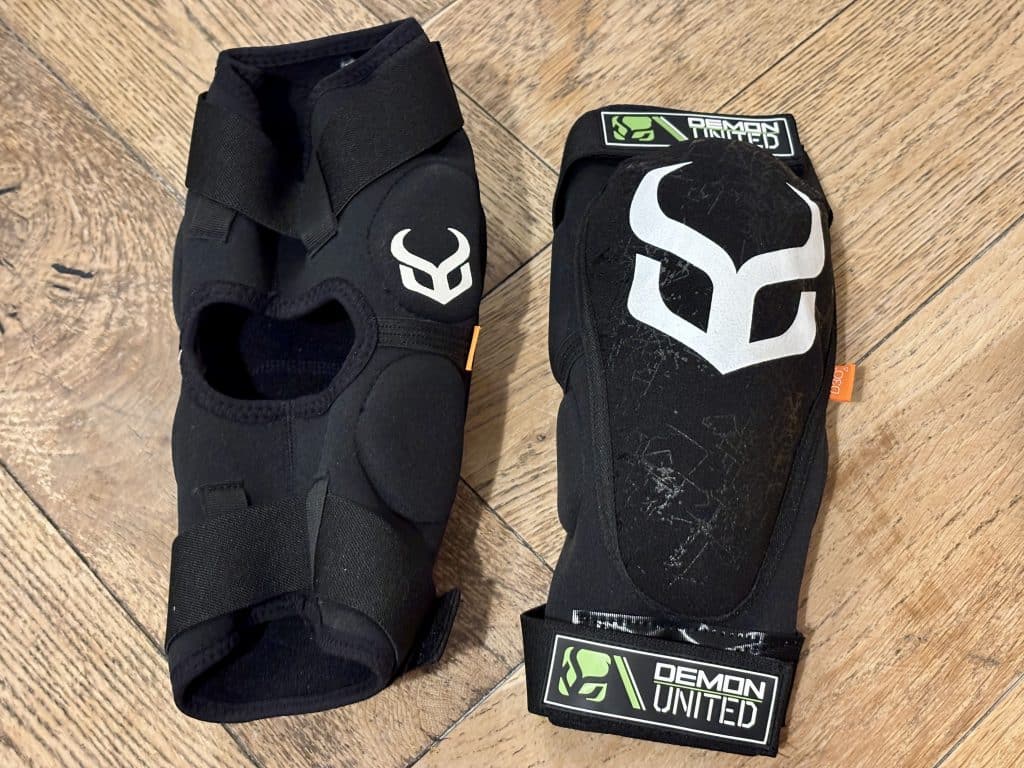
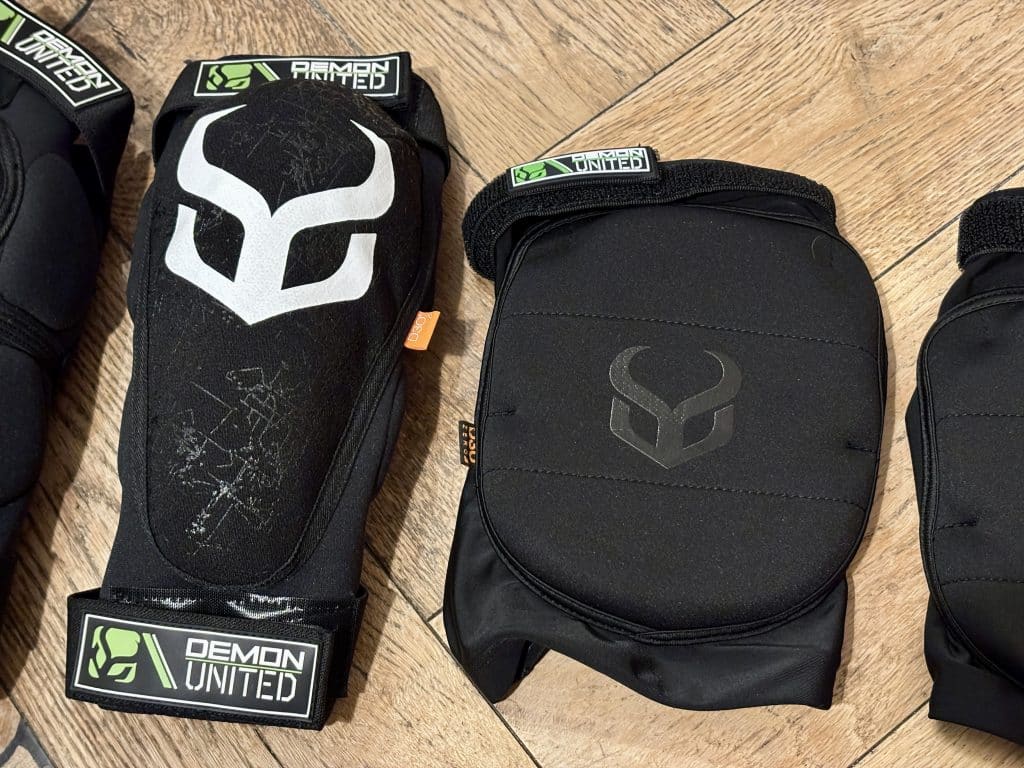
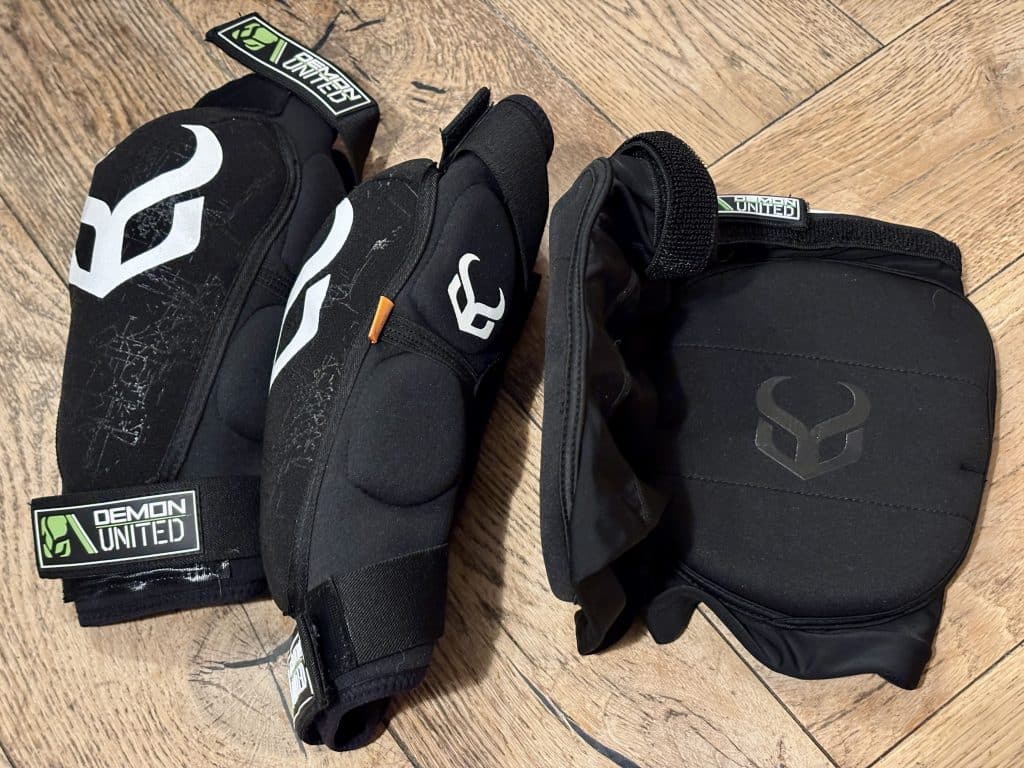
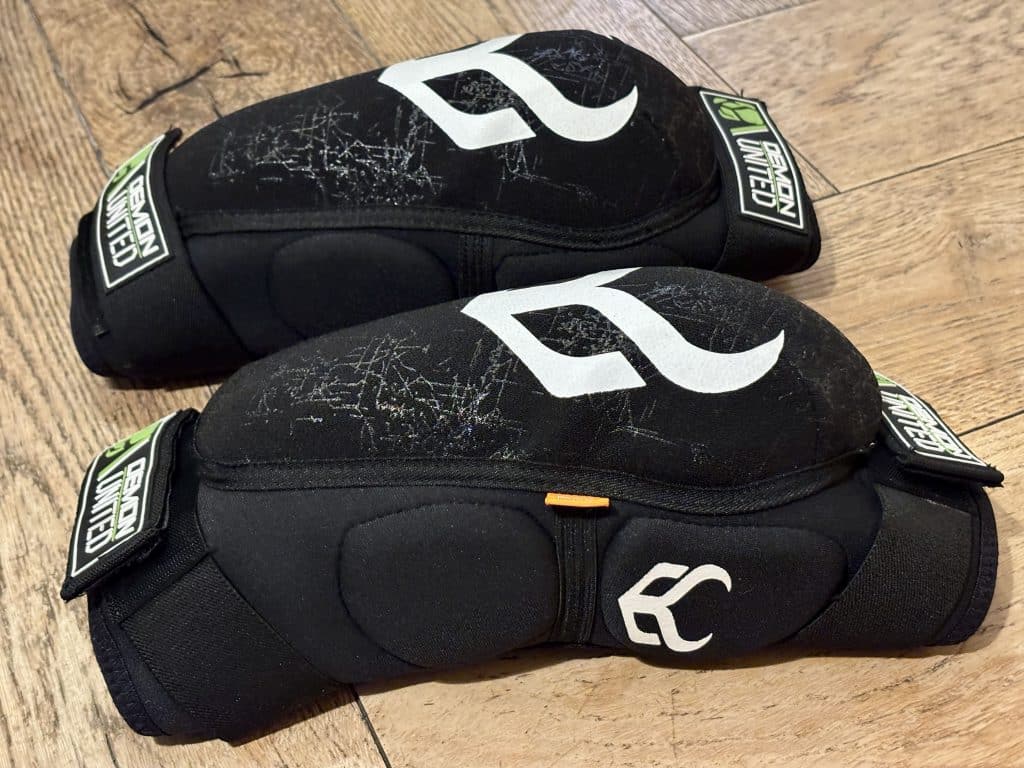
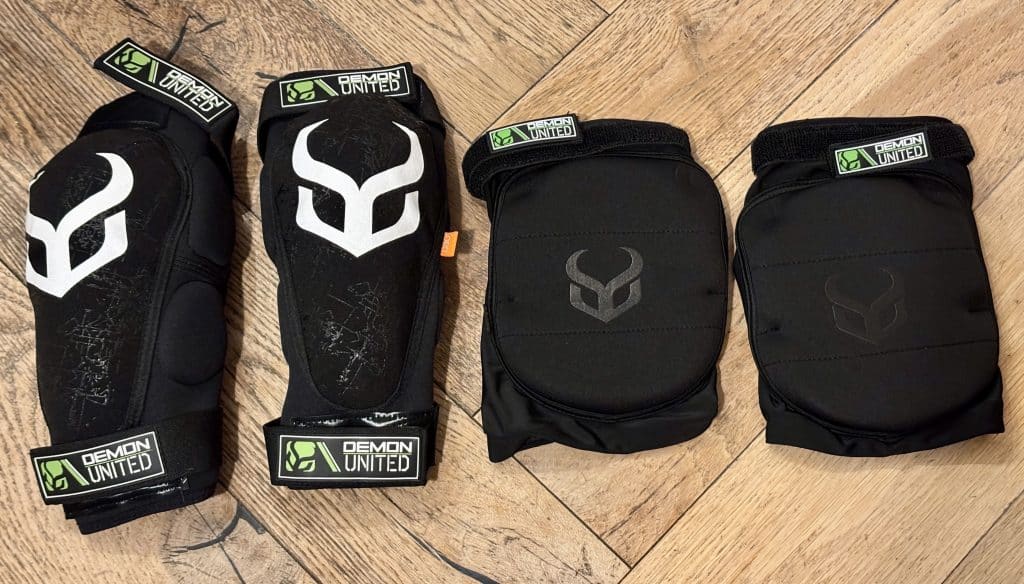
The difference is much bigger when you put the Hyper next to the Zero RF. It’s dramatically thicker through the main knee pad, but that’s only part of it. There’s also substantial padding running down either side of the knee, and the whole thing extends much further around the joint.

The strapping is completely different too. The Zero RF is basically a low-profile sleeve with a top strap to stop it moving. The Hyper locks much more firmly around your leg. It feels like proper protective equipment rather than something you almost forget you’re wearing.

That extra protection is great when you hit the ground. The downside is having a lot more material wrapped around a joint that’s flexing all day, which is why I still prefer the Zero RF for normal resort riding.

Where the Hyper makes sense is when protection matters more. I’ve worn mine when my knee hasn’t felt 100%, and I’d take these over the Zero for park riding or any day where I’m particularly keen to keep my knees intact. The front panel is tough as hell too, which matters if you’re hitting rails as well as snow.

Despite looking fairly substantial, they still move well with your knee. The V7 uses perforated neoprene and the padding is shaped around the joint rather than just sticking a massive lump of foam over your kneecap. They still run warmer and stiffer than the Zero, but that’s the trade-off here.

For most days, I’d still wear the Zero RF. If you’ve got dodgy knees, you’re coming back from an injury, or you simply want as much impact protection as possible, the Hyper is definitely the better option.

Specs:

  • D3O T6 impact padding
  • A.I. (Air Pad Integrated) padding
  • Armortex front shield with Kevlar
  • CE certified to EN 1621-1
  • Perforated neoprene construction
  • Comfort Velcro top strap
  • Designed for skiing, snowboarding, MTB and BMX

Pros

  • Serious D3O impact protection
  • Armortex/Kevlar front shield
  • Extra coverage gives some support around the knee
  • Still moves well with your knee
  • CE certified to EN 1621-1
  • Great when maximum protection matters

Cons

  • Bulkier than the Zero RF
  • Warmer than a lightweight pad
  • Overkill for normal resort riding
  • More expensive than the Zero RF

3. Bodyprox Protective Knee Pads Budget Pick

Bodyprox Protective Knee Pads
  • 7/8-inch EVA foam padding
  • Simple slip-on design
  • Lightweight and flexible
  • Breathable stretch sleeve
  • Two adult sizes available

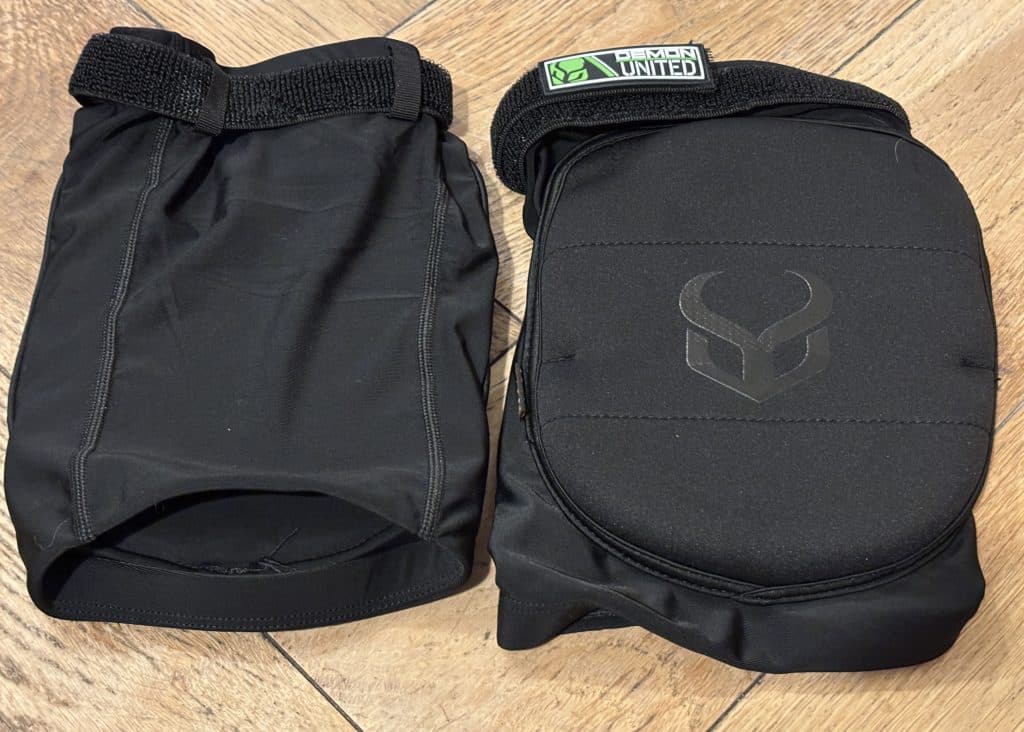
The Bodyprox pads are here for a much simpler reason – they’re cheap.

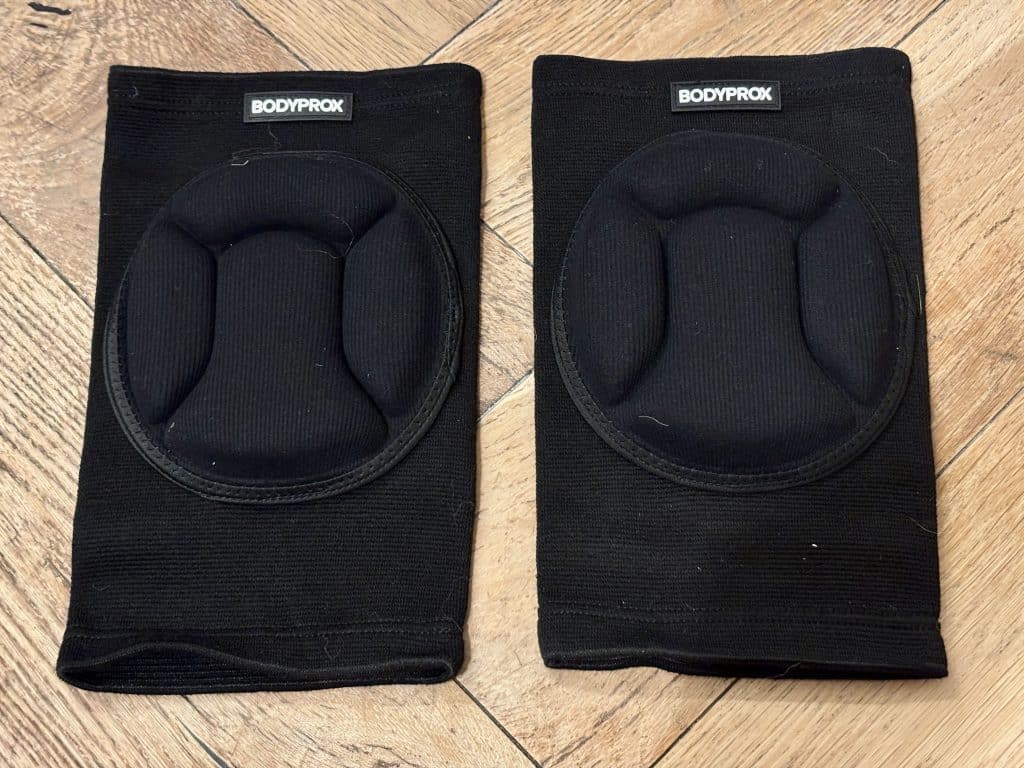
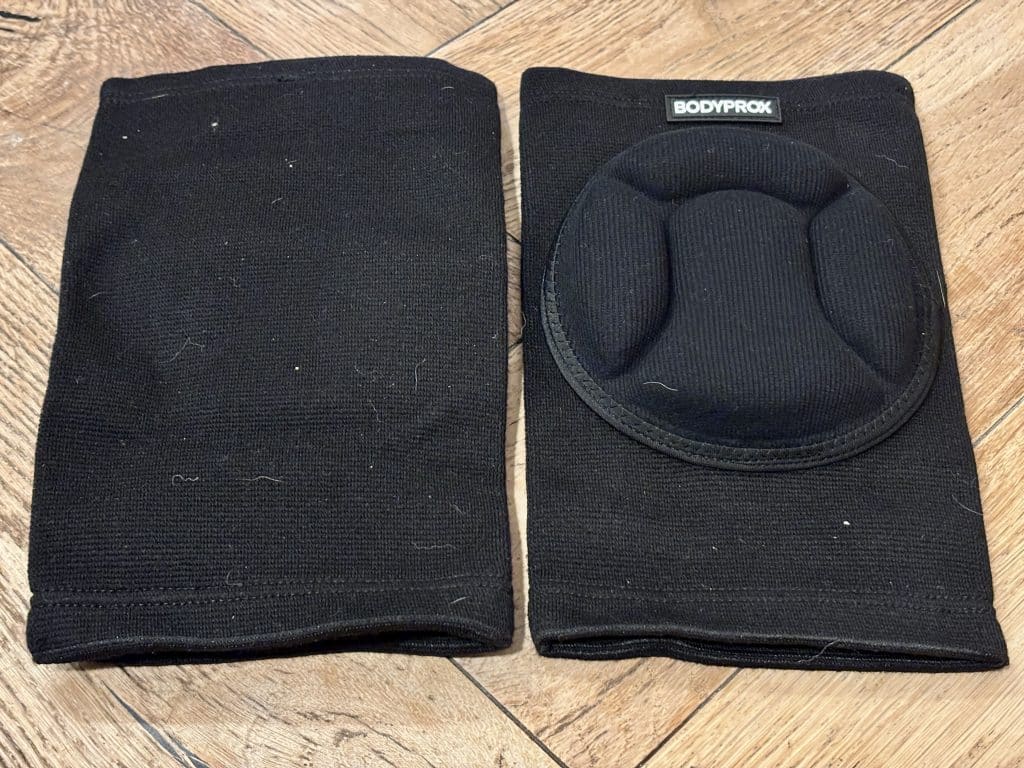
You get a thick layer of EVA foam in a stretchy slip-on sleeve, without the D3O, straps or more elaborate construction of the Demon pads above. They’re also much less bulky, which is handy if you’re trying to get them underneath slimmer ski or snowboard pants.

The padding is pretty crude compared with the Demon options though. It’s basically a big segmented EVA pad sewn onto a stretchy sleeve, with no side protection or adjustable strap to lock it in place. That simplicity is part of why it’s cheap, but it also means the fit depends much more on getting the sleeve size right.

As always, money talks – and whilst these deliver excellent bang for the buck, they can’t contend with the premium options higher up the list. But I’ve used pads like this plenty over the years and there’s definitely a place for them. Sometimes you don’t want $50–$80 worth of knee protection. You just want something between your kneecap and hardpack.

I wouldn’t choose the Bodyprox for heavy park laps or if I was worried about properly hammering my knees. The protection isn’t in the same league as the Zero RF or Hyper X V7. But for learning, cruising around or keeping a cheap pair in your kit bag, I can see the appeal.

Personally, I’d spend the extra on the Zero RF if you’re going to wear knee pads regularly. If you’re not sure you’ll even get on with riding in knee pads, the Bodyprox is a pretty painless place to start.

Pros

  • Very cheap
  • Thick EVA foam padding
  • Less bulky than the Demon pads
  • Simple slip-on design
  • Good entry point if you're new to knee pads

Cons

  • Basic foam rather than D3O
  • Much less substantial protection than the Demon pads
  • No adjustable top strap
  • Not my choice for harder riding

Do You Actually Need Knee Pads?

No.

If you’re putting together your protective gear, I’d buy a helmet before anything else. For snowboarders, I’d probably put wrist guards next. After that, it’s a toss-up between impact shorts and knee pads.

That mostly comes down to which bit of you tends to hit the ground. If you’re forever landing on your backside, impact shorts probably make more sense. If you tend to go down on your knees, get the knee pads. Plenty of people eventually end up wearing both.

Skiers are slightly different because wrist injuries aren’t the same issue they are for snowboarders. I’d still put a helmet first, then decide whether protecting your knees or your hips and tailbone makes more sense for you.

Knee pads aren’t essential. I wear them because I’ve had enough trouble with my knees over the years that protecting them from completely avoidable impacts seems sensible.

What Knee Pads Won't Protect You From

Knee pads protect you from impact. They’re there for catching an edge and landing knee-first on hardpack, clipping something in the park or generally smashing your kneecap into something you’d rather not.

They won’t stop your knee twisting and they aren’t going to prevent an ACL or MCL injury. That’s particularly important for skiers, where a lot of serious knee injuries have nothing to do with hitting the knee itself.

If you’re looking for support rather than impact protection, that’s a different job. We’ve got a separate guide to the best ski and snowboard knee braces.

Why So Much Demon?

Yes, two of my three picks are from Demon. That’s not me trying to fill the list with their gear. They genuinely make some of the best protection in snowboarding. Show me another contender and I’ll gladly put them to the test.

I’ve been wearing their stuff for years. I’ve had Demon Flexmeters on my wrists for well over a decade, long before we’d written a single article online or had an affiliate link to anything they sold.

Demon don’t sponsor us and they don’t give us free gear. We do use affiliate links to their products, which means we may earn a commission if you buy through one, and our SNOWCHASERS code gets you 25% off. But I’d recommend them anyway. I don’t recommend gear on this site that I wouldn’t be happy to use myself.

And I’m not going to recommend a worse knee pad just so there are more brands in the list.

How Much Protection Do You Need?

It’s easy to assume that more protection automatically means a better knee pad. It doesn’t.

The Hyper X V7 offers considerably more protection than the Zero RF, but you’ve got to wear the thing all day. Your knees are constantly bending and moving when you ski or snowboard, and extra bulk eventually becomes noticeable.

That’s why I normally prefer the Zero RF. It gives me the protection I want without getting in the way. If my knee is playing up, I’m coming back from an injury or I know I’m more likely to hit it hard, I’ll take the extra bulk of the Hyper.

At the other end, the Bodyprox makes sense if you just want some cushioning and don’t want to spend much.

More protection isn’t always better. Get enough for the sort of riding you do, but make sure it’s comfortable enough that you’ll actually keep wearing it.

Final Thoughts

Knee pads aren’t essential, and I’m not going to pretend everyone needs a pair.

But knees are annoyingly easy to smash into hard snow. After enough years riding and enough problems with mine, I’d rather have some protection there.

You don’t need the biggest, most protective pad you can find either. Get something comfortable, make sure it stays where it’s supposed to, then forget about it and go skiing.

That’s it.

The Snow Chasers

Ski & Snowboard Knee Pad FAQs

Can you wear knee pads under ski or snowboard pants?
Yes. That's where they're supposed to go. Low-profile pads fit under most ski and snowboard pants without much trouble, although bulkier pads need a bit more room. Try them on with your actual pants before heading to the mountain and bend your knees properly. Standing in front of a mirror doesn't tell you much about how they'll feel once you're riding.
Do knee pads feel restrictive when riding?
Some do. This is why I don't automatically recommend the most protective pad you can find. Your knees are constantly moving, so a bulky pad can get annoying surprisingly quickly. I prefer something flexible and low-profile for normal riding and only put up with the extra bulk when I actually want the extra protection.
Are ski and snowboard knee pads the same?
Pretty much. You don't need a special knee pad just because you're skiing rather than snowboarding. Fit, comfort and impact protection matter much more. I generally avoid big hard-shell downhill MTB pads for snow though. They're awkward under ski and snowboard pants and far more protection than most people need.
How do you wash ski and snowboard knee pads?
Check the washing instructions for your particular pads first, especially if they use D3O or another specialist impact material. I wash mine gently and let them air dry. I wouldn't throw expensive impact foam in a hot wash or tumble dryer unless the manufacturer specifically says you can.

3 thoughts on “Best Ski & Snowboard Knee Pads (Because Falling Hurts)”

  1. Hi, I want your help! I want to buy the very best!
    I had a major fall the first day last season and my confidence was gone for the rest of the holiday, I kept falling, my knees and legs were all covered with bruises! I am very scared to go on the next snowboard holiday with my family. For me, I want to stop, but that means no more family time together on the slopes, now that my youngest daughter also can ski along with us! I am feeling very sad about that idea! But without confidence I will not try again! So I want the very best protection, start believing in these protection gear and start all over and if I fall, what sure will happen, and don’t have pain, I can continue! I don’ mind falling, I just can’t handle so much pain!

    I can read the following: “However, if the price stings, the Demon Zero RF D3O give you about 80% of what these do for way less money.”

    So, if I want the full 100 % protection, I have to buy the POC VPD 2.0??

    I don’t care about the money and if I search the internet (in Belgium), the prices are now about the same. I can buy the Demon for 68 euro and the POC for 63 euro, so no big difference! (POC is now in 50 procent discount on some websites!).

    So why do you recommend the Demon multiple times in your article? In the beginning, at the end, at the FAQ’s… I would buy the Demon, but one sentence about the 80 % does me hesitate!! I wan the very best!!

    So can you help me out with this please? For the moment, I would buy them both just to be sure I have the best with me on the holiday 🙂 But, I don’t want to spend double the money 🙂

    Thanks in advance!
    Greetings

    1. Hi Anja, thanks for stopping by.

      The learning curve with snowboarding is certainly pretty steep, but keep at it, definitely worth it.

      If you struggled with leg bruising too, it sounds like you might need more leg coverage than knee pads alone will provide?

      That either means adding impact shorts alongside knee pads, or for a complete solution have you looked at the Flexforce Impact pants?

      These have basically combined the highest-end padded shorts and knee pads. They’re overkill for most riders but if you really want peace of mind, probably the best answer. They do have a less heavyweight and more flexible option too (Zero RF D3O) which is designed more specifically for skiing and snowboarding.

      If you’re just getting knee pads, the POC VPD are more protective than the Demon RF D30 overall, but they’re also more rigid. I tend to prefer the Demon option in most cases as they’re designed for skiing/snowboarding and don’t feel restrictive. If you literally just want maximum protection, we’ve just updated the article with the new Demon Hyper Knee pads. They are actually more protective than either option, though are a littler bulkier and more restrictive.

      In short – the Zero RF D30 line are a better balance between protection, bulk and flexibility, which is super important for most snowboarders. There are more protective options like POC VPD and Demon Hypers, but they double as mountain bike pads which makes them a little less optimal on snow.

      Hopefully that kinda makes sense?

      All the best,

      Mike

  2. Hi Michael,

    Thank you for your reply!

    I will stick with my impact shorts, one from Demon, which I really like, and protects me well.. The most important now are my knees.

    I would think that the Demon Hyper Knee pads would give me more confidence and better protection. I just hope it is not too restrictive..

    I have also found another knee pads, maybe you can give me your thougths about this one please?

    It is the Fox Launch Pro D3O Knee Protector.

    It really looks like the Demon, but the caps are removable..

    But maybe you prefer Demon? 🙂

    Best regards

Leave a Comment

Your email address will not be published. Required fields are marked *

ten − ten =

Scroll to Top