
Trees make me feel better.
I think they probably make most skiers and snowboarders feel better. Drop into a big open face and it quite obviously looks like avalanche terrain. Duck into the trees and everything suddenly feels smaller and a bit less serious.
Unfortunately, the avalanche doesn’t care how cosy the trees feel.
There are situations where dense forest is safer terrain. But “there are trees here” is a pretty terrible rule to use in the mountains, and if they’re nicely spaced for skiing, that’s a particularly good reason not to assume they’re holding the slope together.
It depends on the trees
Properly dense forest changes things.
Trees shelter the snow from some wind and sun, affect how snow is deposited and can physically interrupt the snowpack. Avalanche Canada describes genuinely dense trees as those where the canopies are touching, and says that in some circumstances they can help anchor the snowpack. Dense forest well away from avalanche paths can be a sensible terrain choice when conditions are sketchy.
That’s quite different from the lovely open glades everyone actually wants to ski.
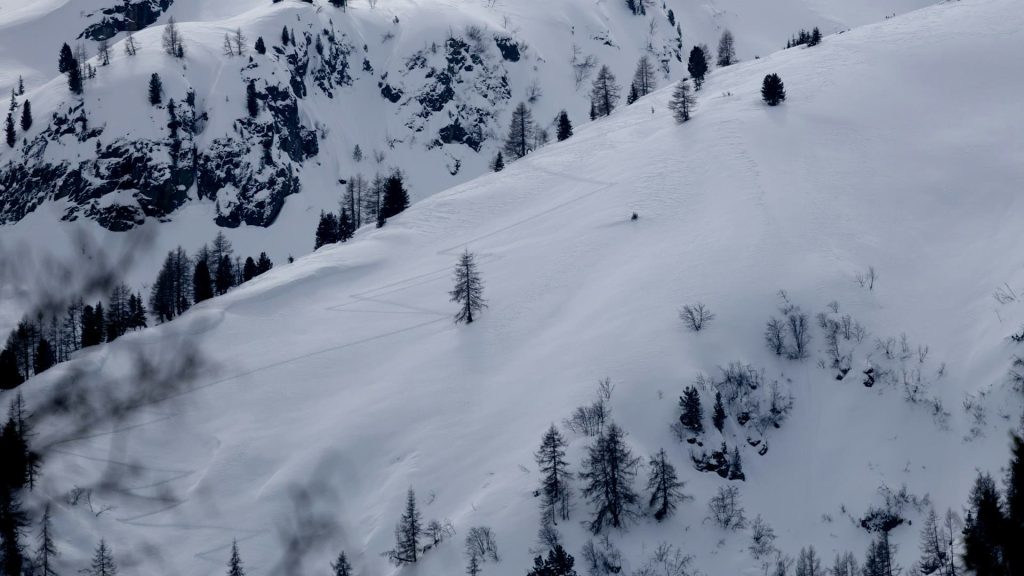
Widely spaced trees don’t give you the same protection. There’s plenty of continuous snow between them for a fracture to propagate through, and a slope doesn’t stop being avalanche terrain because somebody planted a few Christmas trees on it.
The Utah Avalanche Center puts this rather more bluntly than I would – if a slope is 30 degrees or steeper, treat it as avalanche terrain whether there are trees on it or not. For trees to provide serious anchoring, they need to be so dense that you wouldn’t really be skiing through them anyway.
That’s a much more useful rule to take into the mountains.
Skiable trees are still skiable avalanche terrain
This is where I think the confusion comes from.
We’ve all skied trees that feel protected. You’re surrounded by trunks, you can’t see some enormous open bowl above you and there might already be tracks everywhere. It just doesn’t have the visual drama we associate with avalanche terrain.
But gladed slopes can absolutely avalanche.
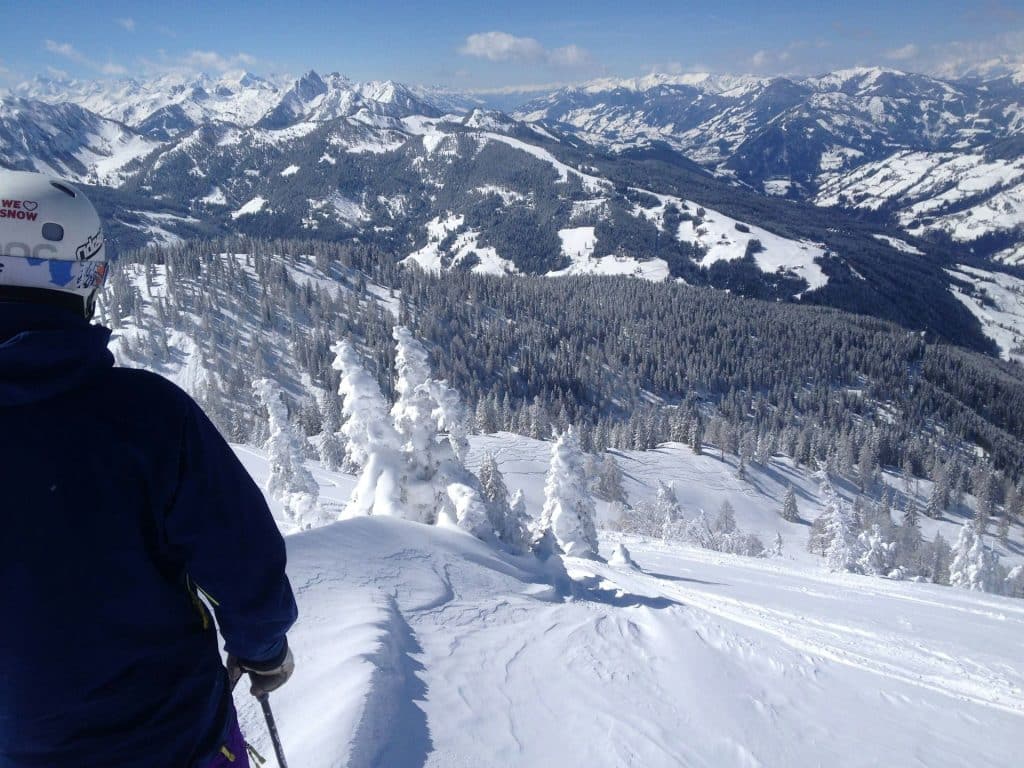
Avalanche.org describes essentially any open or gladed snow-covered slope steeper than about 30 degrees as having the potential to produce avalanches unless the tree cover is genuinely dense. It also points out that avalanche paths themselves can run through gladed terrain.
There’s a grim real-world example from Utah too. In a recent Butler Basin accident report, two skiers were concerned about steep terrain but thought the trees would offer them some protection as they moved towards a ridge. The Utah Avalanche Center’s takeaway afterwards was explicit: terrain that looks more benign or “protected” by trees can still slide. Trees are not a fail-safe.
Trees can actually make an avalanche worse
This is the other half people forget.
If I’m caught in an avalanche on a completely open snowfield, I’ve already got a serious problem.
If I’m being carried through trees, I’ve now got a serious problem with large bits of wood in it.
Trees are a terrain trap. They increase the chance of traumatic injury as you’re carried into them, and avalanche debris can pile deeply around trunks and tree wells. Avalanche.org actually identifies trees as the most common terrain trap associated with traumatic injury and death.
So the same trees that made the slope look safer can make the consequences considerably nastier if it does slide.
That’s worth thinking about before following somebody into a beautifully spaced glade on the basis that “it’s in the trees.”
What about being below the trees?
Still not enough.
You can be standing on relatively gentle terrain in a forest and have avalanche terrain above you. An avalanche doesn’t stop at the point where the slope drops below 30 degrees. That’s where its runout starts becoming relevant.
Avalanche.org has recently highlighted runout zones extending into gladed terrain, including an incident where an avalanche released on a steep open slope above and buried skiers travelling through trees lower down.
So I’d treat this exactly like the stopping-point article we just published. Don’t only look at the trees and slope immediately around your skis. Look at the terrain connected to you and what’s sitting above.
So when are trees useful?
Dense forest can absolutely be part of choosing lower-exposure terrain.
Avalanche Canada’s travel guidance actually recommends using gentle slopes, dense trees, ridges and ribs to reduce exposure, while avoiding overhead hazards and terrain traps. Its more detailed risk-reduction guidance suggests regrouping in dense trees or on high ground far away from steep slopes above or nearby.
That last bit matters.
“I’m in dense trees” and “I’m in dense trees underneath a huge avalanche path” are not remotely the same situation.
I’d be interested in slope angle, how dense the forest really is, whether there are openings, what’s connected to it, what’s above me and what happens if something does release. The trees are one part of reading the terrain, not an avalanche force field.
What I actually take from this
I wouldn’t assume trees = safe.
I’d assume dense forest can be lower-exposure terrain when it’s genuinely dense and isn’t exposed to avalanche terrain around or above it.
That’s less catchy, unfortunately. It’s also considerably less likely to get you killed.
And if you’re looking at a treed slope and don’t know whether you’re in avalanche terrain, that’s not the moment to start estimating how many trees per square metre might save you. Check the avalanche forecast, choose terrain you’re confident is appropriate for the conditions, and if you don’t have the training to make that assessment, don’t make it yourself.
Go with someone qualified, hire a guide or get avalanche training first.
The powder will still be there another day.
Hope that helps?

