
About the Author
This article was written by June, an AASI Level 1 certified snowboard instructor who has spent two winters riding in Hemu, Xinjiang. Having explored many of China's top snowboard destinations, she specialises in big-mountain riding, powder terrain and helping riders discover lesser-known resorts. This guide is based entirely on her first-hand experience of riding and travelling in Hemu.
Intro
It is widely known that Xinjiang is home to China’s premier ski resources, with Keketuohai being the favourite opening-trip spot for many riders.
Like most riders, I head straight to Keketuohai every year as soon as the snow starts falling. It has the earliest start to the season in the country, so I can get first tracks on fresh snow early on… perfect for warming up and getting my legs back after the off-season.
But what really makes this place stand out, and why I rave about it so much, is the incredible variety of terrain. From long winding mountain runs and natural gullies to tree runs, it’s all in one place. You’ll never run out of new lines to ride in a full day here.
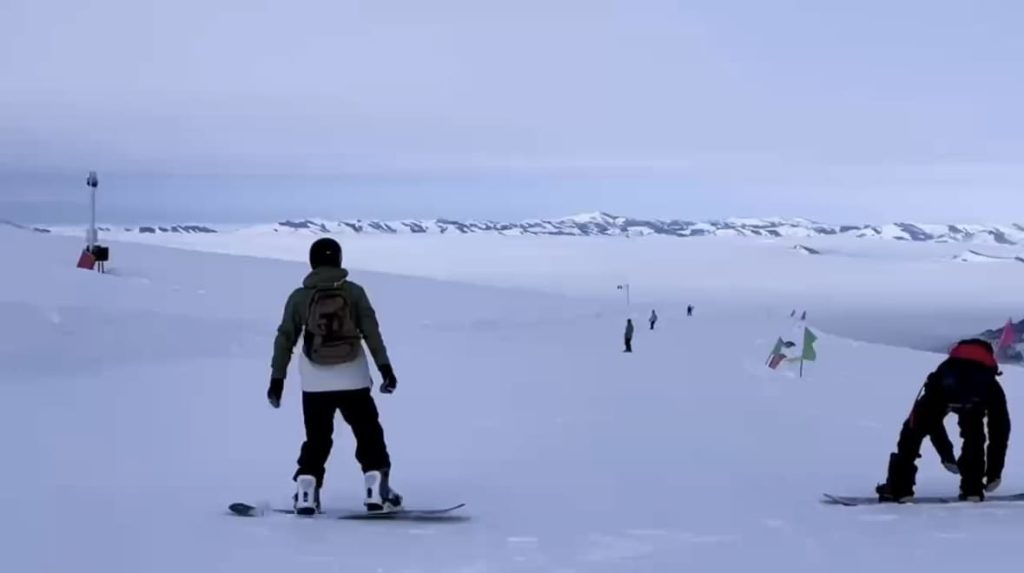
Just like Hemu, Keketuohai sits in the premium snow belt of the Altai Mountains. The tree zones here hold snow especially well, so even days after a big snowfall, you can still track down amazing powder.
Groomed Runs
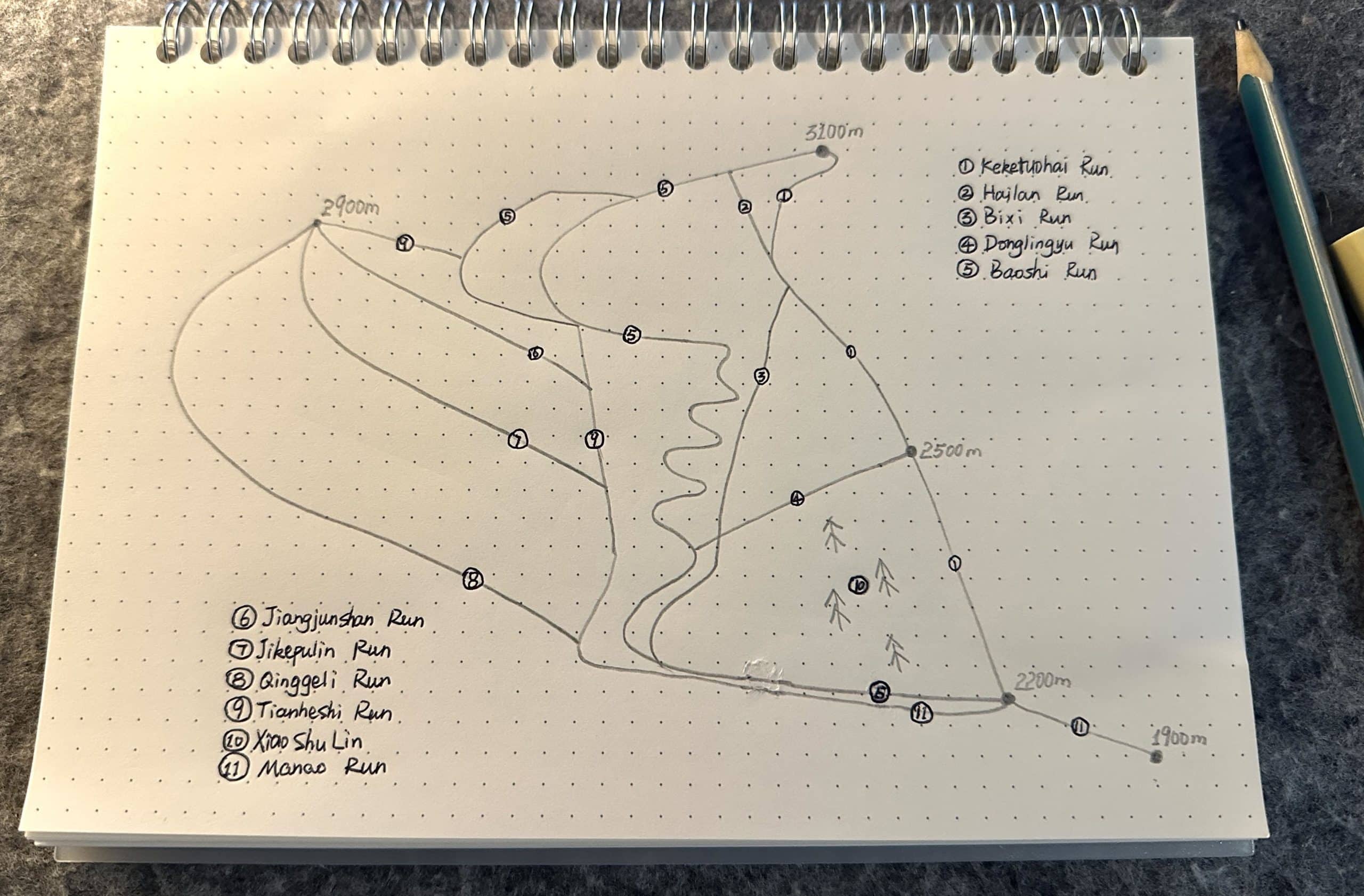
There are 22 groomed runs in total. I’ve spent three full seasons here and lapped almost all of them countless times. Here are my top picks.
Total beginners: Start at the magic carpet practice area to the left of the 2200m lodge.
If you’ve already got the basics down and can link your turns: You’ve got two great options.
1. Manao Run
Manao Run sits below Gondola 1 and runs from 2200m down to 1900m. It has the gentlest gradient on the mountain and is super easy to build confidence on.
The only downside is that the snow can turn soft and slushy on warm afternoons before becoming icy later in the day.
2. Baoshi Run
Baoshi Run is a huge 9.5km groomer that starts at 3100m (take the Red Gondola) and winds all the way down to 1900m.
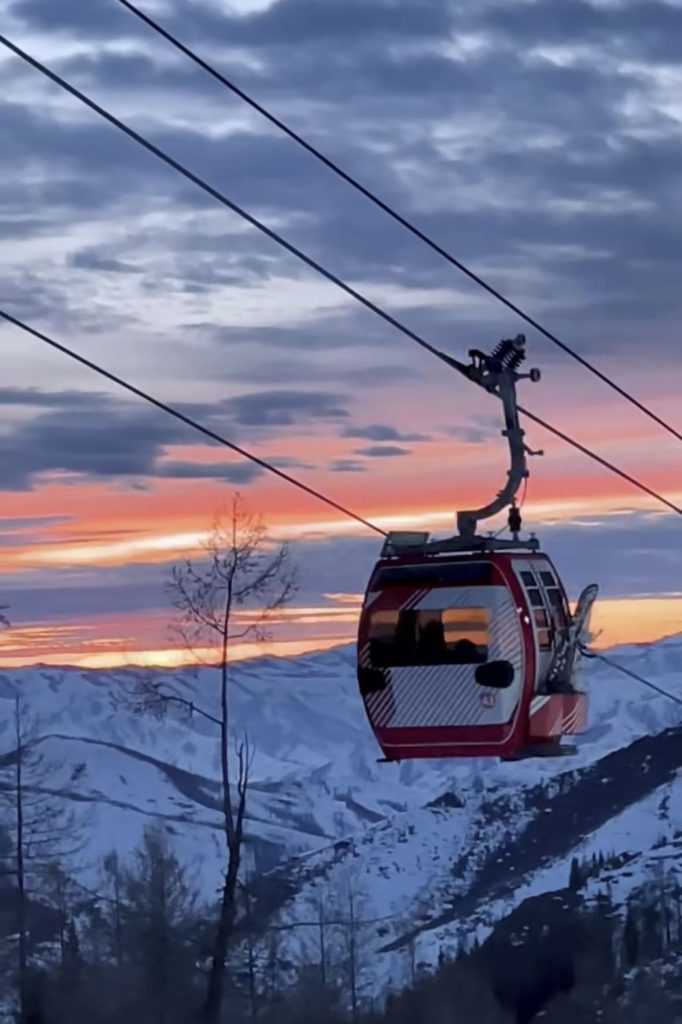
I always lap this run at the end of the day. The views are completely open, and it’s especially magical at sunset. The whole valley glows a warm golden colour as the sun goes down. It’s easily the most peaceful moment of my day.
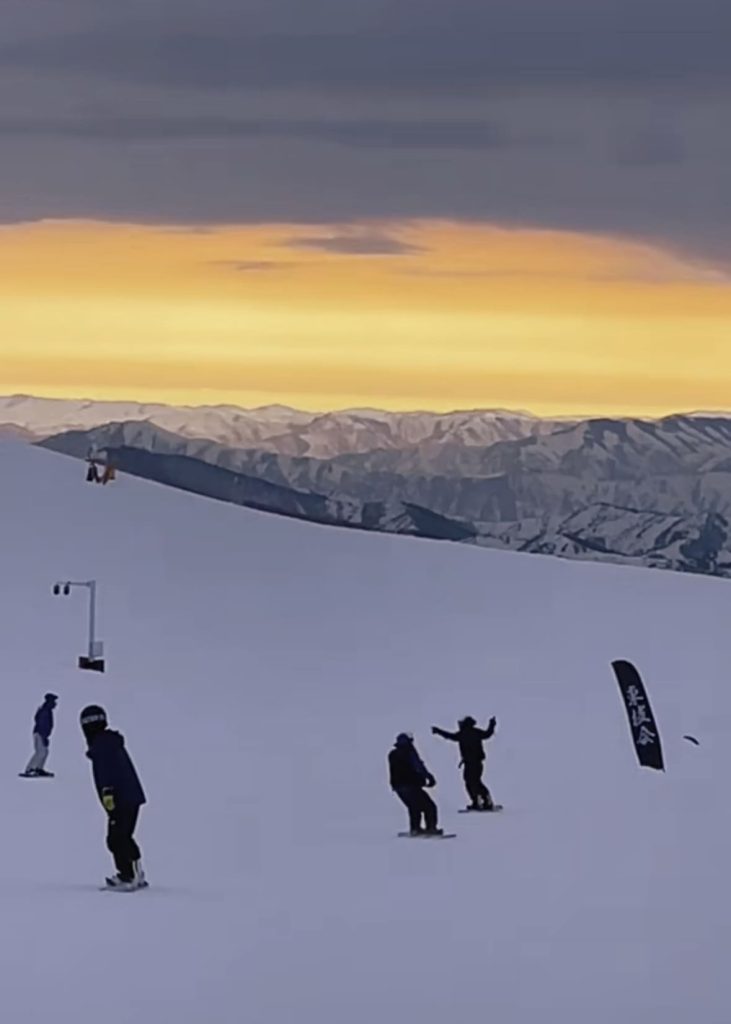
One quick tip. The upper section of Baoshi Run is extremely flat. Keep a straight line and carry your speed, otherwise you’ll end up unstrapping and walking, and that kills the vibe.
The middle and lower sections are full of long, flowing S-turns that are perfect for practising your carving.
There’s also a roughly 200-metre uphill section in the middle. You’ll need to carry a bit of speed to make it over, which can catch newer riders out.
Baoshi Run has quite a few junctions, and many of them aren’t signposted. It’s surprisingly easy to take a wrong turn on your first run.
Here’s the route I recommend. Keep right at the first junction (the left takes you onto Hailan Run), then keep left at the second. The right-hand option is technically still Baoshi Run, but it starts with another uphill section where you’ll probably lose all your speed and have to walk.
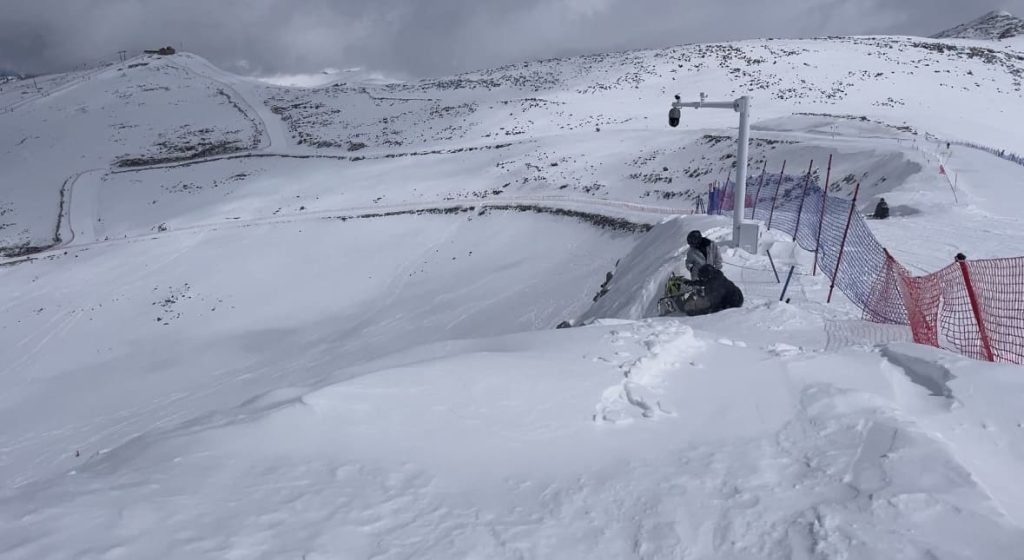
After the S-turns, the lower section merges with Manao Run, which is used for beginner lessons and gets much busier. Stick to the left-hand line at the junction and you’ll avoid most of the crowds.
My Favourite Steeper Terrain
If you’re an intermediate rider working on your carving, or you simply enjoy steeper pistes, these are the runs I always come back to.
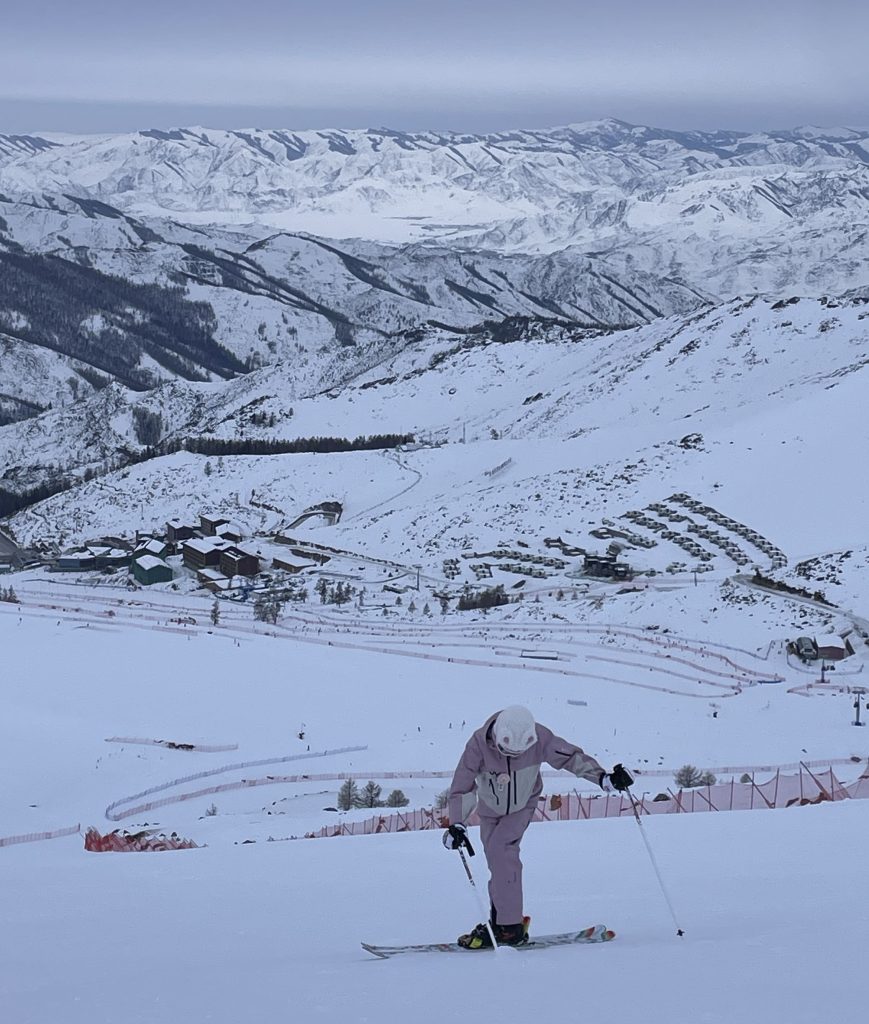
My top pick is Bixi Run. It has a beautifully consistent 12.7° pitch, excellent snow coverage and is simply a joy to carve. If you’re making the jump from intermediate to advanced riding, this is the run I’d recommend most.
If you want something steeper, head for the three black runs below the 2900m cabin.
Qinggeli Run is narrower than the other two, but I love how long and straight it is. The pitch stays really consistent, making it a brilliant run if you enjoy opening up your turns.
Jikepulin Run is the widest of the three. The only downside is that aggressive carving eventually creates quite deep ruts in the snow.
Jiangjunshan Run is the steepest, reaching a maximum pitch of around 23°. It has one steep section after another and really tests your speed control. I’ve only ridden it once, and let me tell you, your legs will be burning by the bottom.
Getting There
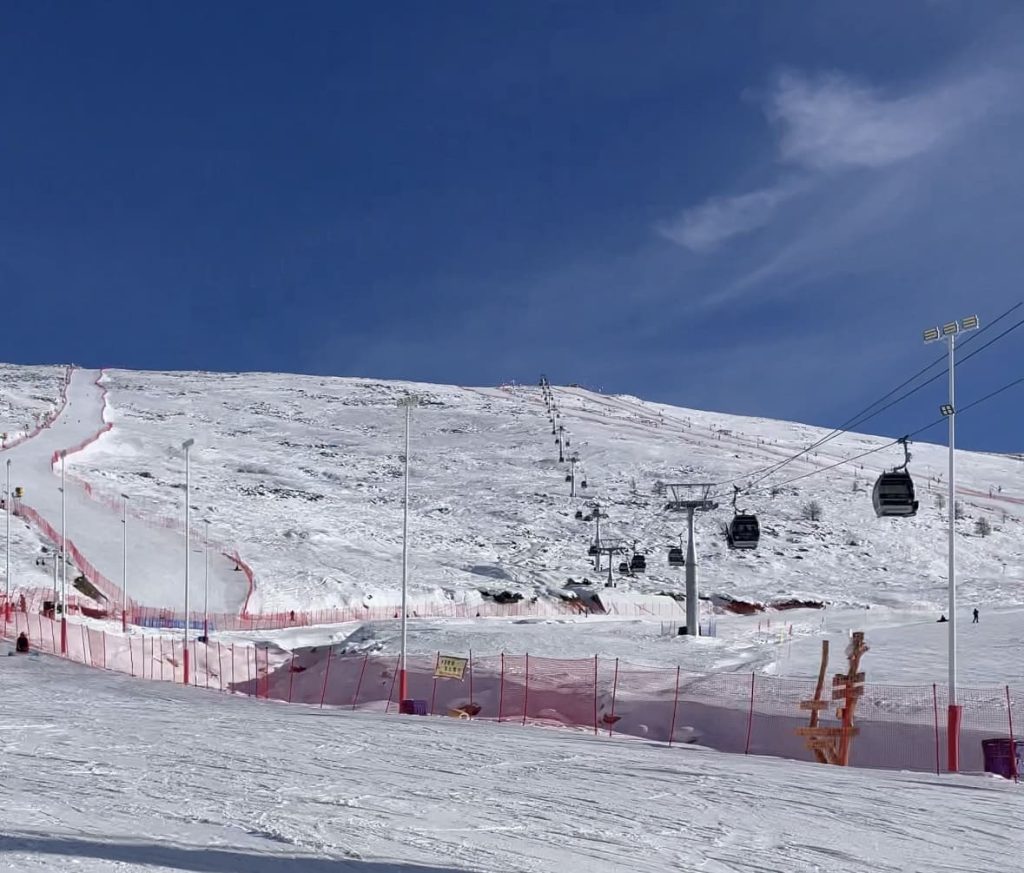
Take the Yellow Gondola from the left side of the 2200m lodge, then transfer onto the Grey Gondola to reach the 2900m station.
A quick tip for the transfer. After getting off the Yellow Gondola, ride down the short, slightly steep slope, then turn right at the T-junction. Stay right the whole way and you’ll spot the Grey Gondola ahead.
Another run that’s absolutely worth riding is Keketuohai Run.
This iconic black run starts from 3100m. Compared with the three steep runs above the 2900m cabin, the gradient changes much more naturally and consistently. There aren’t any sudden, intimidating pitches that appear out of nowhere, which makes it surprisingly friendly for confident intermediate and advanced riders.
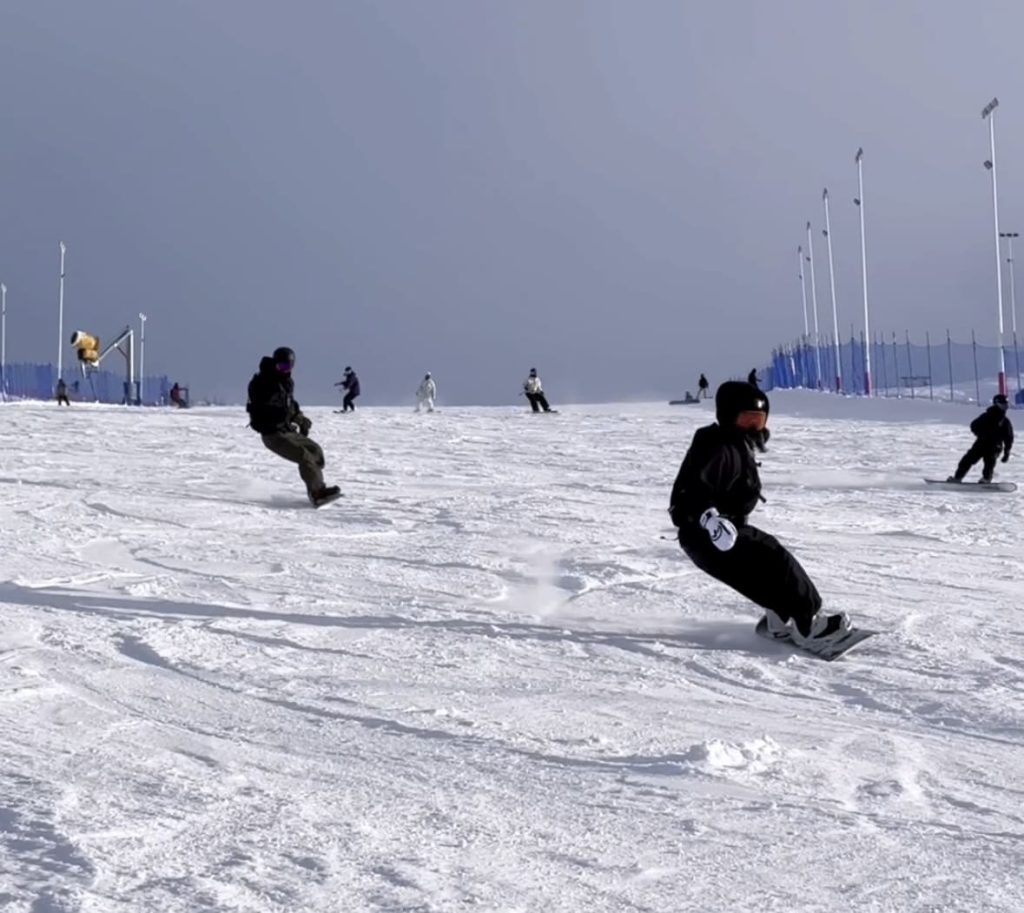
If you enjoy carving, you have to ride this one from top to bottom at least once.
The only downside is that it’s one of the resort’s most popular runs, so it can get fairly busy. Just keep an eye on the riders around you and give everyone plenty of space.
Thankfully, almost all of the lifts here are enclosed gondolas, so there’s no freezing wind on the way back up. It’s warm, comfortable and a nice chance to rest your legs.
Off-Piste
If the groomed runs are the foundation of Keketuohai, then the vast off-piste terrain is what really makes this resort special.
Especially after a big snowfall the day before, the groomers suddenly feel quiet while everyone disappears into the powder. The whole valley fills with people cheering and shouting with excitement. And yeah… I’m definitely one of them.
Big White Slope (Da Bai Po)
My first run of every trip is always Big White Slope.
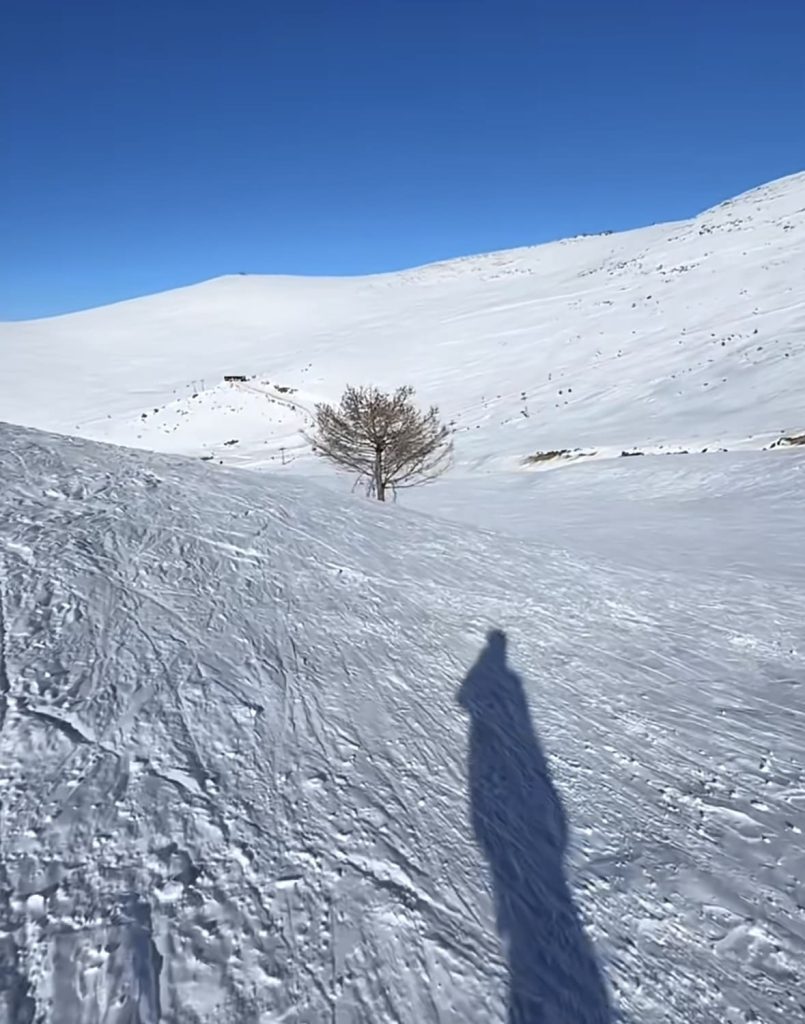
It’s wide, open and forgiving, with deep, even snow and very few hidden rocks, holes or sudden drops. It’s also the perfect place if you’re trying off-piste riding for the first time.
Stick to the left-hand side of Da Bai Po and you’ll find a huge natural halfpipe. It’s brilliant for pumping through the terrain and just having fun. There’s even a lone tree standing right in the middle for company.
The route is simple to follow and very safe. Ride all the way to the bottom and you’ll naturally link back onto the main piste without any chance of getting lost.
Little Woods (Xiao Shu Lin)
Next up is one of my favourite spots on the mountain: Little Woods.
Start from the 2500m cabin and ride down Donglingyu Run. Keep an eye on the lower left-hand side and, as soon as you spot the trees, pick your line and drop in.
The fun isn’t just weaving through the trees. There are also a few hidden natural log features scattered around. See how many you can find.
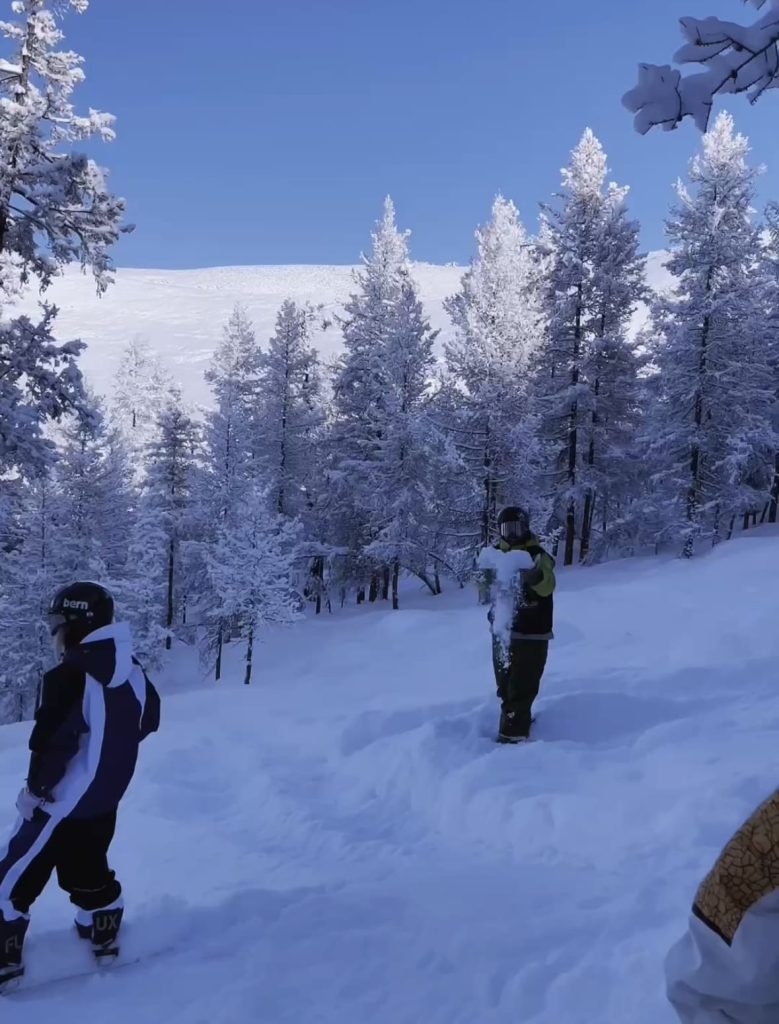
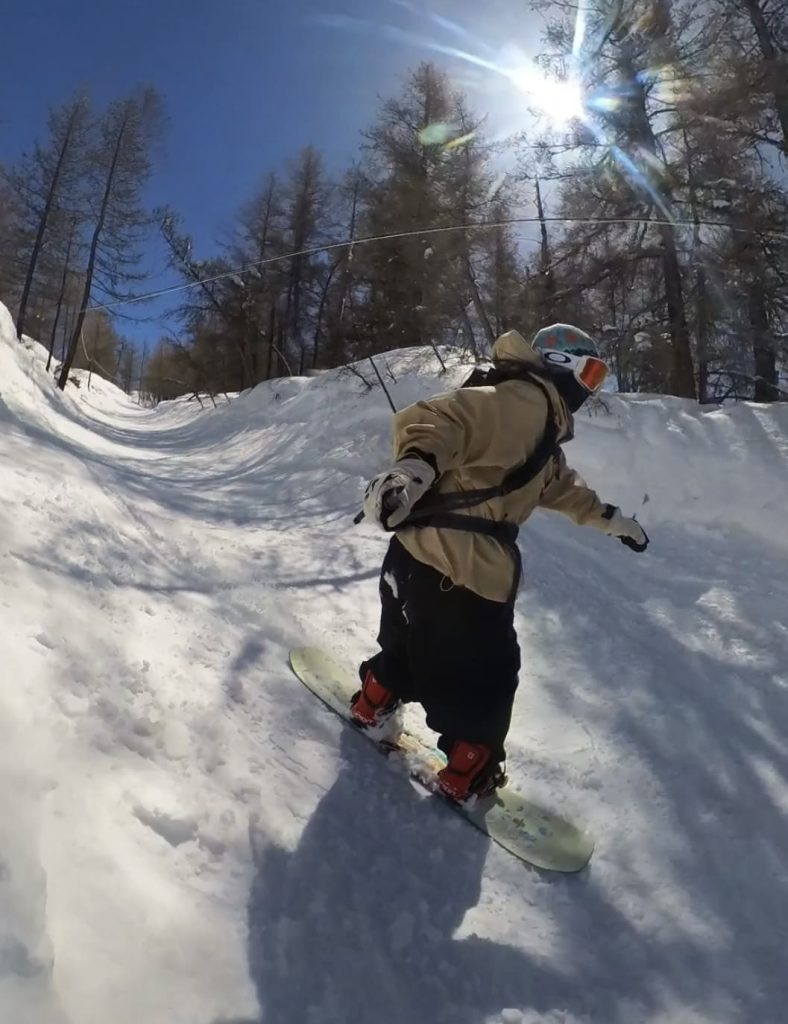
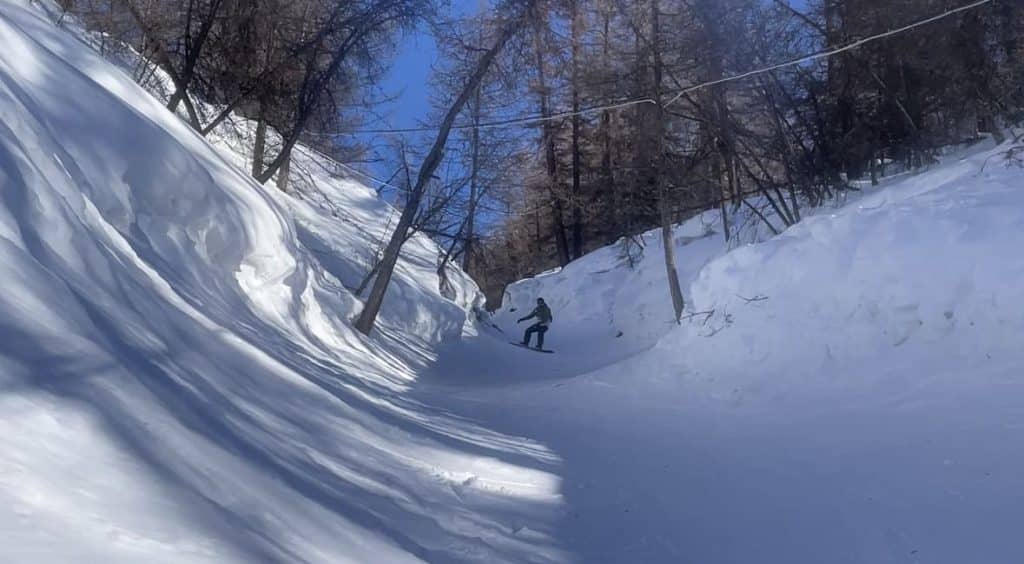
Running alongside Xiao Shu Lin is another brilliant natural drainage gully, around three to five metres wide. It constantly narrows, widens, rises and falls, with plenty of tight corners to keep things interesting. Keep your speed under control and it’s an absolute blast.
One final heads-up. As the snowpack gets thinner, exposed tree roots begin sticking out of the snowbanks, and sharp rocks can start poking through the floor of the gully. It’s worth taking a little extra care later in the season.
Little Wolf & Big Wolf
Last but definitely not least are the resort’s signature off-piste zones: Little Wolf and Big Wolf. These are the runs that draw riders from all over China.
Little Wolf
Compared to Xiao Shu Lin, the terrain here is much more playful, with rolling snow mounds and natural features everywhere. I love ducking between the trees and weaving around the bumps.
The zone is split into two sections. Up top, the trees are fairly well spaced, giving you plenty of room to pick your line. Lower down, everything gets much tighter, with narrower gaps and more technical riding.
Getting There
From the chairlift to the right of the 2500m gondola station, follow the lift line all the way down. You’ll spot a small white slope on your right. That’s the entrance to Little Wolf.
You’ll almost always see people stopping there to catch their breath before dropping into the trees.
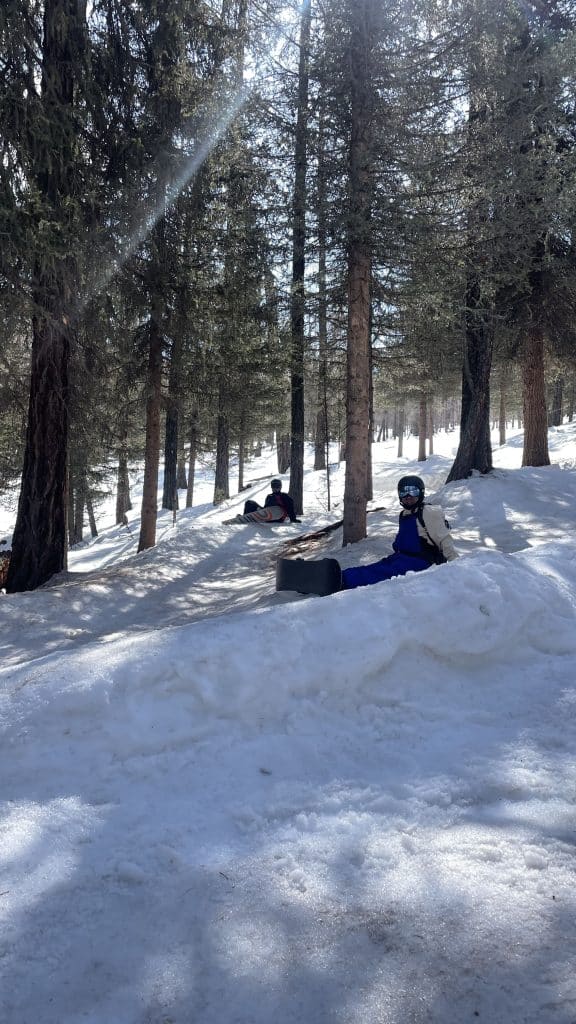
One warning. As the snowpack gets thinner, exposed roots and rocks start appearing. I caught an edge on a big root once and ended up with a massive bruise. It could’ve been a lot worse. At least it wasn’t a rock.
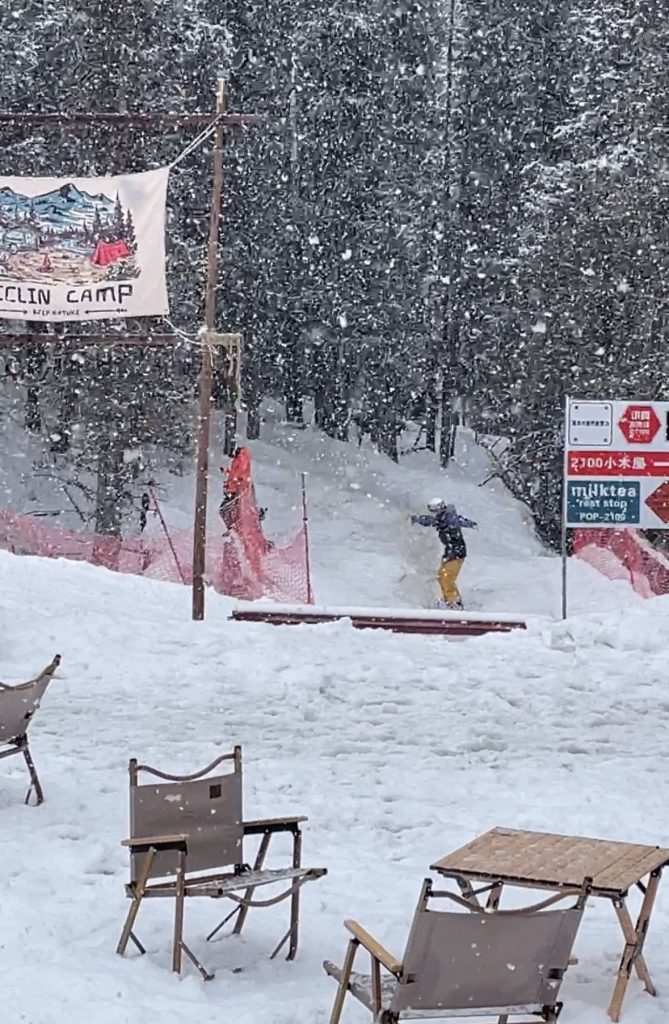
The exit is a small bridge beside the 2100m cabin. I always grab a coffee there afterwards, sit outside for a while and watch everyone celebrating after making it through Little Wolf.
Big Wolf
Big Wolf is a completely different beast.
I only recommend it if you’re already a confident off-piste rider with solid sidecountry experience. I’ve seen plenty of riders drop in without really knowing what they’re getting themselves into, only to end up stuck waist-deep in powder, unable to pull their boards free.
I crashed straight into a tree on my first run here.
Getting There
Start from the front left of the 3100m cabin and follow the ridgeline straight ahead. The views up here are incredible, with Mongolia not far off to your left.
Ride for around 2 to 3 kilometres and you’ll eventually spot a mountain hollow off in the distance on your right. That’s Big Wolf.
Just don’t mix it up with the Little Wolf hollow, which appears much sooner. Drop in too early and you’ll end up riding Little Wolf instead.
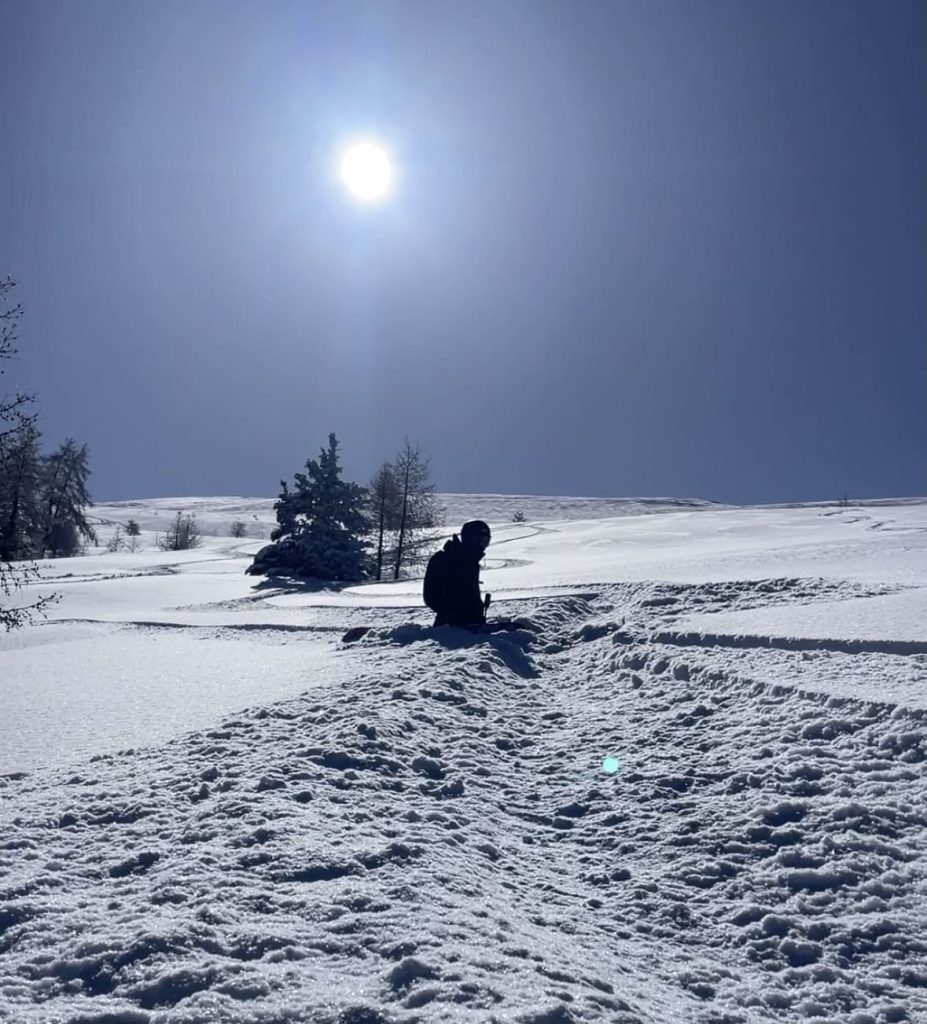
After the upper powder fields, you’ll reach a long flat section. Carry enough speed or you’ll be walking. There are hidden streams running underneath the snow here, so stick to the most well-tracked lines. Once the tracks reach the trees, you’ll see the sign marking the entrance.
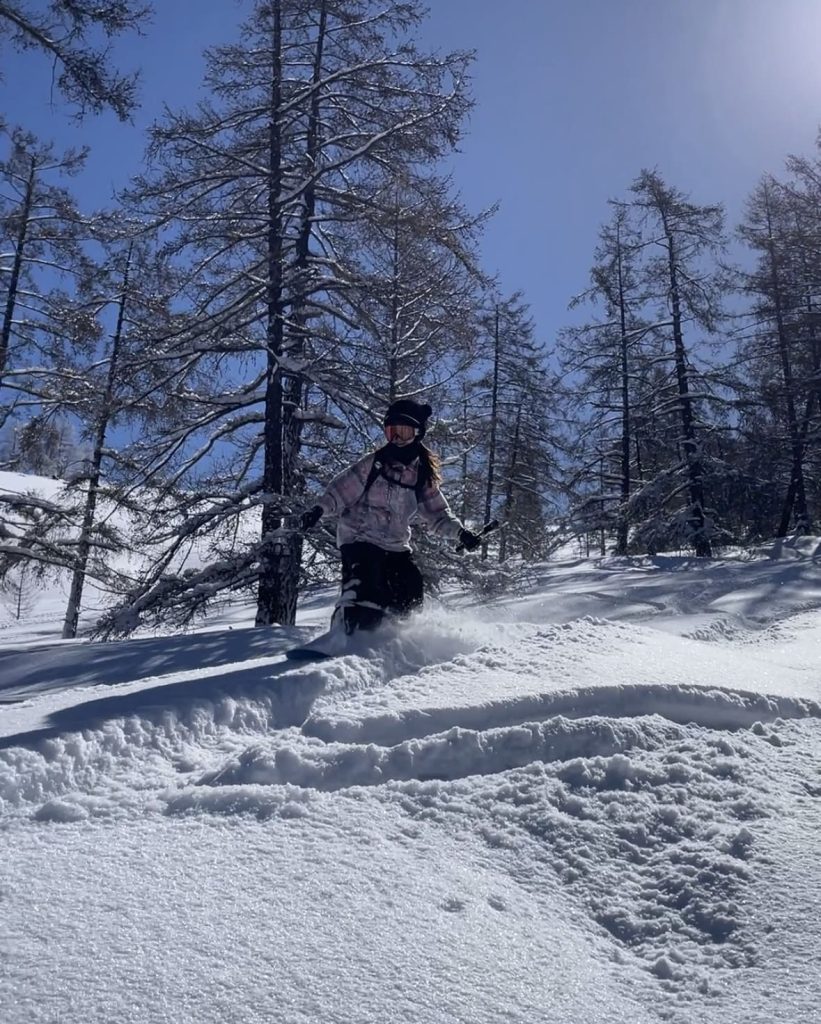
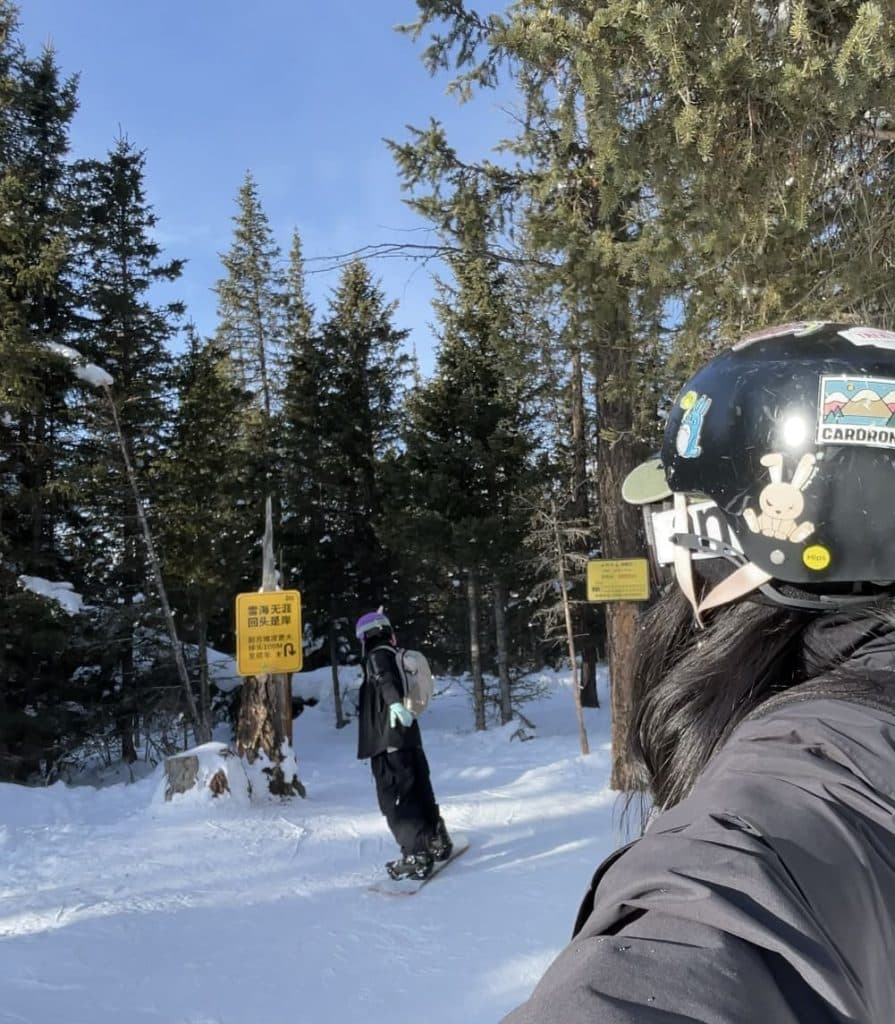
My favourite part of Big Wolf is the natural banked gully. The terrain carries you through one turn after another and it almost feels like you’re surfing the mountain.
The upper section is steep, with icy patches and exposed rocks. Even now, I still take this bit carefully. Speed builds incredibly quickly, and there’s no prize for being the fastest rider down.
Most of this section is only one or two metres wide. You’re riding through a natural gully between tree trunks with very little room to correct mistakes, so keep a safe distance from anyone in front of you and don’t let anyone pressure you from behind.
The lower half opens out into wider gullies with smoother, flowing turns. That’s my favourite part of the whole run.
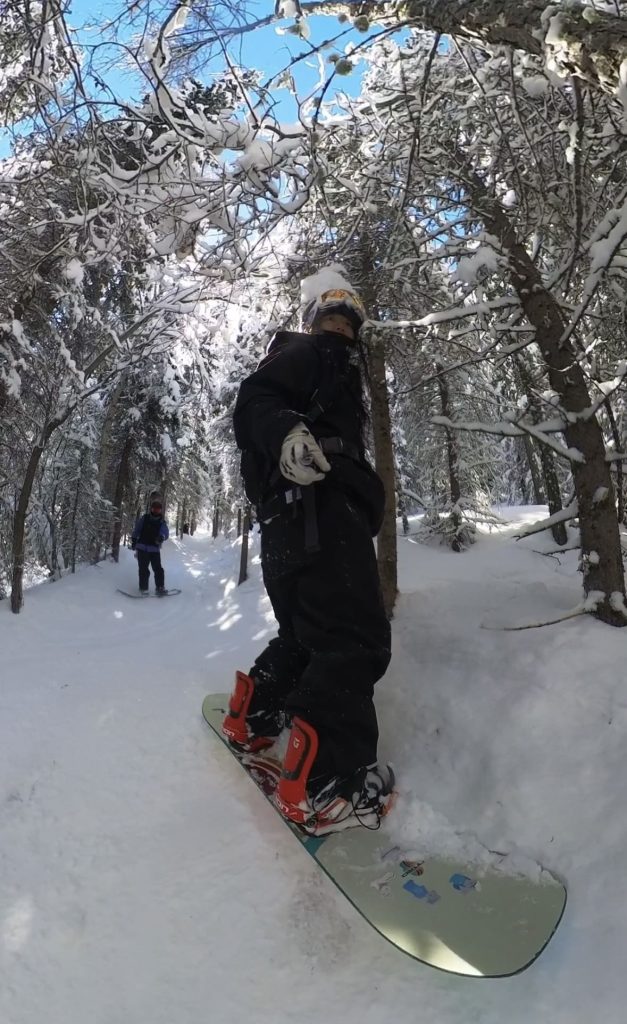
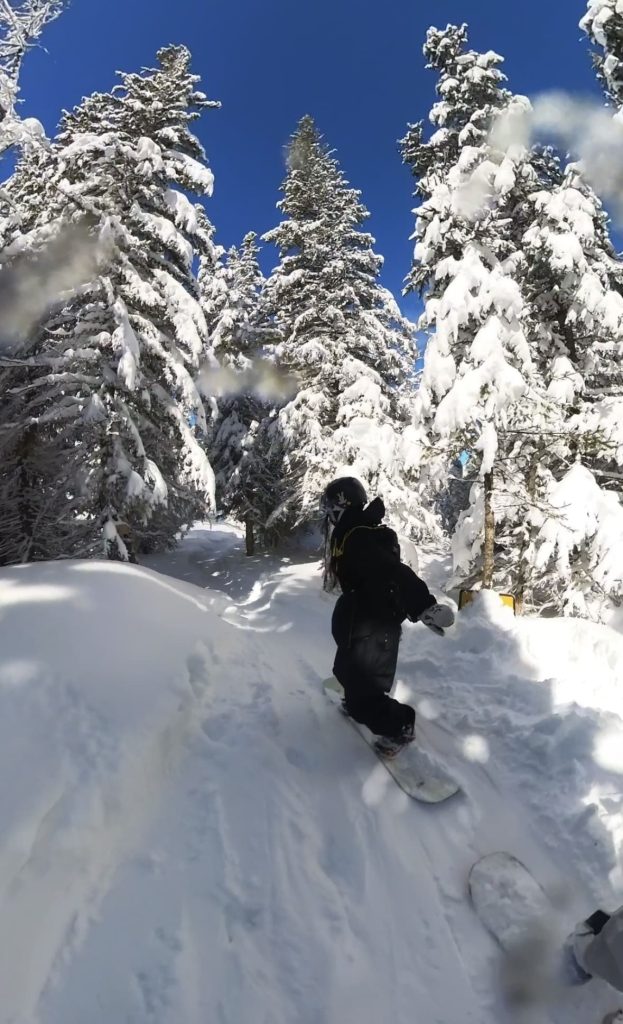
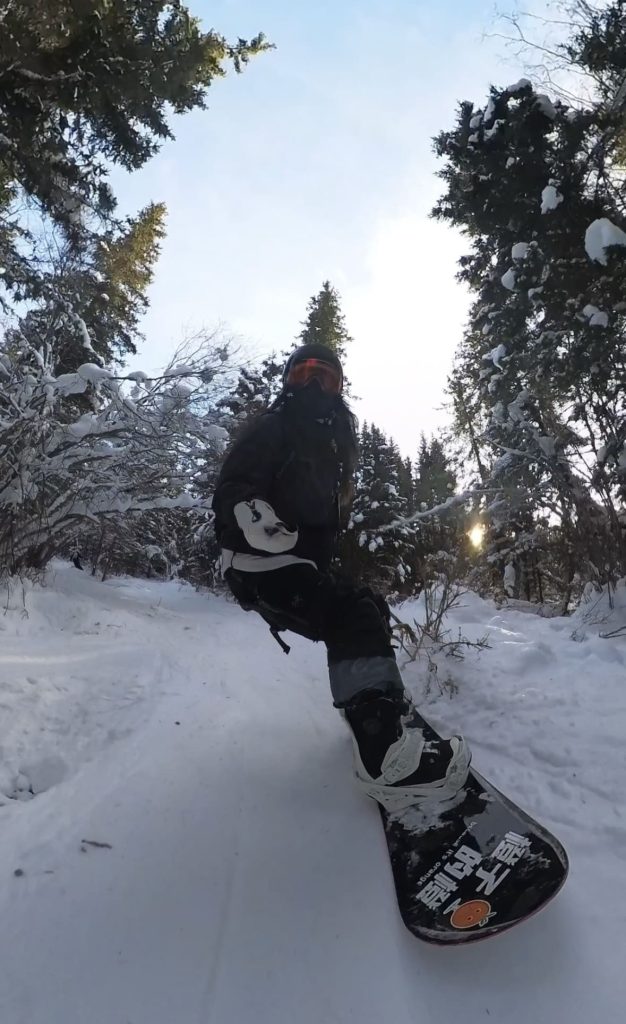
The exit finishes on the main road outside the resort boundary. Don’t worry though, there are always drivers waiting there. For about the price of a Starbucks, they’ll take you straight back up to the resort.
Important Notes
- The 3100m cabin is the only one on the mountain without toilets.
- Access to both Little Wolf and Big Wolf is usually closed after 3:00pm.
- Always ride these areas in a group. Seriously, don’t ride them alone. Walkie-talkies are highly recommended.
- If you can, avoid visiting during the Chinese New Year holiday. Lift queues become enormous and accommodation prices go through the roof.
Transport
There are two main ways to get to Keketuohai:
- Fly to Fuyun Airport, then drive around 40 minutes to Keketuohai Town.
- Fly to Altay Airport, then drive around 3 hours to Keketuohai Town.
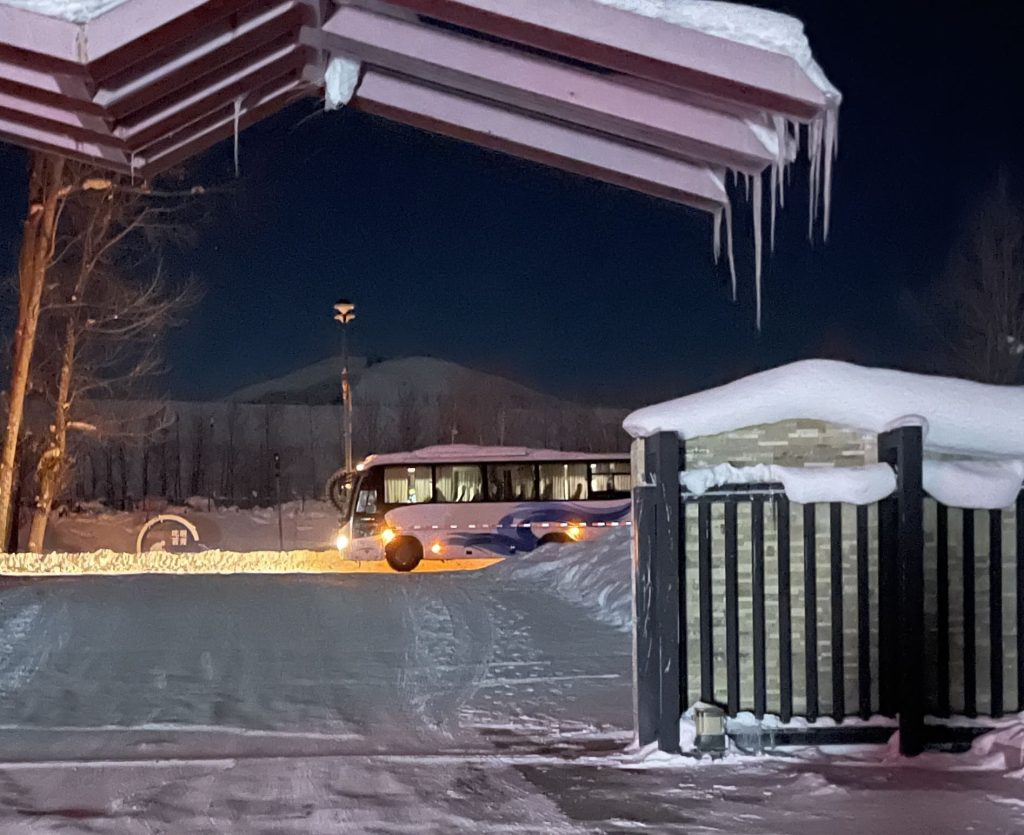
The resort shuttle bus stops at almost every hotel in town. Just ask your hotel reception to confirm the pickup time. It’s incredibly convenient.
If you’re driving, it’s about a 50-minute journey from town to the 1900m base lodge.
The 1900m base lodge is also the only shuttle stop. If you arrive early, you can usually park there. If it’s already full, you’ll need to continue up the winding mountain road to the 2200m car park.
Trust me, that road will definitely test your driving skills.
Food
Every lodge and mountain cabin has a restaurant, especially the 2200m lodge. That’s where I usually grab breakfast before heading out. There’s plenty of choice, with a good mix of Chinese and Western food.
One thing to keep in mind is that most breakfast spots in town don’t open until around 10:00am because of the local time difference. It’s worth knowing if you’re an early riser.
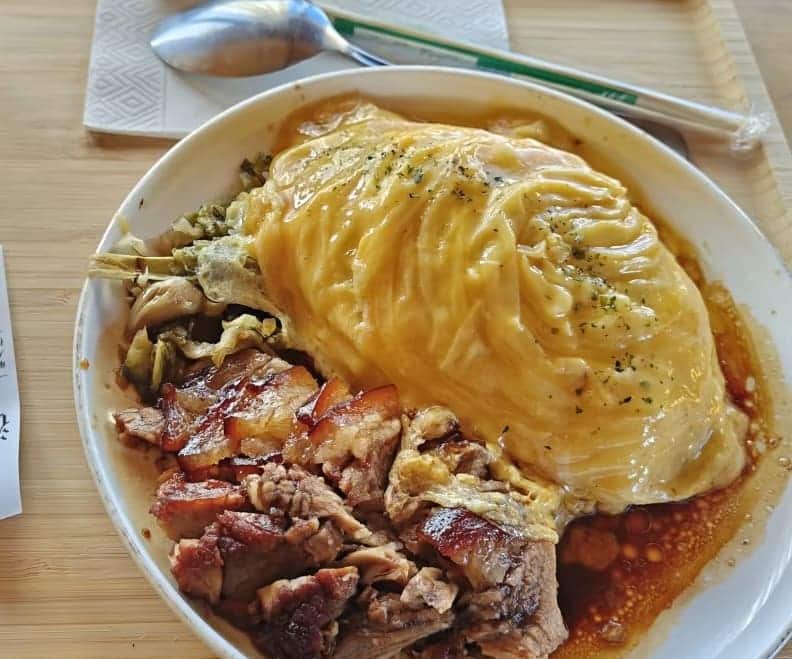
I highly recommend the omelette rice at the 2500m cabin. It’s fantastic. The cabin itself is lovely too, with huge floor-to-ceiling windows looking out over the mountains. It’s my favourite place to stop, rest my legs and take in the view after a long session.
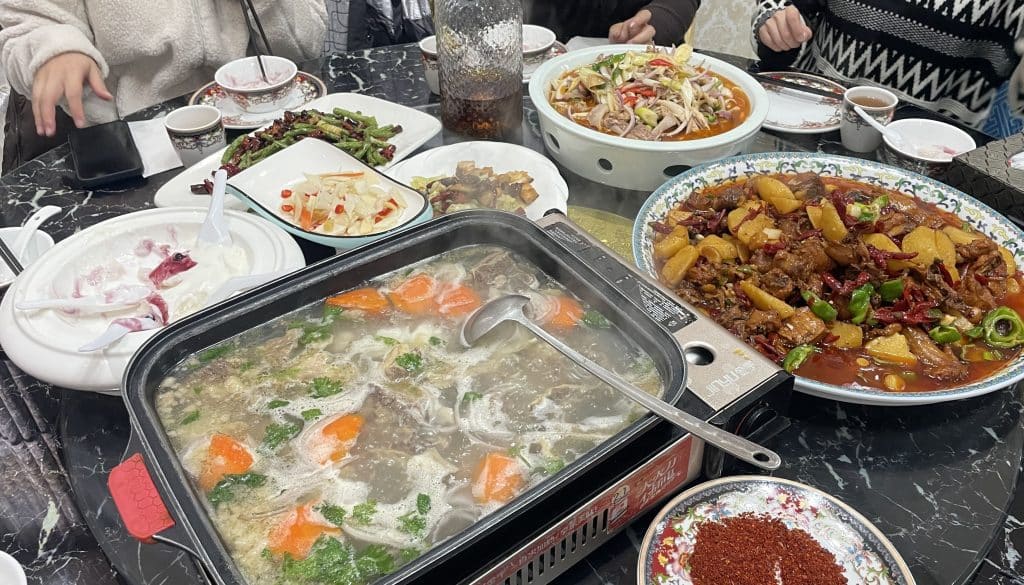
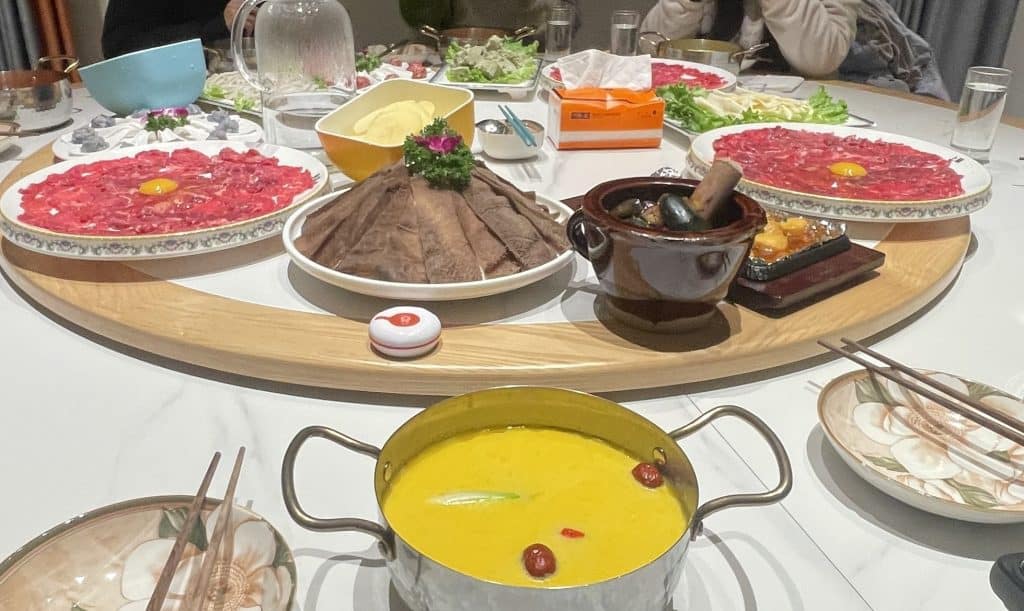
There are also plenty of restaurants in town serving both Chinese and Western food. If you’ve never tried Da Pan Ji (Big Plate Chicken), definitely give it a go. It’s one of Xinjiang’s signature dishes and well worth ordering after a full day on the mountain.
Where to Stay
You’ve got two options.
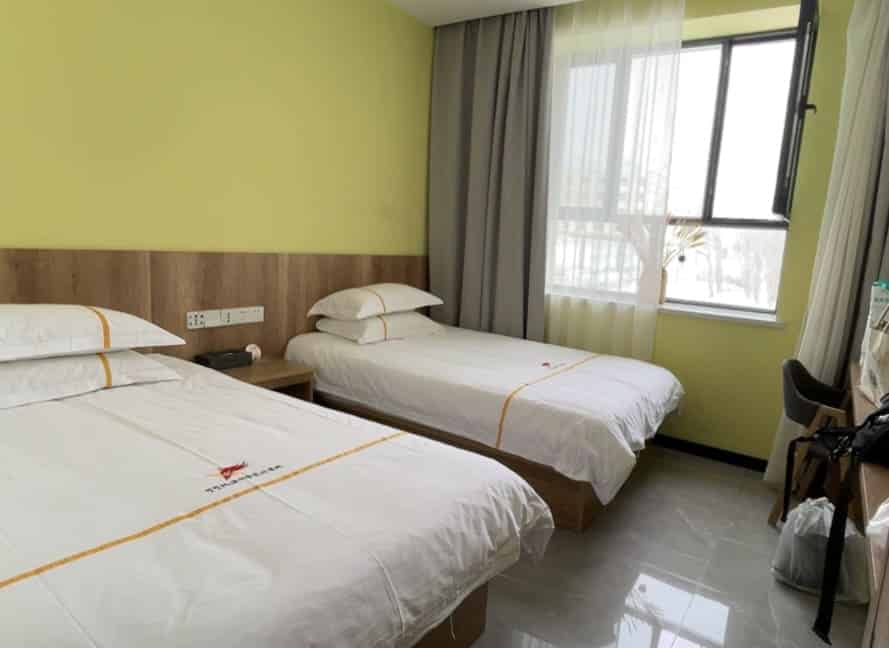
Stay slopeside at the resort. It’s by far the most convenient option, but it’s also the most expensive. That said, I still book it in advance whenever heavy snow is forecast. It’s well worth the money because the mountain road often closes while the snow is being cleared.
Or you can stay in Keketuohai Town, where you’ll find accommodation to suit pretty much every budget.
My tip is to choose a hotel north of the Irtysh River. It’s right beside the main mountain road, has plenty of shuttle bus stops nearby, and is surrounded by restaurants, cafés and ski shops. It makes getting around really easy.
Final Thoughts
Sorry for the long write-up, but this really is my favourite resort, and I think it’s well worth recommending.
I’ve ridden a lot of places over the years, and it’s genuinely hard to find another resort that offers this combination of long groomers, deep powder, playful terrain and incredible tree runs all in one place.
Getting here isn’t exactly easy, but if you love carving fresh corduroy, chasing powder through the trees and making the most of natural terrain, I honestly think it’s worth every kilometre.
