
This is something that confuses a lot of riders, especially early on. People assume slower automatically means safer and more controlled. On a snowboard, that often isn’t true.
I see it constantly when teaching. Riders slow right down because they feel unsure, then everything starts to feel awkward. The board feels twitchy, turns feel forced and balance feels harder than it should. When they let the board run a little, things usually improve straight away.
There’s a reason for that.
Snowboards need forward motion
A snowboard is designed to work while it’s moving. When you’re barely sliding, the board doesn’t have much stability. You end up trying to balance by tightening muscles and reacting late to small changes in the snow.
With a bit of speed, the board starts tracking in a straight line between turns. That makes it easier to stand in a more relaxed, centred position instead of constantly correcting yourself.
This is why people often feel worse right at the top of a run and better a few turns in.
Low speed exaggerates mistakes
At very slow speeds, there’s no margin. Small movements have a big effect. A slight shift onto the wrong edge can stop the board or cause a catch. Tiny balance errors feel dramatic.
Once you have some momentum, the board keeps moving through those little errors. You still need good technique, but you’re not being punished for every minor wobble. Riding starts to feel smoother and more predictable.
Edge hold improves when you’re moving
Edges don’t work particularly well at a crawl. They tend to grab and release instead of engaging cleanly, especially on firm or icy snow. This leads to wipeouts.
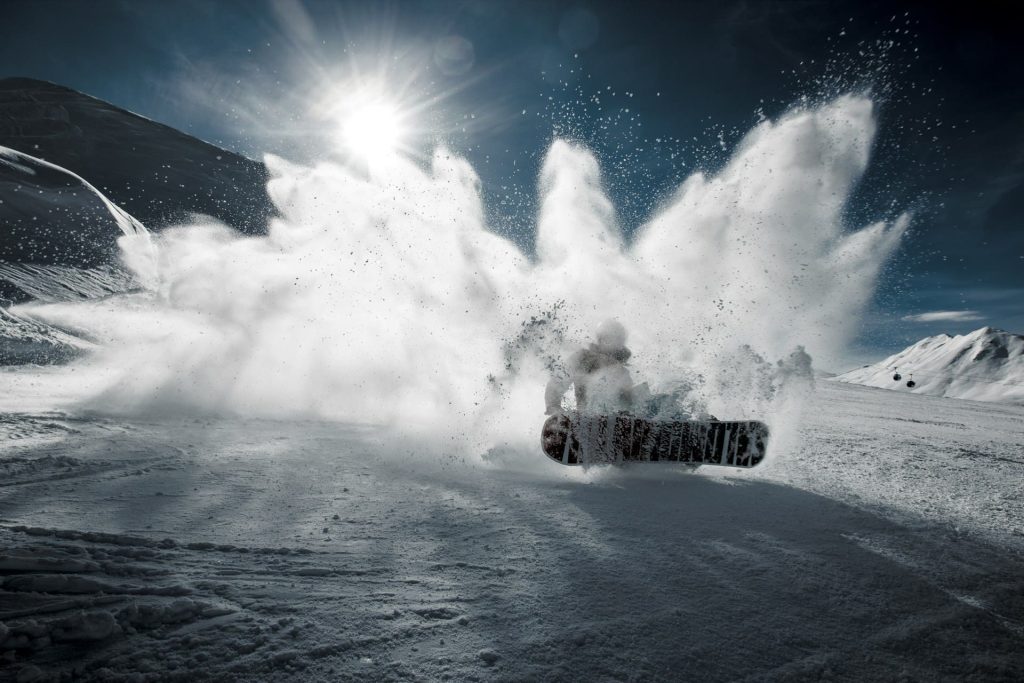
When you’re moving with a bit of pace, the edge has pressure and direction. It can actually bite into the snow and hold a line. Turns feel more consistent and less sketchy. This is one reason icy sections often feel worse when people slow right down.
Slow riding creates tension
When riders get nervous, they usually slow down and stiffen up. Legs lock, upper body tightens, arms start doing odd things. That tension makes balance worse and reactions slower.
A bit of speed often forces people to loosen up without even thinking about it. They stop fighting the board and start letting it move underneath them. Riding immediately feels less work.
Turning needs energy
Snowboards don’t turn easily without forward motion. At very low speed, you have to push the board around. That leads to skidding, twisting and a lot of effort for very little result.
With enough speed, the board bends and responds. Turns feel easier because the board is doing more of the work. You’re guiding it instead of forcing it.
Park features need speed too
This catches a lot of people out in the park. Going too slow feels safer, but it usually makes things harder.
Approaching jumps without enough speed means you have to rush movements on the takeoff. The board feels dead under your feet and timing goes out the window. With a bit more speed, the board stays stable and you can focus on body position instead of panicking at the lip.
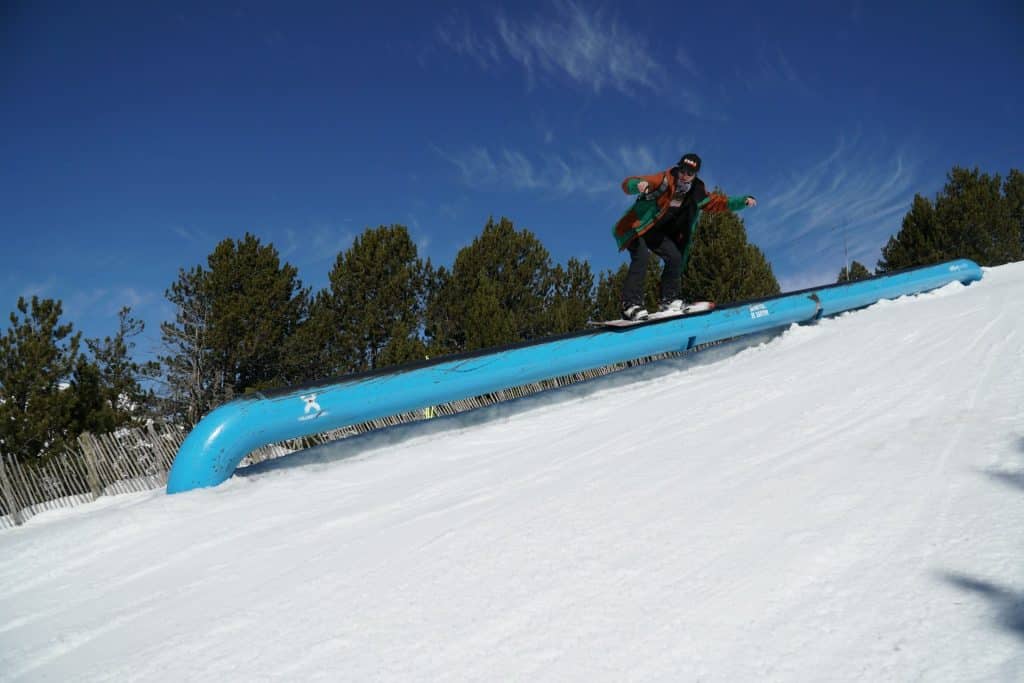
Rails are similar. At very low speed, balance becomes twitchy. Small wobbles feel huge and it’s harder to stay centred. A little momentum helps the board track straight and makes corrections smoother.
This doesn’t mean sending things you’re not ready for. It means committing to a clean, consistent approach speed instead of rolling in half hearted and hoping for the best.
This is not about going fast
This is where people get the wrong idea. This isn’t about charging or pointing it straight. Speed is relative to the slope, conditions and rider.
You just need enough speed for the board to work properly. That level is different on a steep red run than it is on a flat green. Smooth matters more than fast.
Why I encourage slightly more speed
When we instructors push riders to carry a little speed, it’s not to scare them. It’s because creeping creates bad habits. It leads to tension, poor balance and unreliable edge control.
A small increase in speed often makes riding calmer and more controlled, not more dangerous.
Where this matters most
You notice this most on flat runouts, gentle slopes, icy patches and long traverses. These are the places where going too slowly makes snowboarding feel awkward and tiring.
The Takeaway
If you’re new to snowboarding, this is just one of the awkward phases you have to pass through. Riding slowly feels safer, but it often makes everything harder. That’s frustrating and it’s normal.
The good news is the improvement here comes fast. Once you start letting the board carry a bit of speed, balance improves quickly. Turns feel smoother. Falls become less random. Things that felt impossible a day ago suddenly feel manageable.
You don’t have to force it. You don’t have to rush. Just know that this stage doesn’t last long. Most riders get past it in a few sessions, not a few seasons.
Stick with it, let the board move and it will start to make sense.
Hope that was vaguely helpful?

Disclaimer
This is not advice to ride faster than you are comfortable with or to send things you are not ready for. If adding speed makes you tense, scared, or out of control, slow it down!
The point here is simply that super slow speeds often makes snowboarding feel harder, not safer. A calm, steady pace usually gives the board something to work with and that tends to make everything feel more predictable.
