Buying an avalanche shovel isn’t like picking out gloves or goggles. This is life-and-death gear, and I’ve seen firsthand how much it matters. I’ve led ski and snowboard groups into the backcountry for years and nothing frustrates me more than people showing up with a flimsy plastic shovel or worse, no shovel at all.
A good avy shovel needs to dig fast, survive abuse and actually work when you’re cold, tired, and in a panic. I’ve broken cheap ones, bent blades, and even watched a handle snap mid-rescue practice. Trust me, that’s not when you want to discover your gear is trash.
So, these are the shovels I’d let my own crew carry — strong, tested and from brands that avalanche pros actually trust.
🏆 Quick Pick
If I had to carry one avalanche shovel for the backcountry, it would be the BCA Dozer 2H-S. It’s strong, packs well and the hoe mode makes moving snow twice as fast when seconds count. I’ve used plenty of shovels over the years and this is the one I’d trust on real tours.
Top 3 Avalanche Shovels
Best Avalanche Shovels 2026
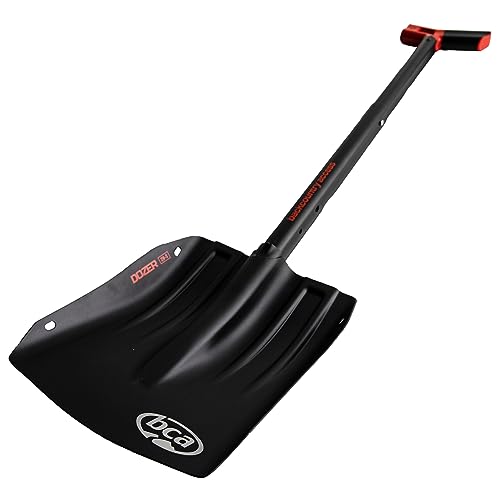
1. BCA Dozer 2H-S Avalanche Shovel Best Overall Pick
- The new ovo-concave shaft, low-profile stompable blades, and wide range of cored-out handles make BCA shovels stronger, lighter, and more packable than ever before.
- This new line is inspired by Backcountry Access's legendary D-2 EXT "Dozer" shovel.
- BCA was the first to create an avalanche shovel with a non-round shaft to prevent breakage while prying.
- Backcountry Access has taken their groundbreaking oval design and added a concave radius on both sides to make it even stronger, without adding weight.
- All BCA extendable models are designed to meet the UIAA standard for avalanche rescue shovels.
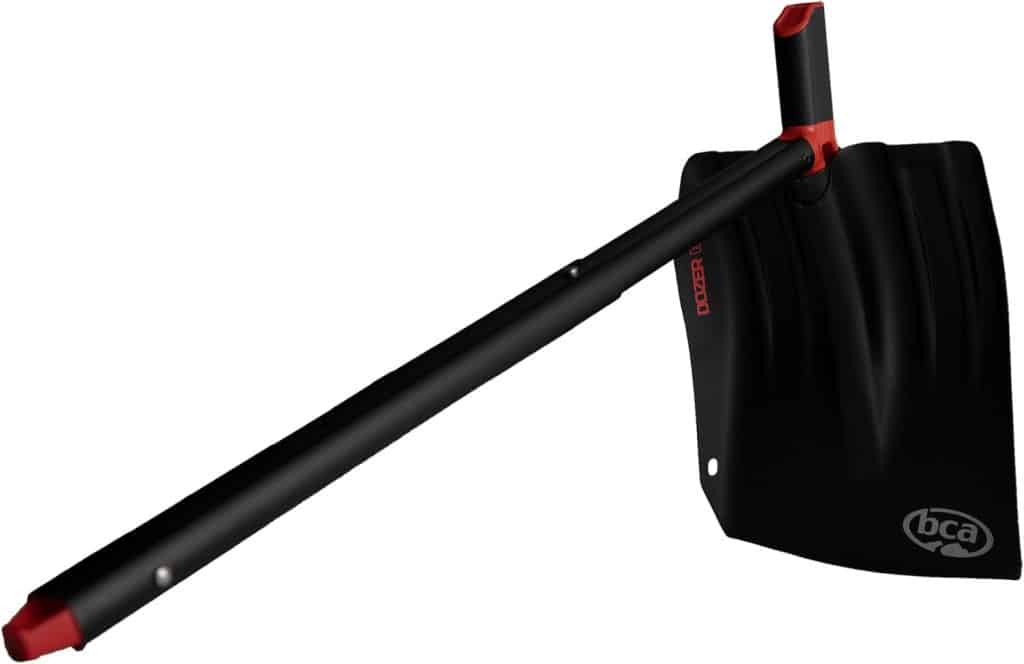
The Dozer 2H-S is the shovel I’ve carried on more than a few backcountry missions, and it’s the one I still recommend to my guided clients when they ask what to buy. BCA calls it “Dozer” for a reason. The blade is big enough to move snow fast but not so oversized that it feels like dragging around dead weight on the climb.
When you’re actually digging in avy debris, you want leverage and comfort. This setup gives you both. The hoe-mode option (flip the blade sideways) is underrated too. It makes moving chunks of snow way easier and a lot less tiring. Once you’ve used that feature in practice, you’ll wonder why every shovel doesn’t do it.
I’ve put this thing through the wringer: icy snowpits, frozen snowmobile trails, even digging the truck out more than once. The aluminum blade takes a beating and hasn’t bent on me. Some shovels feel like cheap toys — the Dozer doesn’t.
It’s not the lightest on the market (look at the Mammut Alugator Pro Light if that’s your priority), but for most skiers and riders this is the sweet spot between durability and packability. When it comes to avalanche rescue gear, I’ll always trade a couple extra ounces for gear that won’t fail when it matters.
Best for: Backcountry skiers and snowboarders who want a tough, versatile shovel they can actually rely on.
Pros
- Strong aluminum blade takes real abuse
- Grip handle and extendable shaft give solid leverage
- Hoe mode makes moving heavy snow faster
- Good balance of durability and packability
Cons
- Not the lightest option for weight-focused missions
- A little bulkier in a small pack compared to ultralight shovels
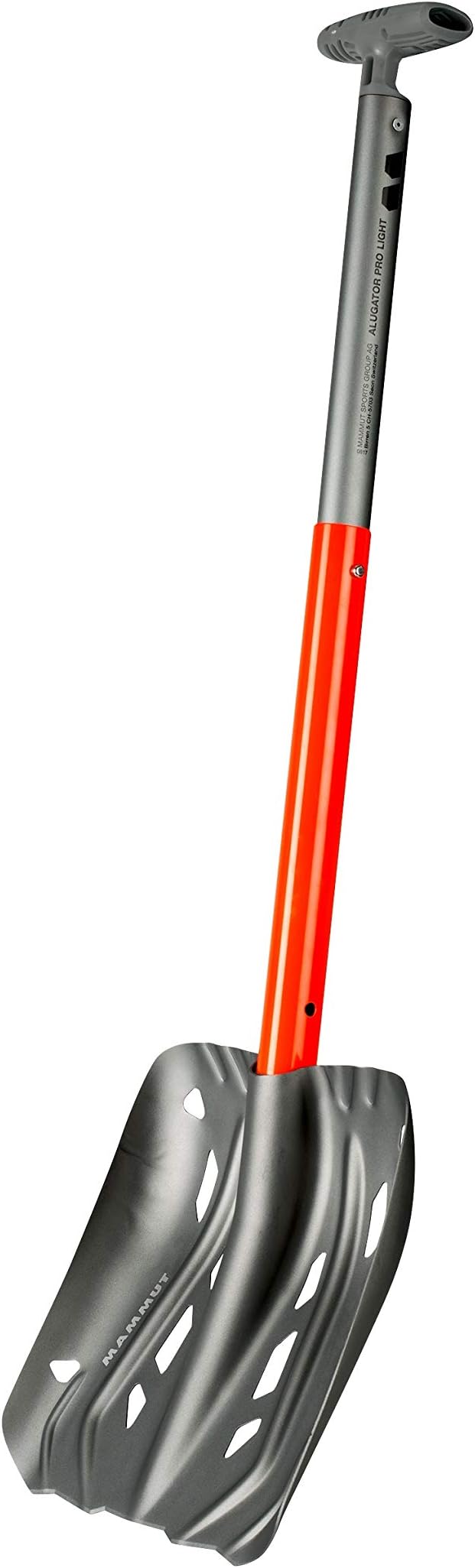
2. Mammut Alugator Pro Light Best Lightweight Pick
- Hardened, anodized aluminum shovel blade
- Automatic zipper locking for quick, precise guidance during assembly
- Ergonomically shaped T-grip for efficient transfer of strength
- Space-saving blade design
- Sharpened, tilt-resistant blade with integrated steps
The Mammut Alugator Pro Light is the shovel I reach for when weight matters but I still want real digging power. I’ve used plenty of “lightweight” shovels that feel like toys the second you hit icy debris. This one isn’t that. The anodized aluminum blade holds up to frozen chunks and refrozen layers, and the telescoping shaft gives you the leverage you need without taking up half your pack.
What I like most is how quick it is to deploy — the T-grip snaps in smoothly and the whole thing feels ready for business in seconds. For ski touring missions where every gram counts but I’m not willing to compromise on reliability, this is probably the best avalanche shovel.
Pros
- Lightweight but still tough enough for avy debris
- Telescoping shaft gives strong digging leverage
- Compact pack size for ski touring missions
- Fast, simple deployment
Cons
- T-grip not as comfortable with big mittens
- Not as powerful as heavier D-grip shovels
3. Ortovox Badger Avalanche Shovel Best Value Pick
- Powerful: The Badger is a super lightweight aluminum shovel with an ergonomic, hybrid grip for maximum power transmission
- Blade Volume: A sizable blade volume of 2.5 liters is backed up by robust design, pronounced center ridge and high side walls for full rigidity
- Non-Slip Traction: Non-slip grooves on the top edge of the blade provide adequate traction when wearing boots
- Quick Assembly: A centering aid in the shaft socket facilitates rapid assembly for quick and convenient use
- Specifications: Scoop 2.5l, Weight 625g, Length 70 (45) cm, Blade 28 x 21 x 4cm
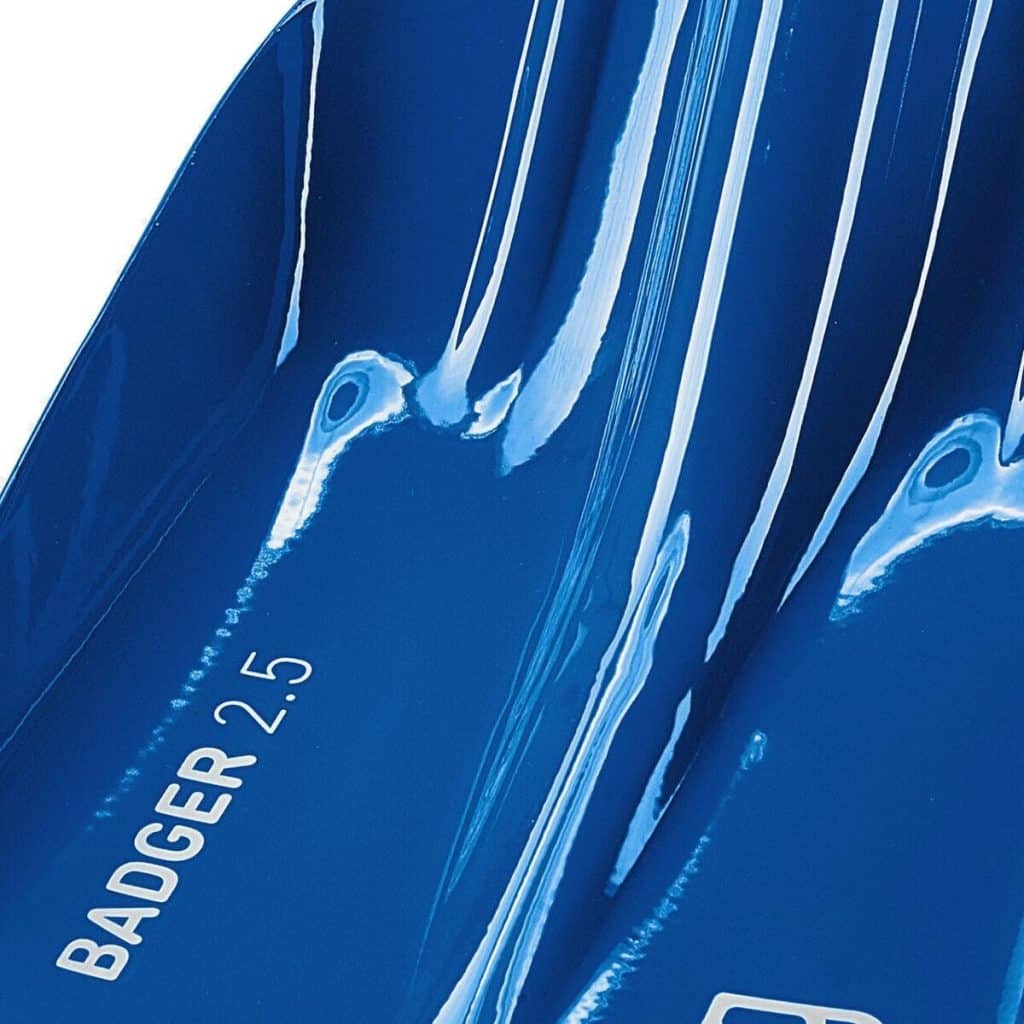
The Ortovox Badger is one of those shovels I’ve seen in tons of packs for a reason. It’s simple, lightweight and doesn’t try to reinvent the wheel. The blade is big enough to move serious snow fast, and the handle clicks in without fuss. I’ve handed this shovel to newer riders on avalanche courses and they get comfortable with it right away.
Is it the burliest shovel on the market? No — the handle is plastic and you won’t get quite the same bombproof feel as a heavier-duty BCA or Mammut. But for the price, it’s one of the best value avalanche shovels out there, and it still performs when things get serious. If you’re building a kit without blowing the budget, the Badger earns its spot.
Pros
- Affordable price without feeling cheap
- Lightweight and easy to pack
- Large blade moves snow quickly
- Simple, beginner-friendly design
Cons
- Plastic handle feels less solid
- Not as durable for heavy or icy conditions
4. BCA Bomber B1 Avalanche Shovel Best Budget Pick
The BCA Bomber B1 is what I recommend for people who want something solid without going full pro. Years guiding backcountry has taught me that in many cases reliability beats fancy. The B1 won’t win any weight-weenie awards, but it won’t bend or fail if you throw it in as “just extra gear.”
It has a classic blade, good reach and folds down small enough for most packs. In cold, sloppy snow (unstable conditions etc.) I’ve tested it against heavier shovels and it holds its own. If you don’t need ho-mode or super fancy joints, this delivers what matters: strength, simplicity, and peace of mind in sketchy snow.
Pros
- Strong and durable construction that takes abuse
- Affordable price for a trusted brand
- Simple design, fewer failure points
- Good reach for digging without stooping too low
Cons
- Heavier than ultralight options
- No hoe mode or blade flip feature
5. Ortovox Beast Avalance Shovel Best Heavy-Duty Pick
- Aluminum Collapsible Shovel: Sturdy utility aluminum shovel; lightweight and durable avalanche shovel
- Material: Hardened and anodized aluminum; high sidewalls and prolonged center ridge for maximum rigidity
- Easy Assembly: Rapid closure shaft with telescopic handle system; assembles quick for easy use
- Features: Extremely lightweight, pack-friendly blade, telescoping handle, non-slip step grooves, hybrid grip, and oval handle cross section T-grip pro with flexible left and right-handed function
- Specifications: Scoop 2.3 liters, Weight 1lb. 4.5 oz., Length 32.7/83 cm, Blade 28 x 21 x 4 cm
The Ortovox Beast is for when you want a shovel that feels like it could handle almost anything. On steeper terrain, heavy wet snow, or when things get serious, I want something I don’t worry about bending. The Beast gives you that confidence. The handle feels solid even through thick gloves, the blade cuts into dense snow well and the shaft holds up without flexing under torque.
It’s not made for ultra light missions — my backpack certainly notices the Beast when I carry it uphill. But in return you get durability and performance in the hard stuff. If your gear budget allows and you want a shovel that can actually perform, this is the one to lean on when others might fold.
Pros
- Built tough for hard or icy conditions
- Strong shaft, resists flex under load
- Solid handle grip, even with big mittens
- Reputable brand with quality parts and service
Cons
- Heavier for long uphill tours
- Bulky to pack compared to ultralight or blade-flipping models
Backcountry Access TS Full Rescue Package Bonus Pick
Most people piece together their beacon, probe, and shovel one by one. The Backcountry Access TS Rescue Package saves you the trouble and gets you a solid, compatible kit right out of the box. You get the Tracker S beacon, a 240 cm probe, and a durable BCA shovel. None of it feels like budget filler gear — it’s the same brand I’ve trusted on guided trips for years.
The beacon is simple, fast, and beginner-friendly. The probe is long enough to actually matter in a rescue. And the shovel is compact but sturdy, which is exactly what you want if you’re carrying this every day.
Is it more money up front? Sure. But buying the kit saves you time and often cash compared to mixing brands. If you’re just getting into the backcountry or buying for someone else, this is a no-brainer. You hand them the box and they’re 90 percent of the way to being properly equipped.
Pros
- Complete setup with beacon, probe, and shovel
- Trusted BCA quality across all components
- Good value compared to buying separately
- Perfect for newcomers who need everything at once
Cons
- Higher upfront price than buying a shovel alone
- Beacon isn’t as feature-rich as pro-level models
- Not customizable — you get what’s in the box
Avalanche Shovel Comparison Table
| Shovel | Weight | Blade Size | Handle | Price | Best For | Score |
|---|---|---|---|---|---|---|
| BCA Dozer 2H-S | 30 oz | 25 x 27 cm | T-grip | $$$ | Best Overall | 9.5 |
| Mammut Alugator Pro Light | 22 oz | 24 x 27 cm | T-grip | $$ | Best Lightweight Pick | 9.3 |
| Ortovox Badger | 25 oz | 28 x 21 cm | T-grip | $ | Best Value Pick | 9.0 |
| BCA Bomber B1 | 23 oz | 24 x 25 cm | T-grip | $ | Best Classic Option | 8.9 |
| Ortovox Beast | 27 oz | 28 x 23 cm | T-grip | $$ | Best Mid-Range Pick | 9.1 |
How To Use Avalanche Shovels
Owning a good avalanche shovel is one thing. Knowing how to actually use it under stress is another. I’ve been on courses where people show up with shiny new gear but the first time they ever dig with it is during practice. That’s a bad idea. You don’t want your first real shovel test to be when a partner is buried.
Practice matters. Find a snowbank, set a timer and see how quickly you can move snow. You’ll notice fast that avalanche debris is not like soft powder. It sets up like concrete and moving it efficiently is all about technique.
Work as a team. If you’ve got multiple shovels in play, you don’t all pile in at once. The fastest method is conveyor-belt style: two or three shovelers in a V shape throwing snow downhill while others rotate in and out. I’ve done it both ways and the difference in speed is night and day.
Chop then clear. Don’t just stab and scoop randomly. Use the shovel blade to chop blocks of snow, then clear them in chunks. It saves energy and gets you down faster. The bigger blades (like on the Dozer) really help here, but even smaller shovels move a lot if you use them right.
Stay low. Get your knees and shoulders into it, almost like paddling. Bending over and scooping weakens your back and slows everything down.
Bottom line
The shovel you choose matters, but the way you train with it matters even more. Take it out, beat it up and get comfortable digging hard. If you ever need it for real, you’ll be glad the muscle memory is there.
Avalanche Shovel Buying Guide
Choosing the right avalanche shovel isn’t complicated, but it does matter. When you’re in the backcountry, this isn’t just another piece of gear — it’s a rescue tool. A good shovel can save time, energy and in the worst cases, lives. Here’s what you should think about before buying.
Material
Most good shovels are made from aluminum. Plastic shovels might be lighter and cheaper, but they’re not strong enough to cut through dense avalanche debris. Stick with aluminum — it’s worth the extra few ounces.
Weight and Packability
Every ounce matters when you’re hauling gear uphill, but don’t sacrifice strength for a “featherweight” design. A shovel in the 1.3–1.7 lb (600–750 g) range hits the sweet spot. Look for a blade that slides easily into your pack and a handle that collapses short but extends when you need leverage.
Handle
Telescoping handles are key. A short handle is useless when you’re digging for real. Look for something that extends to give you more power but still packs down small. T-grips save weight, while D-grips give a more comfortable hold with gloves — both work, it’s just personal preference.
Blade Shape and Size
Big blades move more snow, but they’ll also tire you out faster. Smaller blades are easier to dig with over time but move less per scoop. A medium-sized blade is usually best. Flat blades cut into icy debris more easily, while curved blades throw snow better.
Added Features
Some shovels double as hoes, letting you drag snow instead of just lifting. Others pack in extras like saws hidden in the handle. Nice to have, but not essential if budget is tight.
Price
Expect to spend $50–130 for a quality shovel. Anything cheaper is probably a toy. The difference between “budget” and “premium” is usually weight, features and brand reputation.
My Experience
I’ve been guiding skiers and snowboarders in the backcountry for years. That means I’ve spent more time than I’d like digging practice holes, teaching avalanche courses and watching how different shovels actually hold up when the snow turns heavy and icy.
I’m not here to hype gear because a brand told me to. I’ve bent cheap shovels, seen handles snap and watched people waste time with the wrong setup. I’ve also had to rely on solid gear when seconds mattered. That’s why I’m picky.
When I recommend a shovel, it’s because I’ve either used it myself, seen it used in rescue training, or trust the brand enough to stand behind it. If something’s junk, I’ll call it out. If it’s worth your money, I’ll tell you why.
Final Thoughts
If you’re heading into the backcountry, an avalanche shovel is not optional. I’ve seen too many people treat it like a box-checker item, grabbing the cheapest thing they can find at a hardware store. The truth is, when you actually need a shovel, you’ll be moving heavy, set-up snow under stress and every second counts. That’s why I’m picky.
Go with a trusted brand, make sure it fits in your pack and choose one that feels solid in your hands. You don’t need the lightest or the fanciest — you need something that works, every single time.